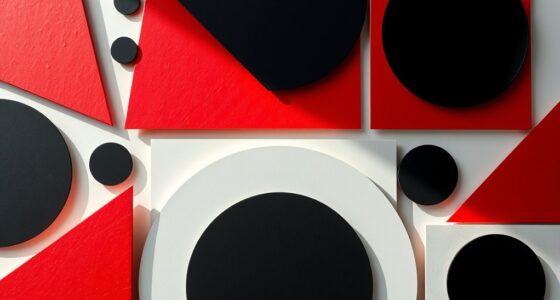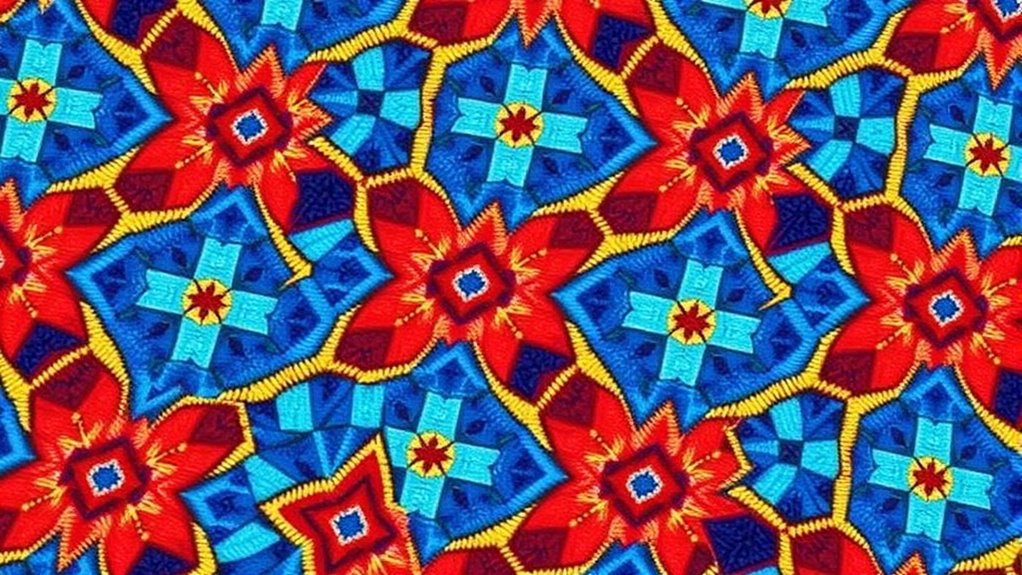

Using tessellations in graphic patterns and textiles allows you to create seamless, balanced designs that repeat effortlessly across surfaces. By employing self-similar shapes and symmetry fractals, you can establish visual harmony and complex textures that draw the eye. Color choices further enhance the pattern’s aesthetic, evoking emotions and reinforcing balance. If you want to explore how these principles come together to make enthralling designs, there’s more to discover ahead.
Listen free for 30 days with Audible
Thousands of audiobooks and originals — cancel anytime.
As an affiliate, we earn on qualifying purchases.
Key Takeaways
- Tessellations create seamless, balanced patterns ideal for enhancing visual appeal in textiles and graphic designs.
- Symmetry fractals ensure self-similar patterns at various scales, maintaining design cohesion.
- Repetition and color harmony in tessellations contribute to dynamic, eye-catching visual flow.
- Applying tessellation principles allows for scalable, intricate designs that fit different surfaces and mediums.
- Incorporating tessellations elevates textile and graphic patterns by adding complexity, harmony, and aesthetic appeal.
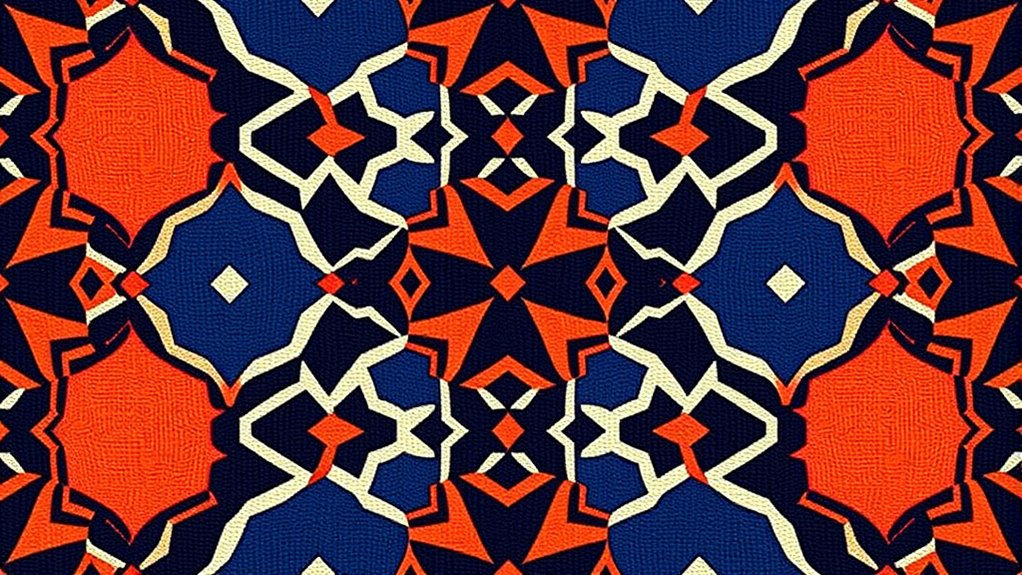
Have you ever wondered how intricate patterns seamlessly fit together without gaps or overlaps? It’s a fascinating process rooted in the concept of tessellations, where shapes repeat across a surface to create endless, captivating designs. When you explore the world of tessellations, you’ll notice how the principle of symmetry fractal plays an essential role. Symmetry fractals involve self-similar patterns that repeat at different scales, giving your designs a sense of harmony and complexity. This repetition isn’t random; it’s carefully crafted so that each shape complements the others, forming a cohesive whole. The beauty lies in how these patterns can be scaled up or down, yet still retain their integrity, making them ideal for both graphic patterns and textiles. Recognizing the role of visual balance can help you craft more harmonious and appealing designs. Understanding symmetry fractal helps you grasp how these patterns can be both intricate and balanced. When you work with tessellations, you’re essentially manipulating shapes that mirror each other along axes or points of rotation. This symmetry ensures that no gaps or overlaps occur, creating a seamless visual flow. As you design, consider how these symmetrical elements can be combined with color harmony to enhance the overall aesthetic. Color harmony is about choosing and blending hues that work well together, reinforcing the pattern’s rhythm and balance. When applied thoughtfully, it can elevate a simple tessellation into a vibrant, eye-catching fabric or graphic. For textiles, this means selecting colors that evoke emotion or align with a brand’s identity, while maintaining visual consistency. In graphic patterns, color harmony guides the viewer’s eye, leading them through the design effortlessly.
As an affiliate, we earn on qualifying purchases.
Frequently Asked Questions
How Do Tessellations Influence Modern Digital Textile Printing?
Tessellations influence modern digital textile printing by enabling intricate digital patterning that enhances visual depth. You can achieve seamless designs with precise color synchronization, making patterns more vibrant and cohesive. By integrating tessellations, you streamline complex pattern creation, allowing for innovative and visually compelling textiles. This technique helps you produce detailed, repetitive designs efficiently, elevating the overall quality and appeal of digital printed fabrics.
Can Tessellations Be Used to Create 3D Textile Effects?
Imagine a 3D textile that’s a pixelated mosaic—tessellations can indeed create 3D textile effects. You can design tactile patterns that seem to leap off the fabric, giving depth and dimension. By carefully arranging tessellated shapes, you produce illusions of raised surfaces or layered textures, making your textiles more dynamic. Tessellations serve as a versatile tool to transform flat patterns into engaging, multi-dimensional 3D textiles.
What Software Tools Are Best for Designing Tessellated Patterns?
You should use vector graphics software like Adobe Illustrator or CorelDRAW to design tessellated patterns effectively. These tools allow you to create precise, scalable designs and access extensive pattern libraries for inspiration. With vector graphics, you can easily manipulate shapes and guarantee seamless tessellations, making your pattern creation process smoother and more efficient. Combining these features helps you produce intricate, professional-looking textile and graphic patterns quickly.
How Do Cultural Motifs Inspire Tessellation Designs in Textiles?
You can draw inspiration from cultural motifs by incorporating symbols that hold deep cultural symbolism, like traditional embroidery patterns. For example, a designer might adapt Moroccan tile motifs to create tessellated textile patterns, blending traditional craftsmanship with modern design. This approach celebrates cultural heritage, adds meaningful detail, and creates visually enthralling textiles that honor history while appealing to contemporary tastes.
Are There Eco-Friendly Methods for Producing Tessellated Textile Patterns?
Yes, you can create eco-friendly tessellated textile patterns by using natural dyes and recycled fibers. Natural dyes reduce chemical pollution, making your designs safer for the environment. Recycled fibers, like reclaimed cotton or polyester, lower waste and resource consumption. By combining these sustainable materials, you produce beautiful tessellated patterns that are eco-conscious and visually striking. This approach supports greener practices in textile production while maintaining artistic integrity.
As an affiliate, we earn on qualifying purchases.
Conclusion
By now, you’ve seen how tessellations can transform simple designs into stunning patterns. They add depth, complexity, and beauty to textiles and graphics, making your creations stand out. So, why settle for ordinary when you can design with endless possibilities? Embrace tessellations and let your creativity flow. Are you ready to turn your ideas into mesmerizing patterns that captivate everyone? Start experimenting today and see where tessellations can take you!
Symmetry fractal design stencils
As an affiliate, we earn on qualifying purchases.
As an affiliate, we earn on qualifying purchases.
As an affiliate, we earn on qualifying purchases.
Fall Picks
fall essentials
As an affiliate, we earn on qualifying purchases.