

TL;DR
India has implemented an earthquake early warning system that can issue alerts minutes to hours before some seismic events. However, it does not predict earthquakes in advance. This system helps reduce damage and save lives but has limitations.
India’s earthquake warning system is capable of issuing alerts minutes to hours before some seismic events, but it does not predict earthquakes in advance. This system aims to help authorities and citizens prepare for imminent quakes, reducing damage and saving lives. The system’s capabilities and limitations are now being clarified as India seeks to improve disaster preparedness.
India has developed a regional earthquake early warning system that leverages a network of seismometers across key seismic zones. According to officials from the Indian Meteorological Department (IMD), the system can detect the initial, less destructive P-waves of an earthquake and send alerts to vulnerable regions before the more damaging S-waves arrive. These alerts can be issued seconds to minutes ahead, depending on the distance from the earthquake epicenter.
However, experts emphasize that the system cannot predict earthquakes before they happen. It relies on real-time detection of seismic waves, not on forecasting or predicting the occurrence of seismic events days or weeks in advance. The system’s primary purpose is to provide early warnings for ongoing seismic activity, giving people and infrastructure time to take protective measures.
India’s system has been tested in recent months and is now operational in several states, including Himalayan regions and parts of the Indo-Gangetic plain, which are prone to earthquakes. The government has stated that the system is a significant step forward in disaster risk reduction, although it is not a substitute for long-term preparedness and resilient infrastructure.
Why India’s Earthquake Warning System Matters for Safety
The system enhances India’s ability to respond swiftly during seismic events, potentially saving lives and reducing economic losses. While it cannot predict earthquakes in advance, early warnings can trigger automatic shutdowns of critical infrastructure, halt transportation, and alert populations to seek safety. This capability is especially vital in densely populated urban areas and vulnerable regions where earthquake damage can be catastrophic.
Experts note that such early warning systems are part of broader disaster management strategies. They complement long-term measures like building codes and public education, forming a layered approach to earthquake resilience.
Earthquake Early Warning Systems
- Condition: Used Book in Good Condition
As an affiliate, we earn on qualifying purchases.
As an affiliate, we earn on qualifying purchases.
India’s Earthquake Preparedness and Technological Advances
India is situated along the Himalayan seismic belt, making it highly prone to earthquakes. Historically, the country has faced devastating seismic events, including the 2001 Gujarat earthquake and the 2015 Nepal earthquake, which affected parts of northern India. Recognizing the need for better preparedness, India has invested in seismic monitoring and early warning systems over the past decade.
The Indian Meteorological Department (IMD) has collaborated with international agencies to establish a regional seismic network. This system is modeled after similar early warning systems used in Japan and Mexico, which have demonstrated the potential to save lives through timely alerts. Despite technological progress, experts agree that predicting earthquakes remains a scientific challenge, with no current method capable of reliably forecasting seismic events days or weeks in advance.
“Our earthquake early warning system can provide crucial seconds to minutes of advance notice, which can be vital for safety measures.”
— Dr. M. Mohapatra, Director General of IMD
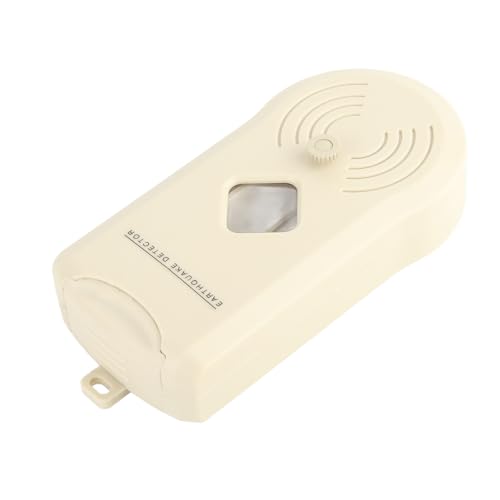
HURRISE Earthquake Detector – Get Early Warning Alerts of Impending – Adjustable Sensitivity & Easy Wall Mounting – Emergency Home Security Device
- Advanced Detection Technology: Provides early seismic activity alerts
- Adjustable Sensitivity: Customize alerts for your environment
- Automatic Reset and Alarm Cutoff: Minimizes false alarms and resets automatically
As an affiliate, we earn on qualifying purchases.
As an affiliate, we earn on qualifying purchases.
Limitations of India’s Earthquake Prediction Capabilities
It is not yet clear how effective the system is in all regions or during very large earthquakes. The system’s coverage and response times depend on the density of seismometer networks and the magnitude of seismic events. Additionally, the system cannot predict earthquakes before seismic waves are generated, and false alarms or missed alerts are possible, particularly in less monitored areas.
Scientists acknowledge ongoing challenges in improving prediction accuracy and coverage, and it remains uncertain how well the system can handle unexpected seismic patterns or very distant events.
Advanced Earthquake Alerts APP TODAY Real-Time Warning & Safety
- Real-Time Earthquake Alerts: Advanced earthquake warning notifications
- Global Coverage: Worldwide earthquake monitoring
- Interactive Map: Visual earthquake location map
As an affiliate, we earn on qualifying purchases.
As an affiliate, we earn on qualifying purchases.
Upcoming Improvements and Policy Directions for Earthquake Readiness
India plans to expand its seismic sensor network and integrate advanced data analytics to improve early warning accuracy. The government is also focusing on public education campaigns to ensure communities understand and respond effectively to alerts. Further research aims to explore potential forecasting techniques, but experts caution that reliable prediction may still be years away.
Authorities will continue testing and refining the system, with the goal of achieving broader coverage and reducing false alarms, ultimately strengthening India’s disaster resilience.

QM-4.5LV Seismometer
- Ideal for Various Settings: Laboratory, school, office, field, home use
- Includes Accessories: 15 ft serial cable, USB-Serial adapter, software CD
- Detects Large Earthquakes: Detects magnitude 6 up to 2500 miles, magnitude 7 worldwide
As an affiliate, we earn on qualifying purchases.
As an affiliate, we earn on qualifying purchases.
Key Questions
Can India predict earthquakes before they happen?
No, current scientific capabilities do not allow for reliable prediction of earthquakes days or weeks in advance. The system can only detect seismic waves during an ongoing event and issue alerts seconds to minutes before the shaking reaches populated areas.
How effective is India’s earthquake warning system?
The system can provide early warnings during seismic events, which can help save lives and reduce damage. Its effectiveness depends on the region, seismic activity, and network coverage, but it is a significant step forward in disaster preparedness.
What are the limitations of the current system?
The main limitation is that it cannot predict earthquakes beforehand. It relies on real-time detection of seismic waves, and false alarms or missed alerts can occur, especially in less monitored areas.
Will the system prevent all earthquake damage?
No, while it can reduce some risks by providing early warnings, it cannot prevent earthquake damage. Building resilient infrastructure and preparedness remain essential components of disaster risk management.
Are other countries using similar earthquake warning systems?
Yes, countries like Japan, Mexico, and the United States have implemented advanced early warning systems that have successfully saved lives and minimized damage during seismic events.
Source: google-trends