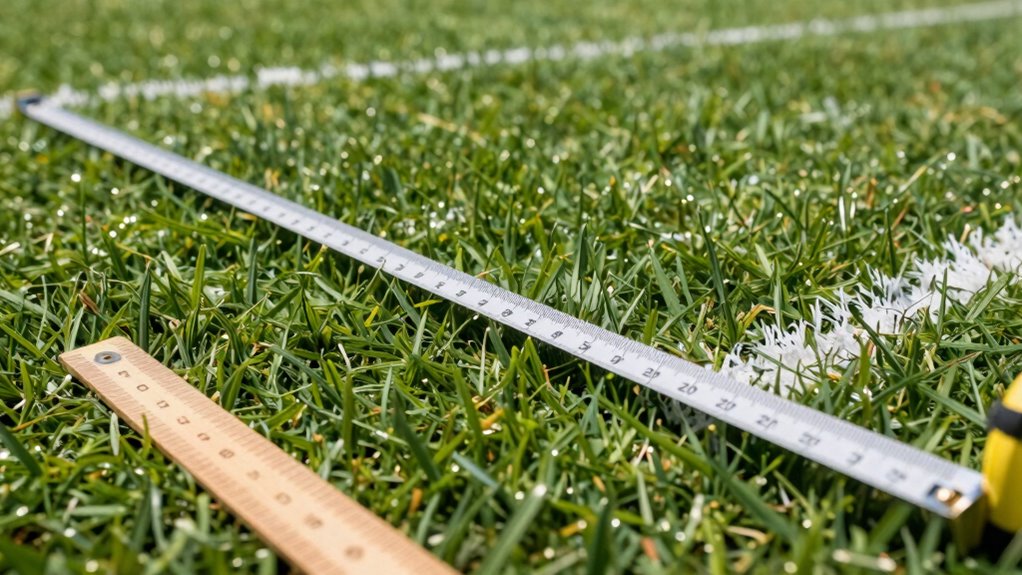
Area measures the space inside a shape, like the size of your garden or a floor, and is expressed in square units. Perimeter is the total length around the shape, like the fence you’d need to enclose it. Both measurements are essential for planning projects and understanding shapes better. Knowing what they specifically measure helps you make accurate calculations. If you want to understand how these measurements work and when to use them, keep exploring.

Prime made for students and young adults
- Fast, free delivery for dorm and study essentials
- Prime Video and Amazon Music included
- Member-only deals
Key Takeaways
- Area measures the total surface space inside a shape’s boundary.
- Perimeter measures the total length around the shape’s boundary.
- Area is expressed in square units; perimeter in linear units.
- Both measurements help in planning materials and boundary boundary-related tasks.
- They provide different insights: space coverage versus boundary length.
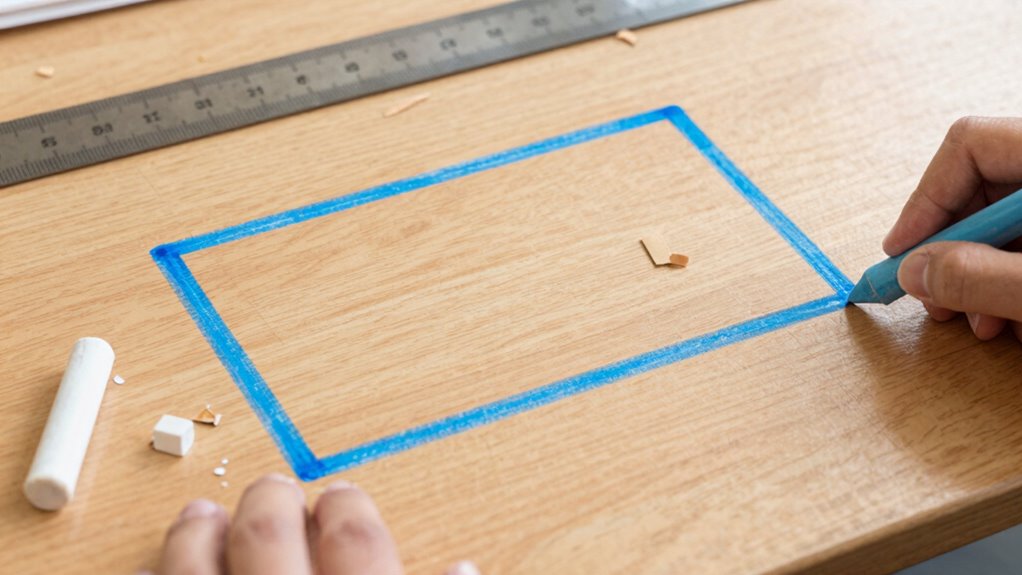
Have you ever wondered how to find the size or boundary length of a shape? When you’re exploring the concepts of area and perimeter, you’re delving into the ways we measure space and boundaries in geometry. These measurements are essential in everyday life, from planning a garden to designing a room, and they’re rooted in the ideas of space measurement and geometric boundaries. Perimeter is the total length of the boundary that encloses a shape. Think of it as the distance you’d walk if you circled around the shape once. It’s a straightforward measurement that tells you how long the boundary is, whether it’s the edge of a swimming pool, a running track, or a piece of fabric. To find the perimeter, you add up the lengths of all the sides. For regular shapes like squares or rectangles, you can use simple formulas—like adding twice the length and twice the width—but for irregular shapes, you might need to measure each side separately and sum them up. The perimeter gives you a sense of the shape’s boundary length, which is essential when calculating fencing needs, border materials, or boundary lines. On the other hand, area measures the amount of space inside a shape’s boundaries. It’s about understanding how much surface the shape covers. If you think about a garden, knowing its area helps you determine how much soil, grass, or tiles you need. For rectangles, you simply multiply the length by the width, but for more complex shapes, you might need to break them down into smaller, manageable sections or use specific formulas. The area is expressed in square units—square meters, square feet, or square inches—highlighting how much surface space the shape occupies. Recognizing the importance of geometric properties can help you better understand how shapes behave and relate to each other in space. Understanding the difference between area and perimeter helps you choose the right measurement for various practical applications. Additionally, knowing the role of measurements in real-world contexts can help you make more informed decisions in design and construction. For example, understanding how to accurately measure the boundary length of irregular shapes can be crucial when working on projects with complex outlines. In essence, while perimeter tells you about the boundary length, area reveals how much space the shape takes up. Both are different yet interconnected ways to measure and understand geometric boundaries and space. Recognizing the distinction helps you apply the right calculation in each situation, making your measurements precise and meaningful. Whether you’re working on a craft project or solving complex math problems, understanding what area and perimeter actually measure allows you to better interpret and manipulate the shapes around you.
As an affiliate, we earn on qualifying purchases.
Frequently Asked Questions
How Are Area and Perimeter Related?
Your area and perimeter are related through their focus on different dimensions of a shape. Perimeter measures the total length around the shape, while area compares the space inside it, reflecting measurement accuracy in each. When you change a shape’s dimensions, both shift, but in different ways. Understanding their relationship helps you compare size and shape, showing how the boundary length relates to the total space within.
Can Area Be Larger Than Perimeter?
Have you ever wondered if area can be larger than perimeter? Yes, it can, depending on the shape. For example, a large square has a big area and a smaller perimeter relative to its size. When comparing measurements, unit conversions matter—making sure you’re consistent in units improves measurement accuracy. So, don’t assume one is always larger; shapes and dimensions influence whether area surpasses perimeter.
Do Different Shapes Have Different Area Formulas?
Yes, different shapes have different area formulas because shape classification determines how you measure their space. For example, squares use length squared, while circles rely on π times radius squared. You’ll also notice the importance of measurement units, like inches or centimeters, which guarantee accuracy. Understanding these formulas helps you compare shapes more effectively and accurately calculate their areas based on their unique geometrical properties.
How Do You Find Area of Irregular Shapes?
Imagine you’re measuring a park with irregular boundaries. To find the area, you can break the shape into simpler parts using shape decomposition techniques, like dividing it into rectangles or triangles. Measure each part separately, then add those areas together. This approach helps you handle complex, irregular shapes efficiently, giving you an accurate total area even when the boundaries aren’t straightforward.
Are Area and Perimeter Measurements Affected by Scale?
Yes, scale influence can affect your area and perimeter measurements. When you change the scale of a shape, the perimeter increases or decreases proportionally, but the area changes even more markedly, usually by the square of the scale factor. This means measurement accuracy depends on maintaining consistent scale. If measurements aren’t scaled correctly, your calculations could be off, leading to inaccurate assessments of size and distance.
As an affiliate, we earn on qualifying purchases.
Conclusion
Understanding the difference between area and perimeter helps you better grasp how shapes work. Did you know that the Great Wall of China stretches over 13,000 miles? That’s a huge perimeter! While perimeter measures the boundary length, area tells you how much space is inside. Mastering these concepts can help you in real life, like planning a garden or designing a room. Keep exploring—they’re essential tools in everyday math!
As an affiliate, we earn on qualifying purchases.
square and rectangular shape measuring tools
As an affiliate, we earn on qualifying purchases.
As an affiliate, we earn on qualifying purchases.
Columbus Day / Indigenous Peoples' Day Picks
long weekend sales
As an affiliate, we earn on qualifying purchases.





![Terence Tao: Math 2.0 [Pdf]](https://geometr.info/wp-content/uploads/2026/10/terence-tao-math-2-0-pdf-featured-260x140.jpg)