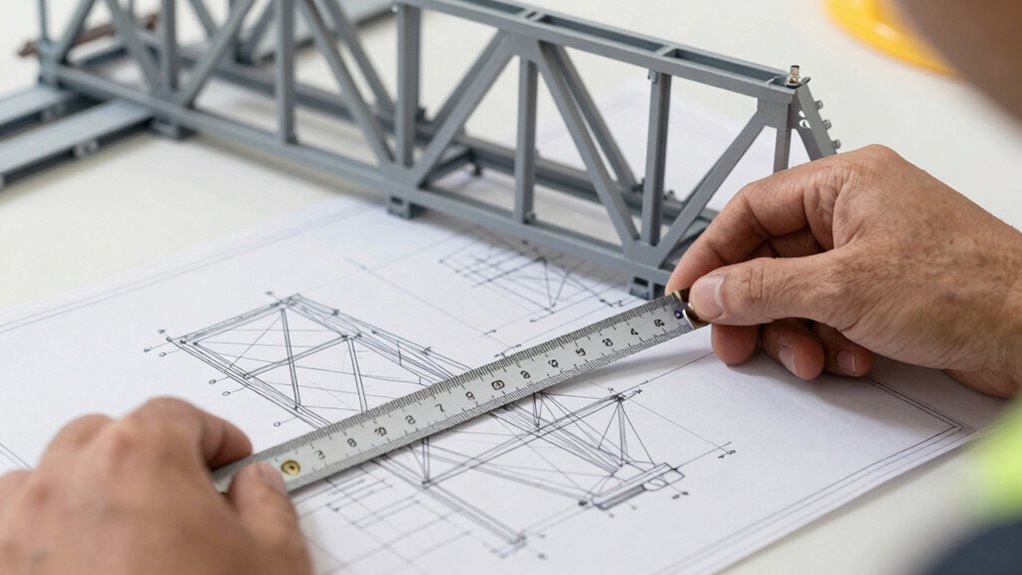

As an engineer, you use geometric principles to analyze how structures respond to various forces like weight, wind, and seismic activity. You visualize stress points, optimize shapes, and distribute loads through shapes like arches and beams. CAD and FEA tools help you simulate real-world conditions and identify weaknesses. By understanding these geometric relationships, you can design safer, more efficient structures—if you want to explore the details, keep going.

Prime made for students and young adults
- Fast, free delivery for dorm and study essentials
- Prime Video and Amazon Music included
- Member-only deals
Key Takeaways
- Engineers utilize geometric principles to model load paths and identify stress points in structures.
- They analyze angles, curves, and spatial relationships to ensure stability and optimize design.
- Geometric calculations help predict how structures respond to various forces like wind and seismic activity.
- CAD and FEA tools simulate real-world conditions based on geometric models for performance prediction.
- Geometry enables the design of structural elements that distribute loads efficiently and enhance safety.
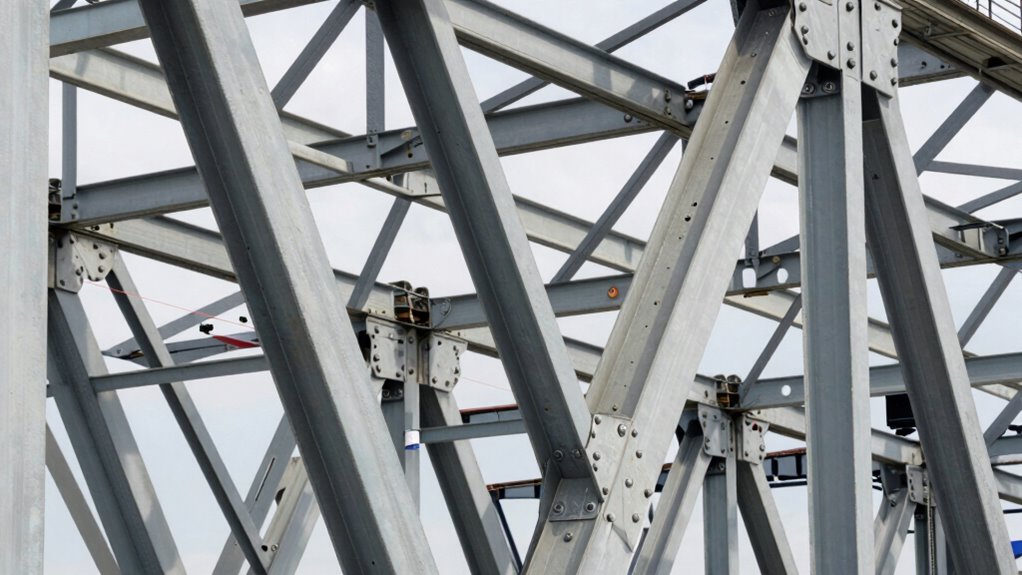
Have you ever wondered how engineers guarantee bridges and buildings can withstand the forces they face? The answer lies in their use of geometry, which helps them predict how structures will behave under various conditions. By understanding the geometric principles behind structural design, engineers can analyze how different parts of a structure work together to bear loads safely. This process involves carefully considering material properties and load distribution to assure stability and durability. Material properties, such as strength, flexibility, and elasticity, play a pivotal role. Engineers examine these characteristics to determine how materials will respond when subjected to forces like weight, wind, or seismic activity. They use geometric models to visualize stress points and potential weaknesses, guaranteeing that materials are used efficiently and safely. Load distribution is another key element. When a structure is subjected to forces, these loads are spread out across different elements. Engineers employ geometric calculations to map how loads travel through beams, columns, and arches, making sure the forces are evenly distributed. This prevents any single component from becoming overstressed, which could lead to failure. For example, in a bridge, geometry helps in designing the arch or suspension cables to evenly distribute the weight of traffic and environmental forces. By understanding how load paths work, engineers can optimize the shape and size of structural elements, reducing material waste and enhancing safety. They often use computer-aided design (CAD) and finite element analysis (FEA) tools, which rely heavily on geometric principles, to simulate real-world conditions. These simulations allow engineers to see how a structure will behave before it’s built, adjusting designs to improve performance. Geometry also helps in predicting how structures will deform or shift under load, enabling engineers to anticipate issues and reinforce vulnerable areas. Additionally, geometric relationships enable engineers to develop more efficient and innovative structural solutions, pushing the boundaries of modern architecture. A thorough understanding of geometric principles is essential for creating resilient structures that can withstand unexpected forces or long-term wear. For example, understanding angle relationships can help optimize the stability of complex roof structures. In simple terms, by mastering geometric relationships, engineers turn abstract concepts into practical solutions that keep us safe. They analyze angles, curves, and spatial relationships within structures, ensuring that each element contributes to overall stability. Moreover, incorporating geometric analysis into the design process allows for more precise and reliable structural performance predictions. Advances in computational geometry have significantly enhanced the ability to model and analyze complex structures more accurately. Whether designing skyscrapers, bridges, or stadiums, the application of geometric principles combined with knowledge of material properties and load distribution enables engineers to create structures that are both safe and efficient. It’s this precise understanding of geometry that allows them to predict how structures will behave, making sure they stand strong against the forces of nature and human activity alike.
CAD software for structural design
As an affiliate, we earn on qualifying purchases.
As an affiliate, we earn on qualifying purchases.
Frequently Asked Questions
How Does Geometry Influence Material Selection in Structural Engineering?
You use geometry to influence material selection by focusing on material compatibility and geometric optimization. Precise geometric designs guarantee the chosen materials can withstand specific stresses and loads without failure. By optimizing shapes and dimensions, you select materials that fit the structural needs, reducing waste and enhancing durability. This approach guarantees your structure maintains strength, stability, and safety, all while efficiently utilizing materials and minimizing costs.
What Role Does Geometry Play in Earthquake-Resistant Design?
You use geometry to enhance earthquake-resistant design by analyzing seismic wave paths, which helps identify vulnerable areas. You also select foundation shapes that distribute forces effectively, reducing damage during quakes. By understanding how seismic waves travel through different geometries, you can design structures that better absorb and dissipate energy. This proactive approach guarantees your buildings are more resilient, safeguarding occupants and minimizing structural failure during seismic events.
Can Geometry Predict Failure Points in Complex Structures?
Yes, geometry can predict failure points in complex structures by analyzing stress analysis and load distribution. You can use geometric models to identify where stress concentrations might occur, revealing potential failure zones. By examining how forces flow through structural elements, you spot vulnerabilities early. Precise geometric calculations help you understand how loads distribute across the system, guiding you to reinforce or redesign areas prone to failure before problems arise.
How Do Engineers Incorporate Irregular Shapes Into Structural Analysis?
You incorporate irregular shapes into structural analysis by using advanced modeling techniques that account for fracture mechanics, which helps predict how cracks might develop. You also analyze load distribution across the structure, considering the unique geometry. This approach allows you to identify stress concentrations and potential failure points, guaranteeing the structure’s stability. By combining these methods, you ensure your design can withstand real-world forces even with complex, irregular shapes.
What Software Tools Assist in Geometric Structural Modeling?
You use software tools like parametric modeling programs and CAD integration to assist in geometric structural modeling. These tools allow you to create detailed, adaptable models that reflect complex shapes and irregular geometries. With parametric modeling, you can quickly modify parameters to test different structural scenarios. CAD integration guarantees your models are precise and easily transferable for analysis and fabrication, streamlining the entire design process and improving accuracy.
As an affiliate, we earn on qualifying purchases.
Conclusion
Think of yourself as a master navigator, charting a vessel through unpredictable waters. Just like a sailor uses the stars and constellations to steer clear of danger and find the safest route, you use geometry to understand and predict how structures will behave under stress. With this celestial map, you guarantee buildings stand tall and safe. Embrace the power of geometry—your guiding star—leading you confidently through the complex sea of structural engineering.
As an affiliate, we earn on qualifying purchases.
engineering geometric modeling books
As an affiliate, we earn on qualifying purchases.
As an affiliate, we earn on qualifying purchases.
Halloween Picks
halloween
As an affiliate, we earn on qualifying purchases.