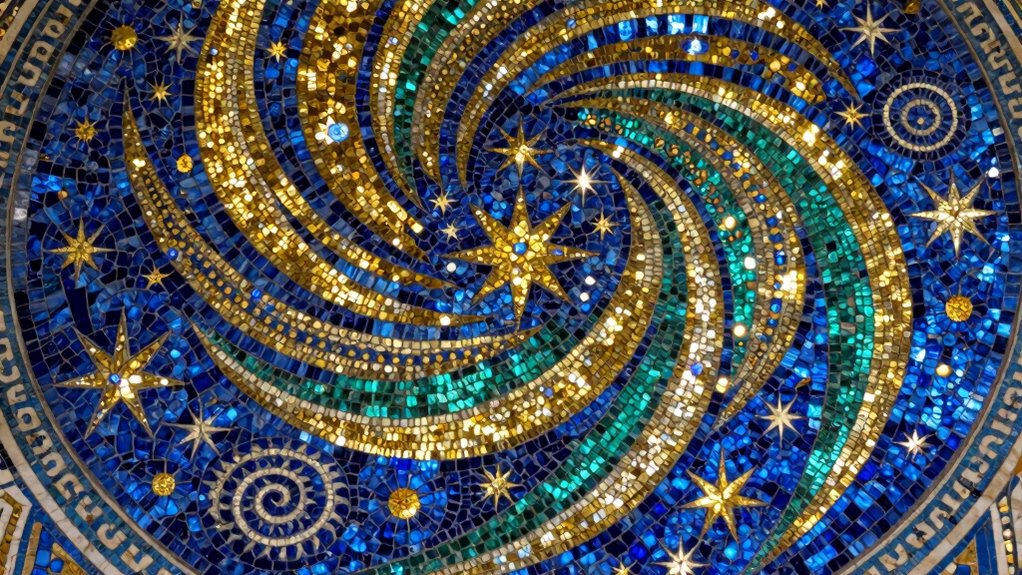

Stars, spirals, and rosettes keep showing up in design because they carry powerful cultural and symbolic meanings. You can see stars representing guidance, hope, and divine authority, while spirals symbolize growth, change, and life’s cycles. Rosettes reflect beauty and harmony. These motifs have deep roots in history and art, making them timeless elements that evoke universal feelings and ideas. If you’re curious to explore more about their meanings and uses, you’ll find plenty of fascinating insights ahead.

Get school and study supplies delivered free — and shop member deals
- Fast, free delivery on millions of items
- Access to Prime Big Deal Days deals on October 6–7
- Prime Video, Amazon Music and more included
Key Takeaways
- They symbolize universal concepts like guidance, growth, and beauty, making them meaningful and appealing in various designs.
- Their deep historical and cultural roots give them timeless relevance and familiarity across different societies.
- Their visually dynamic shapes evoke movement, transformation, and harmony, enhancing aesthetic appeal.
- They serve as recognizable symbols of divine authority, spirituality, and natural order in art and architecture.
- Their recurring presence in modern branding and logos leverages their powerful symbolic and cultural associations.

Have you ever wondered how stars, spirals, and rosettes add visual interest and meaning to design? These motifs have persisted across centuries because they carry deep cultural symbolism and fascinating historical origins. When you spot a star or spiral in art or architecture, you’re witnessing symbols that have resonated with humans for thousands of years. They’re more than just decorative elements; they embody universal ideas and cultural stories that continue to inspire.
Stars, for example, often symbolize guidance, hope, and divine presence. In many cultures, they serve as navigational tools, guiding travelers through darkness. Historically, stars have been used in religious iconography and royal emblems, representing celestial power or divine authority. The ancient Egyptians, Greeks, and Chinese all incorporated star symbols into their art, aligning them with spiritual beliefs and cosmology. When you see a star in a design today, it’s carrying that legacy—reminding us of our universal quest for direction and enlightenment. Additionally, the symbolic significance of stars extends into modern branding and logos, reinforcing their enduring cultural relevance.
Spirals, on the other hand, are among the oldest motifs in human history, with origins tracing back to prehistoric art. Their roots are evident in shell carvings, cave paintings, and megalithic structures. The spiral’s historical origins are linked to natural phenomena like whirlpools, galaxies, and weather patterns, making them a universal symbol of growth, evolution, and the cycle of life. Cultures worldwide have embedded this shape into their art to symbolize transformation and continuity. For you, a spiral might evoke feelings of movement and progress, connecting you to the ancient understanding of life’s perpetual change.
Rosettes, often resembling a stylized flower or a rosette-shaped pattern, have their own rich history. Their origins can be traced to classical antiquity, where they adorned Greek and Roman architecture, mosaics, and decorative arts. Historically, rosettes embody beauty, fertility, and the divine order of nature. They are used to frame important elements or serve as focal points, emphasizing the significance of the design. When you see rosettes, you’re witnessing a symbol rooted in the appreciation of natural beauty and the desire to evoke harmony and balance within a space. Additionally, their recurring presence across different cultures highlights their significance as a universal symbol of beauty and harmony, resonating across diverse artistic traditions.
As an affiliate, we earn on qualifying purchases.
Frequently Asked Questions
How Do Cultural Meanings Influence Star and Spiral Symbolism?
You see, cultural symbolism deeply influences how you interpret star and spiral designs, as they often hold spiritual significance. Different cultures assign unique meanings—like guidance, eternity, or divine power—to these symbols. When you incorporate them into design, you’re not just creating visuals; you’re conveying cultural stories and spiritual beliefs. Understanding these cultural symbols helps you connect more authentically with viewers, enriching the overall message and emotional impact of your work.
What Historical Periods Popularized Rosette Motifs in Design?
Did you know rosette motifs surged in popularity during medieval ornamentation and Renaissance artistry? These periods embraced intricate floral designs, symbolizing divine beauty and rebirth. Medieval artisans used rosettes to embellish architecture and manuscripts, while Renaissance artists incorporated them into frescoes and decorative arts. Their timeless appeal stems from their ornate, symmetrical nature, making rosettes a favorite feature across centuries, continually inspiring modern design.
Are There Specific Materials Best Suited for Creating Intricate Rosettes?
You should choose materials like wood, clay, or metal for creating intricate rosettes, as they offer durability and detail. Crafting techniques such as carving, casting, or molding work best for capturing fine details. For delicate or detailed designs, consider using lightweight materials like plaster or resin. These material choices and techniques allow you to achieve precision, depth, and a refined look, making your rosettes stand out beautifully.
How Do Stars and Spirals Affect Viewer Perception in Art?
Stars and spirals gently guide your eye, creating a visual focus that draws you in effortlessly. They evoke a sense of movement and harmony, subtly influencing your emotional impact. As your gaze follows these shapes, you experience feelings of wonder and curiosity, deepening your connection with the art. Their graceful curves and dynamic forms make the design feel lively and engaging, inviting you to explore and enjoy each intricate detail.
Can These Motifs Be Adapted for Modern Digital Design?
Yes, you can definitely adapt stars, spirals, and rosettes for modern digital design. These motifs enhance digital aesthetics by adding visual interest and a sense of movement. You should focus on seamless motif integration, blending these shapes into interfaces or backgrounds to create dynamic visuals. Experiment with color, scale, and animation to make these classic designs feel fresh and relevant in contemporary digital projects.
As an affiliate, we earn on qualifying purchases.
Conclusion
As you embrace these timeless motifs—stars, spirals, and rosettes—you find their allure woven into the fabric of design itself. They’re more than mere decorations; they’re symbols of eternity, movement, and beauty. Like the moon’s silent pull on the tides, these elements draw your eye and stir your soul. So next time you see them, remember—they’re not just patterns, but echoes of the universe’s endless dance, forever spinning in the art of creation.
As an affiliate, we earn on qualifying purchases.
Halloween Picks
halloween
As an affiliate, we earn on qualifying purchases.