For a strong all-around starting point, The Wild Robot pairs an accessible story with thoughtful questions about technology and nature. The Alien Next Door: The New Kid offers a lighter first-contact story for younger readers, while A Wrinkle in Time suits kids ready for a more demanding, idea-rich classic. The main tradeoff is between easy, funny reads and longer adventures with more peril, complex themes, or older language. Age labels help, but a child’s reading confidence and taste matter just as much. Read on for the full comparison and help matching a book to the reader.

Get school and study supplies delivered free — and shop member deals
- Fast, free delivery on millions of items
- Access to Prime Big Deal Days deals on October 6–7
- Prime Video, Amazon Music and more included
Key Takeaways
- The Wild Robot is the broadest starting point in this lineup: its approachable premise can suit readers who want science fiction without a dense science lesson.
- The Alien Next Door: The New Kid and Aliens for Breakfast lean toward humor and shorter reading sessions, making them more approachable than the longer survival and dystopian stories.
- A Wrinkle in Time offers a more layered classic adventure, but its older style may be a hurdle for readers who prefer contemporary pacing.
- The City of Ember and Last Day on Mars bring stronger survival stakes; choose them for readers who enjoy tension and can follow a longer plot.
- Several entries are connected to series or collected editions, including The Last Kids on Earth; check the edition and included books before buying if the child already owns part of a series.
| The Proto Project: A Sci-Fi Adventure of the Mind for Kids Ages 9-12 |  | Best for Thoughtful Middle-Grade Readers | Genre: Science fiction adventure | Age range: 9–12 | Story approach: Imaginative storytelling | VIEW LATEST PRICE | See Our Full Breakdown |
| The Alien Next Door 1: The New Kid |  | Best for Beginning Readers Who Like Humor | Series: The Alien Next Door | Series number: 1 | Subtitle: The New Kid | VIEW LATEST PRICE | See Our Full Breakdown |
| The Wild Robot (Volume 1) |  | Best for Nature-Minded Sci-Fi Readers | Series: The Wild Robot | Volume: 1 | Genre: Children’s science fiction novel | VIEW LATEST PRICE | See Our Full Breakdown |
| The City of Ember: The First Book of Ember |  | Best for Readers Who Want a Mystery-Led Dystopia | Series: The Books of Ember | Series position: First book | Title: The City of Ember | VIEW LATEST PRICE | See Our Full Breakdown |
| The Lost Space Treasure – A Novella |  | Best for Short Reading Sessions | Format: Paperback | Book type: Novella | Genre: Science fiction | VIEW LATEST PRICE | See Our Full Breakdown |
| Stuck in a Video Game |  | Best for Young Gamers | Genre: Science fiction adventure | Target age: 9+ | Format: Book | VIEW LATEST PRICE | See Our Full Breakdown |
| Last Day on Mars: A Compelling Space Adventure About Young Heroes and Survival on a Dying Planet for Kids (Ages 8-12) (Chronicle of the Dark Star, 1) |  | Best for Space Adventure Beginners | Series: Chronicle of the Dark Star | Volume: 1 | Target age: 8–12 | VIEW LATEST PRICE | See Our Full Breakdown |
| The Iron Heart of Mars (Space Bound) |  | Best for Mars Series Readers | Series: Space Bound | Title setting reference: Mars | Format: Not specified in supplied product data | VIEW LATEST PRICE | See Our Full Breakdown |
| A Wrinkle in Time (Newbery Medal Winner) |  | Best Classic Science Fiction Pick | Genre: Young adult fantasy with space and time travel | Award: Newbery Medal winner | Format: Book | VIEW LATEST PRICE | See Our Full Breakdown |
| The Last Kids on Earth: The Monster Box (Books 1-3) | 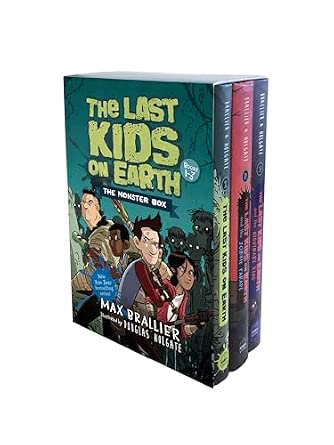 | Best Illustrated Box Set | Series: The Last Kids on Earth | Format: Box set | Books included: 1–3 | VIEW LATEST PRICE | See Our Full Breakdown |
| Aliens for Breakfast (A Stepping Stone Book) |  | Best for Early Readers | Series: Stepping Stone | Genre: Children’s science fiction | Premise: Extraterrestrials join breakfast | VIEW LATEST PRICE | See Our Full Breakdown |
| The Last Kids on Earth |  | Best for Humorous Monster Adventure | Series: The Last Kids on Earth | Genre: Children’s post-apocalyptic adventure | Setting: A world filled with monsters | VIEW LATEST PRICE | See Our Full Breakdown |
| The Last Dragon on Mars (The Dragonships Series) |  | Best for Sci-Fi Fantasy Crossover Seekers | Series: The Dragonships Series | Genre: Science fiction and fantasy crossover | Setting indicated by title: Mars | VIEW LATEST PRICE | See Our Full Breakdown |
| science fiction books for kid | Genre | Series | Format |
|---|---|---|---|
| The Proto Project: A Sci-Fi Ad | Science fiction adventure | — | Not specified |
| The Alien Next Door 1: The New | Children’s science fiction | The Alien Next Door | — |
| The Wild Robot | Children’s science fiction novel | The Wild Robot | — |
| The City of Ember: The First B | Not specified in supplied product data | The Books of Ember | Not specified |
| The Lost Space Treasure | Science fiction | — | Paperback |
| Stuck in a Video Game | Science fiction adventure | — | Book |
| Last Day on Mars: A Compelling | Space adventure | Chronicle of the Dark Star | — |
| The Iron Heart of Mars | Not specified in supplied product data | Space Bound | Not specified in supplied product data |
| A Wrinkle in Time | Young adult fantasy with space and time travel | — | Book |
| The Last Kids on Earth: The Mo | — | The Last Kids on Earth | Box set |
| Aliens for Breakfast | Children’s science fiction | Stepping Stone | — |
| The Last Kids on Earth | Children’s post-apocalyptic adventure | The Last Kids on Earth | Not specified in supplied product information |
| The Last Dragon on Mars | Science fiction and fantasy crossover | The Dragonships Series | — |
More Details on Our Top Picks
The Proto Project: A Sci-Fi Adventure of the Mind for Kids Ages 9-12
Ages 9–12 and its focus on imaginative, thought-provoking science fiction give this book a clear place for readers ready to think alongside an adventure. Compared with The Alien Next Door 1: The New Kid, which centers on school humor and an extraterrestrial newcomer, The Proto Project sounds better suited to kids looking for ideas as well as plot. The available description, though, does not explain its premise or specific themes, so I can’t say how challenging or science-focused the story is. That makes it a less predictable choice than The Wild Robot, whose robot and island setting are spelled out. Pick this one when the age range and cerebral adventure appeal; skip it if you need a well-described premise before choosing a book.
Pros:- Designed for readers ages 9–12
- Pairs an adventure with thought-provoking themes
- Encourages imaginative thinking
- Science-fiction framing may appeal to kids curious about speculative stories
Cons:- Available description gives no specific plot details
- No format, length, or illustration information is provided
- The level of science content and reading challenge is unclear
Best for: Readers ages 9–12 who enjoy imaginative adventures with thought-provoking themes
Not ideal for: Parents seeking a clearly described premise, specific science topics, or an illustrated format
- Genre:Science fiction adventure
- Age range:9–12
- Story approach:Imaginative storytelling
- Themes:Thought-provoking themes
- Intended audience:Kids
- Format:Not specified
Our verdict“Choose it for a 9–12-year-old who wants an imaginative, idea-led sci-fi adventure and is comfortable going in with little plot detail.”
The Alien Next Door 1: The New Kid
School-life humor makes this an approachable entry into kid-friendly science fiction: the new arrival is an alien, so an everyday first-day situation gets a playful extraterrestrial twist. Its vivid illustrations offer visual support that the description of The Proto Project does not promise, while the school setting gives younger or reluctant readers a familiar way into the story. Compared with The Wild Robot, which follows a robot adapting to wilderness, this book leans toward social mishaps and humor rather than survival and nature. The tradeoff is scope: it is described as short, and readers who want extended world-building or a longer adventure may finish quickly and want more. It fits best as a light, accessible read, not a sprawling sci-fi tale.
Pros:- Uses the familiar new-kid-at-school setup to introduce an alien character
- Blends humor with a warm tone
- Vivid illustrations add visual interest
- Short format can suit brief reading sessions
Cons:- Short length may leave readers wanting a fuller story
- School humor may be less appealing to readers seeking space exploration
- No age range or detailed format specifications are provided
Best for: Younger or reluctant readers who enjoy illustrated school stories with a humorous alien twist
Not ideal for: Readers seeking a long novel, complex world-building, or a sustained survival adventure
- Series:The Alien Next Door
- Series number:1
- Subtitle:The New Kid
- Genre:Children’s science fiction
- Setting:A new school
- Main character:An extraterrestrial newcomer
- Illustrations:Vivid illustrations
Our verdict“Pick this illustrated, humorous alien story for a child who prefers a quick school adventure to a longer novel like The Wild Robot.”
The Wild Robot (Volume 1)
Robot meets wilderness is the distinctive hook here: Roz must survive on a remote island and build connections with its inhabitants. That gives the science-fiction premise a strong emotional and ecological thread, with friendship, empathy, and nature shaping the adventure. Compared with The Alien Next Door 1: The New Kid, this is a fuller-feeling choice for readers interested in adaptation and the natural world rather than school comedy; compared with The City of Ember, its island setting shifts the focus from an enclosed human city to a robot learning from animals. Illustrations add visual appeal, though the story is described as having limited appeal for older readers. It makes the most sense for younger readers who want character growth and nature alongside speculative fiction, rather than a more mature or space-centered story.
Pros:- Clear, memorable premise of a robot stranded on a remote island
- Connects survival and friendship with themes of nature and empathy
- Illustrations add visual interest
- Roz’s adaptation gives the story a strong character arc
Cons:- May have limited appeal for older readers
- The island and nature focus may not suit readers seeking space travel
- Detailed format and age specifications are not provided
Best for: Younger readers who like robot characters, animal encounters, and stories about empathy and the natural world
Not ideal for: Older readers looking for a more advanced science-fiction challenge or a space-focused adventure
- Series:The Wild Robot
- Volume:1
- Genre:Children’s science fiction novel
- Main character:Roz, a robot
- Setting:A remote island
- Themes:Survival, friendship, nature, and empathy
- Illustrations:Illustrated
Our verdict“Choose this for a younger reader who wants an illustrated robot adventure grounded in nature and relationships.”
The City of Ember: The First Book of Ember
A first book in a series and its underground city premise make The City of Ember a choice for readers ready to follow a larger mystery. That puts it at a different angle from The Wild Robot, whose story follows one robot adapting to island life, and from The Lost Space Treasure – A Novella, which is explicitly presented as a compact space adventure. The provided product information contains no plot description, age range, format details, or themes, so I can’t responsibly say how its science-fiction elements compare in depth or reading level. Its series position suggests a continuing story, which may appeal to children who like mysteries and connected books, but readers wanting a self-contained, clearly described space story have better-supported choices elsewhere in this roundup. This pick depends on interest in the title’s city mystery and series opening.
Pros:- Identified as the first book in the Ember series
- City-centered title suggests a distinct setting from island or space adventures
- Series opening may suit readers who want a continuing story
Cons:- No product description was provided to clarify the plot
- Age suitability and reading level are unspecified
- Format, length, and specific science-fiction themes are not provided
Best for: Young readers drawn to underground-city mysteries and the start of a continuing story
Not ideal for: Families who need a confirmed age range, format, or detailed premise before choosing
- Series:The Books of Ember
- Series position:First book
- Title:The City of Ember
- Genre:Not specified in supplied product data
- Age range:Not specified
- Format:Not specified
Our verdict“Consider it for a child drawn to an underground-city series opener, but choose a better-described option if you need to confirm age fit or story content.”
The Lost Space Treasure – A Novella
Compact novella format is the reason to choose this entry: the supplied description promises a fast-paced space adventure that can fit shorter reading sessions. Unlike The City of Ember, whose product details provide no length or plot information, this book is explicitly framed as a concise installment with established series world-building and characters. That makes it easier to place for readers who already know the cast, though newcomers may have less context than they would with a clearly identified first volume such as The Wild Robot. The short form also has a cost: the description notes that some plot threads may remain unresolved, and readers wanting a broad, self-contained novel may find it slight. I’d reserve it for children who value quick momentum and are comfortable joining an ongoing adventure.
Pros:- Novella format supports shorter reading sessions
- Fast-paced science-fiction storyline
- Builds on an existing series world and cast
- Paperback format is specified
Cons:- Shorter form may leave plot threads unresolved
- Continuing-series context may make it less suitable as a starting point
- No age range or detailed series information is supplied
Best for: Readers familiar with the series who want a quick space adventure in shorter sessions
Not ideal for: Newcomers seeking a self-contained full-length novel or readers who dislike unresolved plot threads
- Format:Paperback
- Book type:Novella
- Genre:Science fiction
- Setting:Space
- Pacing:Fast-paced
- Series context:Continues adventures of an established cast
- ISBN-10:198960546X
Our verdict“Choose this paperback novella for a series reader who wants a brisk space adventure and accepts a shorter, potentially open-ended story.”
Stuck in a Video Game
Stuck in a Video Game makes science fiction feel familiar to kids who already know game worlds, turning the premise of being trapped inside one into an adventure about friendship and perseverance. Its stated audience starts at age nine, giving it a slightly older entry point than Last Day on Mars, which is aimed at ages eight to twelve and centers on survival in space. That makes this the more natural choice for a child drawn to gaming scenarios over planetary danger. The tradeoff is clear: the central hook may do little for readers who aren’t interested in video games, and the available description gives no detail about the story’s science or worldbuilding. I’d choose it for a gamer who wants a science fiction adventure with an encouraging message, rather than a reader seeking a strongly space-focused story.
Pros:- Video game setting gives young gamers an accessible science fiction hook.
- Friendship and perseverance add themes beyond the adventure premise.
- Stated age guidance of 9+ helps families choose for older middle-grade readers.
Cons:- Gaming premise may not appeal to children uninterested in video games.
- The supplied details do not specify the science fiction worldbuilding or series status.
Best for: Readers aged nine and up who enjoy video games and want an adventure centered on teamwork and persistence.
Not ideal for: Children who dislike gaming settings or are looking primarily for a space exploration story.
- Genre:Science fiction adventure
- Target age:9+
- Format:Book
- Setting:Video game world
- Audience fit:Children who enjoy video games
- Themes:Friendship, bravery, and perseverance
Our verdict“Choose this for a gamer aged nine or older who wants a friendship-focused science fiction adventure inside a game world.”
Last Day on Mars: A Compelling Space Adventure About Young Heroes and Survival on a Dying Planet for Kids (Ages 8-12) (Chronicle of the Dark Star, 1)
Last Day on Mars is the clearest pick here for a child ready to move into a space-centered middle-grade series: its setup pairs young heroes with survival on a dying planet, and the stated age range is eight to twelve. Compared with Stuck in a Video Game, it puts the danger in a planetary setting rather than a game, making it a better match for readers drawn to Mars and space peril. As volume one of Chronicle of the Dark Star, it also offers a series starting point. That commitment is a tradeoff: a reader wanting a self-contained story may prefer a standalone, and the supplied details say little about the book’s length, reading level beyond age guidance, or tone. I’d put it ahead of more comic post-apocalyptic fare when space survival is the specific draw.
Pros:- Space survival premise gives the adventure a clear science fiction focus.
- Age guidance of 8–12 targets middle-grade readers.
- First volume provides an entry point to the Chronicle of the Dark Star series.
Cons:- Starting a series may not suit readers who want a complete standalone story.
- The supplied description gives limited detail about reading complexity and presentation.
Best for: Readers aged eight to twelve who want a space survival adventure and are open to starting a series.
Not ideal for: Children seeking a standalone book, a comic-heavy presentation, or a story with detailed format information before choosing.
- Series:Chronicle of the Dark Star
- Volume:1
- Target age:8–12
- Genre:Space adventure
- Setting:A dying planet
- Central premise:Young heroes and survival
Our verdict“Pick this for an eight-to-twelve-year-old who wants young heroes facing danger on Mars and is happy to begin a series.”
The Iron Heart of Mars (Space Bound)
The Iron Heart of Mars (Space Bound) has a promising Mars-centered title, but the supplied product information contains no description, age guidance, or format details. That makes it harder to recommend confidently than Last Day on Mars, which at least identifies its audience and series position, or Stuck in a Video Game, which provides a clear premise and age threshold. Its distinct role is therefore for readers already seeking a Mars-themed book and willing to check the edition details before choosing. The title alone cannot tell me whether this is suitable for a particular child, how much science fiction it contains, or whether it stands alone. That uncertainty is the main tradeoff, so I would not make it a first science fiction pick without confirming the reading age and story context.
Pros:- Mars-focused title may appeal to children specifically interested in the planet.
- The title identifies it as part of Space Bound.
- A distinct candidate for readers exploring Mars-themed fiction.
Cons:- No description is provided to establish the plot or science fiction elements.
- No target age or format is provided to guide a child-specific choice.
- The supplied information is too limited to compare its reading level with Last Day on Mars.
Best for: Families already looking for a Mars-themed book who can confirm the age range and story details before buying.
Not ideal for: Adults choosing a first science fiction book for a child who need clear age, format, or plot information.
- Series:Space Bound
- Title setting reference:Mars
- Format:Not specified in supplied product data
- Target age:Not specified in supplied product data
- Genre:Not specified in supplied product data
- Product description:Not provided
Our verdict“Consider it for a Mars-curious reader only after checking the edition’s age guidance and story details.”
A Wrinkle in Time (Newbery Medal Winner)
A Wrinkle in Time is the classic choice in this group for readers who want space and time travel wrapped in a story about courage, family, and knowledge. Meg and her friends travel through space and time to rescue her father, giving the premise a more imaginative, fantasy-leaning feel than the planetary survival focus of Last Day on Mars. Its Newbery Medal status and reputation as a classic make it a strong option for families seeking a longstanding children’s novel. The tradeoff is accessibility: the description notes complex vocabulary, and some readers may find its style dated. Compared with the more contemporary, game-based hook of Stuck in a Video Game, this asks for more patience with language and a less familiar storytelling style.
Pros:- Space and time travel give the story a broad imaginative science fiction frame.
- Courage, family, and knowledge give the adventure emotional themes.
- Newbery Medal winner with a longstanding place in children’s literature.
Cons:- Complex vocabulary may challenge younger or less confident readers.
- Some readers may find the writing style dated.
Best for: Families seeking a classic space-and-time adventure for a confident young reader who can handle complex vocabulary.
Not ideal for: Younger children who need simpler language or readers who prefer contemporary gaming and survival premises.
- Genre:Young adult fantasy with space and time travel
- Award:Newbery Medal winner
- Format:Book
- Main characters:Meg Murry and her friends
- Central premise:Travel through space and time to rescue Meg’s father
- Themes:Courage, love, family, and knowledge
Our verdict“Choose this classic for a confident reader ready for a more language-rich space and time adventure.”
The Last Kids on Earth: The Monster Box (Books 1-3)
The Monster Box bundles the first three books in The Last Kids on Earth, making it the strongest choice here for readers who want several illustrated adventures together. Fast pacing, humor, and vibrant illustrations give it a different feel from Last Day on Mars, which centers on survival in space, and from A Wrinkle in Time, whose appeal leans more on language and imaginative travel. This set suits kids who respond to action and visual storytelling, though its post-apocalyptic monster adventure is a looser fit for a narrowly space-focused science fiction roundup. It also stops after book three, so children who get hooked will need to find later volumes separately. I’d choose it for a gift or for a young reader who benefits from illustrated, quick-moving stories.
Pros:- Includes the first three books, so readers can continue through multiple adventures.
- Vibrant illustrations support visual engagement.
- Fast-paced, humorous storytelling suits readers who prefer action-forward books.
- Box set format works well as a gift or library addition.
Cons:- Only includes books one through three; later titles must be obtained separately.
- Post-apocalyptic monster action is a less direct fit for readers seeking space-focused science fiction.
Best for: Middle-grade readers who enjoy illustrated, humorous post-apocalyptic adventures and want multiple books in one set.
Not ideal for: Children looking specifically for space exploration or a complete collection of the whole series.
- Series:The Last Kids on Earth
- Format:Box set
- Books included:1–3
- Audience:Middle-grade readers
- Presentation:Vibrant illustrations
- Story elements:Adventure, humor, and post-apocalyptic fun
Our verdict“Choose this set for an illustration-loving middle-grade reader who wants a humorous adventure series in a bundled format.”
Aliens for Breakfast (A Stepping Stone Book)
Aliens for Breakfast is the gentlest entry point here for children just starting to read science fiction on their own. Its playful extraterrestrial premise and short length make the story feel approachable, while the illustrations offer visual support that the more involved adventures, such as The Last Kids on Earth, may not provide in the same way. That simplicity is also its main limit: readers looking for elaborate world-building or sustained action may outgrow it quickly. Compared with The Last Dragon on Mars, whose supplied details point to a broader sci-fi/fantasy premise but offer little reading guidance, this book has a clearer fit for new readers. I’d choose it for an accessible first taste of aliens, not for a child already seeking a complex space saga.
Pros:- Short length suits developing readers
- Whimsical alien premise makes science fiction approachable
- Bright, age-appropriate illustrations support the story
Cons:- Limited story depth may not satisfy older or more advanced readers
- The supplied information does not specify age range, page count, or edition details
Best for: Children building independent reading confidence who enjoy silly alien stories and picture support
Not ideal for: Older or advanced readers seeking layered plots, extensive world-building, or a longer science-fiction adventure
- Series:Stepping Stone
- Genre:Children’s science fiction
- Premise:Extraterrestrials join breakfast
- Reading level:Early readers
- Illustrations:Bright, age-appropriate illustrations
- Length:Short; page count not provided
- ASIN:0394820932
Our verdict“Choose Aliens for Breakfast as a light, illustrated first science-fiction read for a child still gaining reading confidence.”
The Last Kids on Earth
The Last Kids on Earth suits readers who want a fast-moving story about kids facing danger together, with humor softening its post-apocalyptic monster setting. That mix gives it a different appeal from Aliens for Breakfast: this is better for children ready for bigger stakes and an ensemble adventure, while the shorter Stepping Stone book is more approachable for new readers. It also sits apart from The Last Dragon on Mars, which has a sci-fi/fantasy hook in its title but lacks plot details in the supplied information. The key tradeoff is genre fit: monsters and survival drive this book, so it is a looser match for a child specifically seeking spaceships or alien science. The provided listing also leaves edition and format details unclear.
Pros:- Combines adventure and humor to balance its dangerous setting
- Centers friendship and teamwork among a group of kids
- Monster-filled post-apocalyptic premise offers bigger stakes than Aliens for Breakfast
Cons:- Monster survival is a looser fit for readers seeking space-focused science fiction
- The supplied information does not clarify edition, format, or detailed specifications
Best for: Readers who enjoy funny, high-stakes adventures about friendship, monsters, and kids working together
Not ideal for: Children specifically seeking space exploration, alien encounters, or a quieter and shorter early-reader story
- Series:The Last Kids on Earth
- Genre:Children’s post-apocalyptic adventure
- Setting:A world filled with monsters
- Main characters:A group of kids
- Story elements:Adventure, humor, friendship, and new allies
- Format:Not specified in supplied product information
- ASIN:0670016616
Our verdict“Pick The Last Kids on Earth for a child who prefers comic monster peril and friendship-driven adventure to space-centered science fiction.”
The Last Dragon on Mars (The Dragonships Series)
The Last Dragon on Mars has the most obvious blend of science fiction and fantasy in this group: its title pairs Mars with a dragon, and the supplied data identifies it as part of The Dragonships Series. That could appeal to a child who wants an imaginative departure from the monster survival of The Last Kids on Earth or the breakfast-sized alien fun of Aliens for Breakfast. But the available description stops before explaining the plot, intended age, or reading level, so I can’t confidently match it to a particular kind of reader beyond that premise. Its series connection may interest children who like continuing adventures, though the listing provides no details about where this book sits in the series. Choose it for the concept, with the understanding that its fit is harder to judge from the available information.
Pros:- Combines a Mars setting with a dragon-centered fantasy hook
- Identified as part of The Dragonships Series
- Offers a distinct sci-fi/fantasy direction compared with the monster-focused The Last Kids on Earth
Cons:- Supplied information does not describe the plot or main characters
- Age range, reading level, format, and series position are not specified
Best for: Young readers drawn to stories that mix planetary settings with dragons and other fantasy elements
Not ideal for: Caregivers who need a clearly described plot, age range, reading level, or confirmed series starting point before choosing
- Series:The Dragonships Series
- Genre:Science fiction and fantasy crossover
- Setting indicated by title:Mars
- Fantasy element indicated by title:Dragon
- Plot details:Not provided
- Age range:Not provided
- ASIN:1665946520
Our verdict“Choose The Last Dragon on Mars for a child excited by dragons in a planetary setting if the premise matters more than having detailed reading guidance.”
How We Picked
I compared these books by how well they serve different young science fiction readers: accessibility, science-fiction ideas, pacing, emotional intensity, and the amount of reading commitment involved. I gave the broadest appeal to stories that pair a clear premise with a memorable adventure, while shorter, sillier books rank as better entry points and more demanding classics or survival tales suit readers ready for greater complexity. Series placement and collection format also matter because they affect where a child can start and whether a book duplicates something already on the shelf.
The ranking reflects fit, not a claim that every child will enjoy the same style. I treated science fiction broadly, including alien encounters, robots, space survival, and speculative settings, while favoring books where those ideas meaningfully shape the story. Because editions and age ranges can vary, I recommend checking the specific listing’s contents and matching its reading demands to the child rather than relying on age labels alone.
| science fiction books for kid | Format |
|---|---|
| The Proto Project: A Sci-Fi Ad | Not specified |
| The Alien Next Door 1: The New | — |
| The Wild Robot | — |
| The City of Ember: The First B | Not specified |
| The Lost Space Treasure | Paperback |
| Stuck in a Video Game | Book |
| Last Day on Mars: A Compelling | — |
| The Iron Heart of Mars | Not specified in supplied product data |
| A Wrinkle in Time | Book |
| The Last Kids on Earth: The Mo | Box set |
| Aliens for Breakfast | — |
| The Last Kids on Earth | Not specified in supplied product information |
| The Last Dragon on Mars | — |
Factors to Consider When Choosing Science Fiction Books For Kids
The right pick depends on what a child wants from a story and how much reading challenge feels enjoyable. These broader checks can help you avoid choosing by cover art or the word “space” alone.
Match the Story’s Complexity to Reading Confidence
A child may enjoy advanced ideas while still preferring short chapters and familiar vocabulary. Think about whether they read independently, enjoy being read to, or switch between the two; the same book can work differently in each setting. Older classics may use sentence patterns and cultural references that call for more support. A common mistake is treating an age band as a strict reading-level guarantee. When uncertain, preview a page or two and check whether the child can follow the prose without losing the fun. A slightly easier book they finish can build more momentum than a more challenging title they set aside.
Choose the Kind of Science Fiction That Hooks Them
Science fiction for children includes many story engines: meeting an alien, living with a robot, surviving on another planet, or exploring a changed world. Start with the kind of question the child already likes to imagine, rather than assuming every young reader wants rockets and technical details. Some books use speculative ideas mainly for humor, while others focus on friendship, ethics, or danger. If a child likes animals, a robot companion may be a natural bridge; if they enjoy puzzles, a strange society may hold their attention. The tradeoff is that a narrow match can be instantly appealing but may offer less variety. A broader adventure can introduce new interests, though it may take longer to click.
Check Intensity Before Choosing a Survival Story
Peril can make a book gripping, but children differ in how they respond to danger, loss, and uncertain endings. Consider whether the reader seeks suspense or tends to dwell on frightening scenes after reading. Space survival and dystopian settings often involve higher stakes than school humor or a playful alien visit. A familiar adult can preview the book or consult a detailed synopsis when a child is sensitive to these themes. Avoid assuming that a science-fiction setting makes a story emotionally light. The best balance gives a child enough tension to care while leaving them comfortable continuing the story.
Decide Whether a Series or Standalone Fits Better
A series can help a reluctant reader return to characters they already know, and it gives enthusiastic readers a clear next step. It can also mean buying multiple volumes before knowing whether the first one suits the child. Check whether a title is the first installment, a later book, or a boxed collection. Collections may be convenient, but they can duplicate volumes already owned or commit shelf space to more story than the child wants. A standalone can be a lower-commitment way to sample a new author or subgenre. Choose a series when continuity is part of the appeal; choose a self-contained story when you want a complete arc in one book.
Look at Format and Reading Occasion
Chapter length, illustration density, trim size, and whether the book is a single volume or collection all shape how it works in daily life. A shorter, illustrated read may be easier to carry and pick up during brief reading windows. A longer novel can be rewarding at bedtime or for a child who likes staying with one world over many sessions. Families reading aloud may value vivid scenes and clear stopping points more than independent readers do. Check the edition details because formats can differ even when the title is the same. Pick the format that fits the child’s habits, not just the one that looks most substantial on a shelf.
Frequently Asked Questions
Which book is a good first science fiction read for a child who is unsure about the genre?
Start with a story whose hook overlaps with something the child already likes, such as humor, animals, or school life. The Alien Next Door: The New Kid and Aliens for Breakfast offer lighter, more comic routes into alien stories, while The Wild Robot connects a speculative premise with an accessible character-focused adventure. A child who enjoys fantasy may also be open to science fiction that emphasizes wonder over technical detail. If they are hesitant, borrow or preview one book before choosing a longer series. A quick, enjoyable first experience matters more than introducing the most famous title.
Should I choose a funny book or a serious space adventure?
Let the child’s current reading mood guide you. Humor and shorter episodes can make reading feel low-pressure, while survival and high-stakes plots suit readers who actively seek suspense. Serious does not automatically mean more worthwhile, and funny does not mean shallow; they simply offer different kinds of momentum. If you are unsure, ask whether the child wants to laugh, solve a mystery, or worry about what happens next. You can also alternate tones across reading choices to keep the genre from feeling repetitive. For a sensitive reader, preview the description and consider whether danger is central to the story.
Are older science fiction classics still a good choice for kids?
They can be, especially for readers who enjoy unusual ideas, older settings, or discussion after reading. A classic may have a different pace and vocabulary from contemporary middle-grade fiction, so enthusiasm for the premise does not always mean it will be an easy independent read. Consider reading the opening together or choosing a shared read-aloud. If the child loses interest in the style, a newer book can build confidence before returning to the classic. The best choice depends on the reader’s tolerance for slower exposition and unfamiliar language, not the book’s reputation alone.
How can I tell whether a book’s themes or scary scenes will suit my child?
Read a detailed synopsis and look for the source of tension: alien threat, environmental danger, separation, or a society in crisis. Those elements can feel very different to different children, even when the reading level is similar. Ask the child what kinds of scenes they prefer to avoid, and treat their answer as useful buying information. For a gift, a lighter comic story is often a safer starting point than a survival-focused adventure when preferences are unknown. Reading a sample chapter can reveal tone better than a short cover description. You can also read together so the child has room to pause and talk about a difficult scene.
What should I check before buying a series collection or boxed set?
Confirm which volumes are included and whether the collection starts at the beginning of the series. Check the child’s shelf for books they may already own, especially when a collection shares its name with an individual volume. Look at the format and physical size too, since a multi-book set can be less convenient to carry than separate paperbacks. A collection makes sense when the reader is already committed to the characters or wants several installments at once. For a first try, a single opening volume keeps the choice flexible. Product listings can use similar titles for different formats, so verify the contents carefully.
Conclusion
For the best overall fit, choose The Wild Robot if you want an accessible adventure with a distinctive speculative premise. For best value in reading approach, choose The Alien Next Door: The New Kid as a lighter entry point, especially for a child who likes humor; check the edition and series format before ordering. For a premium-feeling classic, choose A Wrinkle in Time when the reader is ready for denser language and a more layered journey. For beginners, try Aliens for Breakfast for a short, comic introduction to alien fiction. Readers seeking higher stakes can look to Last Day on Mars, while fans of interconnected adventures may prefer The Last Kids on Earth after confirming which volumes they need. Match the book to the child’s preferred tone and reading confidence, and the science-fiction premise is more likely to keep them turning pages.
Fall Picks
fall essentials
As an affiliate, we earn on qualifying purchases.