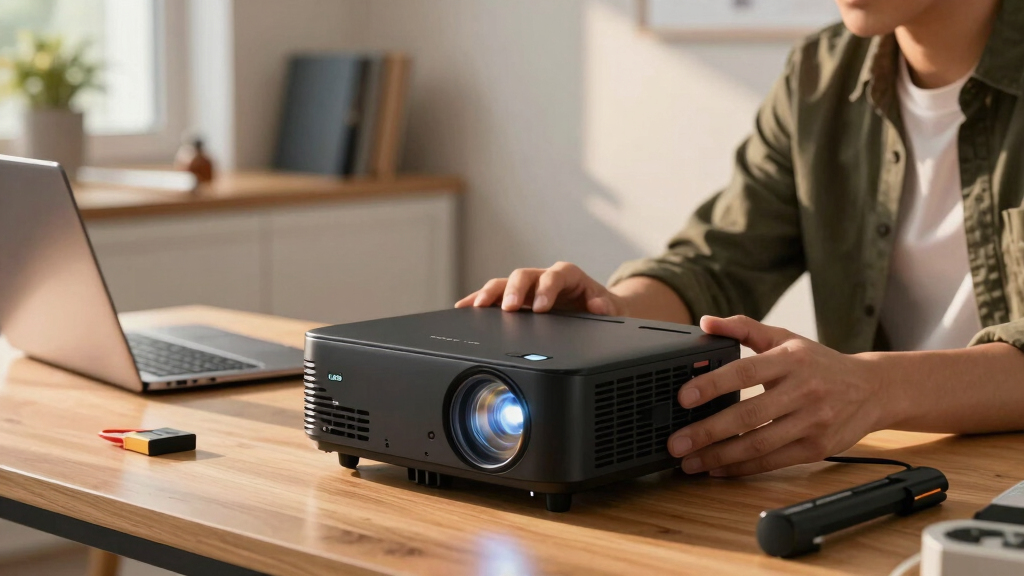

Finding the best short throw laser projector for engineering students means balancing high resolution, brightness, and ease of setup within a compact form. The Optoma GT3900UHD 4K UHD stands out for its crisp 4K clarity, ideal for detailed technical drawings. The Epson LifeStudio Grand Plus offers a more budget-friendly, user-friendly experience, perfect for classroom and small group work. As you compare options, keep in mind that tradeoffs often involve brightness versus resolution, or price versus advanced features. Continue reading for a detailed breakdown of these projectors and what makes each one unique.

Prime made for students and young adults
- Fast, free delivery for dorm and study essentials
- Prime Video and Amazon Music included
- Member-only deals
Key Takeaways
- Resolution quality varies significantly; 4K models like the Optoma GT3900UHD deliver sharper images, essential for technical accuracy.
- Brightness levels (lumens) are critical; projectors like the Epson LS500 excel in well-lit environments, while others may struggle with ambient light.
- Short throw distance is a common feature, but actual throw ratios differ, affecting setup flexibility in smaller or cluttered rooms.
- Built-in smart features such as Android TV or Google TV can enhance usability but may add to the cost and complexity.
- Tradeoffs between compact size and performance exist; some ultra-compact models sacrifice brightness or resolution for portability.
| Optoma GT3900UHD 4K UHD Short Throw Laser Projector |  | Best Overall for Brightness and Versatility | Native Resolution: 3840 x 2160 | Display Resolution Maximum: 3840 x 2160 | Brightness: 4,000 lumens | VIEW LATEST PRICE | See Our Full Breakdown |
| Epson LifeStudio Grand Plus Ultra Short Throw Laser Projector |  | Best for Immersive Large Displays and Built-in Sound | Projection Size: Up to 150 inches | Resolution: 4K HDR | Brightness: 4,000 lumens | VIEW LATEST PRICE | See Our Full Breakdown |
| Optoma GT2400HDR Full HD 1080p Short Throw Laser Projector |  | Best for Brightness and Durability in Gaming and Simulations | Resolution: Full HD 1080p | Brightness: 4,200 lumens | Laser Light Source: 30,000 hours | VIEW LATEST PRICE | See Our Full Breakdown |
| Optoma ML1080UST 1080p Photon Go Ultra Short Throw Full HD LED Triple Laser DLP Google TV Smart Projector |  | Best for Portability and Smart Features | Resolution: 1920 x 1080 | Brightness: 650 lumens | Battery Life: 1.5 hours | VIEW LATEST PRICE | See Our Full Breakdown |
| WEMAX Nova Pro 4K Ultra Short Throw Projector with Google TV |  | Best for Ultra Short Throw and Vivid 4K Display | VIEW LATEST PRICE | See Our Full Breakdown | |||
| Optoma GT2000HDR Ultra-Compact Short Throw Full HD Home Laser Projector |  | Best for Portability and Eco-Friendly Use | Brightness: 3500 lumens | Resolution: Full HD | Design: Eco-Friendly | VIEW LATEST PRICE | See Our Full Breakdown |
| Hisense PX4-Pro Ultra Short Throw RGB Laser Cinema Projector |  | Best for Cinematic and Gaming Experience | Brightness: 3500 ANSI Lumens | Contrast Ratio: 6500:1 | Projection Size: 80″ to 200″ | VIEW LATEST PRICE | See Our Full Breakdown |
| Epson EpiqVision Ultra LS500 Laser Ultra Short Throw Projector, 4000 lumens, 4K PRO-UHD, HDR, Android TV, Google Assistant, HDMI 2.0, built-in speakers – Black (Renewed) |  | Best for Bright, Large-Scale 4K Presentations in Versatile Settings | Brightness: 4000 lumens | Resolution: 4K PRO-UHD | Projection Size: up to 130 inches | VIEW LATEST PRICE | See Our Full Breakdown |
| AWOL VISION LTV-3000 Pro 4K 3D Ultra Short Throw Triple Laser Projector with Dolby Vision & Atmos |  | Best for Immersive Home Theater and Large-Scale Presentations | Projection Technology: Triple Laser | Resolution: 4K UHD | HDR: Dolby Vision, HDR10+ | VIEW LATEST PRICE | See Our Full Breakdown |
| top short throw laser projector for engineering student | Brightness | Resolution |
|---|---|---|
| Optoma GT3900UHD 4K UHD Short | 4,000 lumens | — |
| Epson LifeStudio Grand Plus Ul | 4,000 lumens | 4K HDR |
| Optoma GT2400HDR Full HD 1080p | 4,200 lumens | Full HD 1080p |
| Optoma ML1080UST 1080p Photon | 650 lumens | 1920 x 1080 |
| WEMAX Nova Pro 4K Ultra Short | — | — |
| Optoma GT2000HDR Ultra-Compact | 3500 lumens | Full HD |
| Hisense PX4-Pro Ultra Short Th | 3500 ANSI Lumens | — |
| Epson EpiqVision Ultra LS500 L | 4000 lumens | 4K PRO-UHD |
| AWOL VISION LTV-3000 Pro 4K 3D | — | 4K UHD |
More Details on Our Top Picks
Optoma GT3900UHD 4K UHD Short Throw Laser Projector
The Optoma GT3900UHD earns its spot as the best overall choice thanks to its stunning 4K UHD resolution and a brightness of 4,000 lumens, making it suitable for both small spaces and bright environments. Compared to the WEMAX Nova Pro, it offers a brighter image, which is vital for engineering students working in well-lit rooms. Its short throw ratio allows large images from tight spaces, ideal for detailed technical drawings or presentations. While its high brightness is a plus, it does increase power consumption and potentially raises costs. The lack of detailed audio features might be a downside for those seeking an all-in-one solution. This projector makes the most sense for students who need high image quality, flexibility, and long-term durability without compromising on brightness.Pros:- Stunning 4K UHD resolution with vibrant colors and HDR support
- Bright 4,000 lumens for clear images in ambient light
- Short throw lens ideal for small spaces and golf simulators
- Laser lifespan of 30,000 hours reduces maintenance
Cons:- High brightness leads to increased power consumption
- Limited details on audio features and built-in sound
Best for: Engineering students who value high-resolution images and bright visuals in small or well-lit rooms.
Not ideal for: Students seeking a budget-friendly option or those who prioritize integrated audio for presentations without external speakers.
- Native Resolution:3840 x 2160
- Display Resolution Maximum:3840 x 2160
- Brightness:4,000 lumens
- Throw Ratio:0.496:1
- Laser Life:30,000 hours
- Connectivity:HDMI
Our verdict“This projector is perfect for engineering students who need high-quality, bright images in compact spaces and are prepared for a higher price point.”
Epson LifeStudio Grand Plus Ultra Short Throw Laser Projector
The Epson LifeStudio Grand Plus stands out for delivering an enormous 150-inch 4K HDR picture from ultra short distances, making it ideal for presentations or collaborative projects on a grand scale. Compared with the Optoma GT3900UHD, it emphasizes size and immersive experience, especially with its built-in Bose audio, which simplifies setup and enhances sound quality. It’s especially suited for group work and detailed technical reviews. However, its close wall placement requirement means it’s less flexible in smaller or cluttered rooms. The higher price may deter budget-conscious students, and details on lamp life remain unspecified, which could impact long-term costs. This model is best for students who prioritize large-scale visuals and integrated sound without external speakers.Pros:- Enormous 150-inch display for immersive viewing
- Bright 4,000 lumens with vivid colors and HDR
- Built-in Bose audio enhances sound clarity
- Supports gaming with multiple HDMI ports
Cons:- Requires very close wall distance due to ultra short throw
- Potentially high purchase price
Best for: Engineering students who need large, vivid displays with excellent sound for group or classroom settings.
Not ideal for: Students with limited space or those on a tight budget who can’t accommodate its close placement requirements.
- Projection Size:Up to 150 inches
- Resolution:4K HDR
- Brightness:4,000 lumens
- Technology:3LCD
- Connectivity:3 HDMI ports
- Sound:Bose audio
Our verdict“Ideal for students needing large, vivid images and integrated audio for collaborative or presentation-heavy projects.”
Optoma GT2400HDR Full HD 1080p Short Throw Laser Projector
The Optoma GT2400HDR offers a compelling choice for engineering students focused on gaming, golf simulation, or detailed visuals with its high brightness of 4,200 lumens and durability features. Its 1080p resolution isn’t as sharp as 4K options, but it compensates with a laser source that lasts up to 30,000 hours and dust-resistant design, making it a reliable workhorse. Compared to 4K models like the Optoma GT3900UHD, it’s more affordable and easier to maintain but sacrifices some detail clarity. Its short throw distance means it requires specific setup space, which could be limiting in small rooms. This projector is best suited for students who prioritize brightness, durability, and cost-effectiveness over ultra-high resolution.Pros:- High brightness of 4,200 lumens suitable for various lighting conditions
- Laser light source with 30,000 hours lifespan for low maintenance
- Dust-resistant design enhances durability
Cons:- Limited resolution at 1080p compared to 4K options
- Setup may require specific space due to short throw
Best for: Engineering students who need a durable, high-brightness projector for gaming or simulation activities on a budget.
Not ideal for: Students seeking the highest resolution for detailed technical work or those with limited space for short throw setup.
- Resolution:Full HD 1080p
- Brightness:4,200 lumens
- Laser Light Source:30,000 hours
- Dust Protection:IP6X-rated
Our verdict“Best for students needing a bright, durable projector for gaming and simulations without the demand for 4K clarity.”
Optoma ML1080UST 1080p Photon Go Ultra Short Throw Full HD LED Triple Laser DLP Google TV Smart Projector
The Optoma ML1080UST provides a versatile, portable solution with a 1080p display, triple laser RGB technology, and built-in Google TV, making it suitable for students who move between classes or study spaces. Its auto keystone and focus features simplify setup, while the 1.5-hour battery limits extended use, making it less ideal for prolonged projects. Compared to larger, more permanent projectors like the WEMAX Nova Pro, it sacrifices some image size for mobility. Its brightness of only 650 lumens restricts use to darker rooms, and its higher price reflects the premium smart features. This projector is best for students who need a compact, smart, and easy-to-use device for quick presentations or casual use.Pros:- Compact, portable design with built-in battery
- High-resolution 1080p with HDR support
- Smart Google TV with access to streaming apps
- Auto focus and keystone correction for quick setup
Cons:- Limited battery life of only 1.5 hours
- Brightness may be insufficient in well-lit rooms
Best for: Engineering students needing a portable projector with smart TV features for quick presentations and on-the-go use.
Not ideal for: Students working in bright environments or requiring large images for detailed technical displays.
- Resolution:1920 x 1080
- Brightness:650 lumens
- Battery Life:1.5 hours
- Projection Technology:Triple Laser RGB
- Maximum Image Size:100 inches
- Built-in OS:Google TV
Our verdict“Ideal for students who prioritize portability and smart features over maximum brightness or size.”
WEMAX Nova Pro 4K Ultra Short Throw Projector with Google TV
The WEMAX Nova Pro excels in delivering a 150-inch 4K HDR display from just 19 inches away, making it ideal for small spaces where large, detailed images are necessary. Its native 4K resolution and HDR10 support provide vibrant images suitable for technical visuals and presentations. Compared to the Optoma GT3900UHD, it offers a larger screen from a shorter distance, but its brightness of 2100 ISO lumens may struggle in brightly lit environments. The built-in Google TV and Dolby Audio enhance its smart capabilities, though setup can be complex due to numerous connectivity options. It’s best suited for students who want an immersive experience in a compact form factor with smart features, but less so for those in brightly lit rooms.Pros:- Ultra short throw design for large images from a small distance
- Native 4K resolution with HDR10 and HLG support
- Built-in Google TV offers extensive content
- Immersive 150-inch display from 19 inches away
Cons:- Requires dark environment for best picture quality
- Setup can be complex due to multiple connectivity options
- Brightness may be insufficient in very bright rooms
Best for: Engineering students who need a compact, high-resolution projector for immersive displays and smart streaming in dark environments.
Not ideal for: Students with very bright rooms or limited space for ultra short throw setup who prioritize high brightness.
Our verdict“Ideal for students seeking a large, detailed display with smart streaming features in a dark or controlled lighting environment.”
Optoma GT2000HDR Ultra-Compact Short Throw Full HD Home Laser Projector
This compact laser projector excels in portability, making it ideal for engineering students who need a lightweight device they can move around easily. Its 3500 lumens brightness ensures clear images even in moderately lit rooms, but unlike the Hisense PX4-Pro, it lacks detailed connectivity options and specifics on throw distance, which could limit setup flexibility. The eco-friendly design and external power supply add convenience for long-term use and sustainability. Compared with larger, more feature-rich models, this option sacrifices some advanced features for simplicity and ease of transport. It’s best suited for students who prioritize mobility over extensive features or large-screen setups.
Pros:- High brightness suitable for various lighting conditions
- Compact and portable design
- Eco-friendly features
Cons:- Limited details on connectivity options
- No information on throw distance or screen size compatibility
Best for: Engineering students who need a portable projector for presentations and study sessions in different locations
Not ideal for: Students seeking a projector with extensive connectivity options or large, cinematic displays for home theater use
- Brightness:3500 lumens
- Resolution:Full HD
- Design:Eco-Friendly
- Power Supply:External
Our verdict“This projector is a strong choice for students needing a lightweight, portable device for basic presentations and study use.”
Hisense PX4-Pro Ultra Short Throw RGB Laser Cinema Projector
The Hisense PX4-Pro stands out for its vibrant 3500 ANSI lumens and ultra short throw design, supporting large images from 80 to 200 inches. Its RGB laser technology delivers vivid colors and high contrast, making it ideal for engineering students who want multimedia-rich presentations or immersive gaming sessions. Features like Dolby Vision, Dolby Atmos, and low-latency gaming support give it a cinematic edge over more basic models like the Optoma GT2000HDR. However, the setup process can be complex, and it requires a suitable wall or screen for optimal image quality. This makes it better suited for students willing to invest time in calibration and setup for a premium viewing experience.
Pros:- Bright and vivid image quality with high contrast and color accuracy
- Supports large screen sizes up to 200″ with ultra short throw design
- Immersive cinematic and audio experience with Dolby Vision and Dolby Atmos
- Excellent gaming performance with low latency and adaptive sync
Cons:- Requires a suitable wall or screen for optimal viewing
- High-end features come at a premium price
- Setup and calibration might be complex for some users
Best for: Students wanting a top-tier multimedia device for presentations, gaming, and entertainment in a dedicated room
Not ideal for: Students with limited space or those seeking a simple, plug-and-play projector without complex setup requirements
- Brightness:3500 ANSI Lumens
- Contrast Ratio:6500:1
- Projection Size:80″ to 200″
- Color Technology:RGB Pure Triple Color Laser
- Throw Ratio:0.2
- Audio:Devialet tuned, Dolby Atmos 4.0.2, 66W (peak 198W)
Our verdict“This projector is ideal for students seeking a high-performance, cinematic experience with gaming and multimedia capabilities, willing to handle a complex setup.”
Epson EpiqVision Ultra LS500 Laser Ultra Short Throw Projector, 4000 lumens, 4K PRO-UHD, HDR, Android TV, Google Assistant, HDMI 2.0, built-in speakers – Black (Renewed)
The Epson LS500 offers a bright 4000 lumens 4K HDR image up to 130 inches, making it perfect for engineering students needing clear, sharp visuals in well-lit environments. Its ultra-short throw design simplifies setup close to the wall, unlike the Hisense PX4-Pro which requires precise calibration. The built-in Android TV and Google Assistant add smart features, though the product being renewed may introduce some uncertainty about warranty and condition. Compared with the Optoma GT2000HDR, it provides a higher brightness and 4K resolution but may lack some gaming and cinematic features. This model fits students who prioritize high brightness and smart capabilities for versatile, large-format presentations.
Pros:- Bright and vivid 4K HDR picture up to 130 inches
- Ultra-short throw for easy setup near wall
- Advanced 4K PRO-UHD and laser technology for sharp images
- Built-in Android TV with smart features
Cons:- Requires a wireless network for some functionalities
- Performance of color brightness may vary depending on usage
- Refurbished product may have limited warranty or condition
Best for: Students who need a bright, 4K-ready projector for professional presentations or multimedia projects in well-lit rooms
Not ideal for: Students seeking a budget-friendly or non-renewed projector for casual or infrequent use
- Brightness:4000 lumens
- Resolution:4K PRO-UHD
- Projection Size:up to 130 inches
- Technology:Laser-Array, 3LCD
- HDR:10-bit HDR
- Connectivity:HDMI 2.0, Android TV, Wi-Fi
Our verdict“This projector suits students needing a high-brightness, large-format display with smart features for versatile environments, accepting the risks of a renewed product.”
AWOL VISION LTV-3000 Pro 4K 3D Ultra Short Throw Triple Laser Projector with Dolby Vision & Atmos
The AWOL VISION LTV-3000 Pro is tailored for students who want a combination of high-quality visuals and immersive audio, supporting 4K, Dolby Vision, and Atmos. Its built-in center channel speaker simplifies setup, and the ultra short throw ratio allows large screens up to 150 inches with minimal space. The support for 3D content and smart home integration broadens its versatility. Compared to the Hisense PX4-Pro, it emphasizes cinematic and home theater experiences over gaming, but it performs best in darker rooms due to its high-end visuals. The installation may require precise placement, making it less suitable for quick or casual setups.
Pros:- Supports 4K UHD, Dolby Vision, HDR10+, and Dolby Atmos for immersive visuals and sound
- Built-in center channel speaker enhances dialogue clarity
- Ultra short throw design supports large screens with minimal space
- Energy-efficient laser reduces power consumption
Cons:- Best suited for darker environments; less effective in bright rooms
- Installation requires precise placement for optimal focus
- Requires compatible 3D glasses and content for 3D viewing
Best for: Students seeking a premium home theater experience with advanced visuals and sound for presentations or entertainment
Not ideal for: Students with limited space or those who need a simple, easy-to-set-up projector without immersive audio or 3D support
- Projection Technology:Triple Laser
- Resolution:4K UHD
- HDR:Dolby Vision, HDR10+
- Screen Size:up to 150 inches
- Throw Ratio:0.25:1
- Speaker:Built-in center channel
Our verdict“This projector is ideal for students wanting a cinematic, immersive experience at home, provided they can manage precise placement and darker room conditions.”

How We Picked
These projectors were selected based on performance, usability, build quality, and value specifically for engineering students. Priority was given to models offering high resolution (preferably 4K), sufficient brightness for well-lit environments, and short throw capabilities that allow flexible placement in small spaces. Additional considerations included smart features for ease of use, durability, and user reviews highlighting real-world reliability. The ranking reflects a balance of these factors, favoring models that deliver clarity and brightness without excessive complexity or cost, ensuring practical applicability for engineering projects and presentations.Factors to Consider When Choosing Top Short Throw Laser Projector For Engineering Students
When choosing a short throw laser projector for engineering students, several key factors influence how well a model will meet your needs. Understanding these can help you avoid common pitfalls like overspending on features you won’t use or selecting a projector that can’t handle your lighting conditions. Here are the main considerations:Resolution and Image Clarity
High resolution is vital for engineering work where detail matters, especially for technical drawings, CAD models, and fine text. 4K projectors like the Optoma GT3900UHD provide exceptional clarity, but they come at a higher cost. If budget is tight, a good Full HD (1080p) model may suffice for most classroom presentations, though it may lack the crispness required for very detailed work. Keep in mind that higher resolution often demands more powerful processing and may impact compatibility with existing devices.
Brightness and Ambient Light Handling
Brightness measured in lumens determines how well a projector performs in well-lit rooms. For engineering students who often work in classrooms or labs with ambient light, a model with at least 3000 lumens is recommended. Brightness tradeoffs include increased power consumption and sometimes larger form factors. Conversely, in darker environments, you can opt for a slightly dimmer, more compact projector without sacrificing image quality.
Throw Ratio and Room Size
Short throw projectors typically have a throw ratio that allows large images from just a few feet away. However, the exact ratio influences placement flexibility. If your workspace is tight, look for projectors with a ratio of 0.2 to 0.3. More generous ratios can accommodate larger rooms but may require more space. Misjudging this can lead to setup issues or suboptimal image sizes, which hampers usability for detailed engineering visuals.
Smart Features and Connectivity
Built-in smart platforms like Android TV or Google TV streamline connectivity, allowing you to project directly from apps or cloud services. These features add convenience but can increase cost and complexity. Consider whether you need native smart features or if you’re comfortable using external devices like laptops or streaming sticks. Compatibility with your existing devices and ease of setup are key to avoiding frustration.
Size, Portability, and Durability
Portability matters if you plan to move your projector between classrooms or labs. Ultra-compact models are easier to carry but may compromise brightness or resolution. Durability and build quality are also important—look for models with sturdy casings and reliable components, especially if you’ll use the projector frequently or in various environments. Balance portability with performance to find the best fit for your daily use.
Frequently Asked Questions
Can I use a short throw laser projector outdoors for engineering presentations?
While many short throw laser projectors are designed primarily for indoor use, some models with high brightness ratings—such as over 4000 lumens—can handle outdoor environments during daytime or in shaded areas. However, outdoor use introduces challenges like ambient light and weather conditions, so it’s important to select a projector with sufficient brightness and durability. For regular outdoor presentations, consider models explicitly rated for outdoor use or with higher lumens to ensure clear visibility.
Is 4K resolution necessary for engineering projects, or is 1080p enough?
For most engineering applications, especially detailed CAD work and technical drawings, 4K resolution can significantly enhance clarity and precision. However, 1080p projectors often provide adequate image quality for general presentations and are more budget-friendly. If your work involves fine detail and you want the best visual accuracy, investing in a 4K model makes sense. Otherwise, a high-quality Full HD projector may meet your needs at a lower cost.
How important is built-in smart TV functionality in a projector for engineering students?
Built-in smart TV features add convenience by allowing direct streaming and app access, reducing the need for external devices. For engineering students who frequently share content or need quick access to cloud-based resources, this can streamline presentations. However, these features often increase cost and may introduce complexity. If you prefer simplicity or already use a laptop or tablet for projections, a projector without smart features might be a better value and easier to operate.
What should I prioritize: brightness or resolution?
Prioritizing brightness is crucial if you’ll use the projector in well-lit rooms or with ambient light. High brightness ensures your images stay visible and clear under these conditions. Resolution, on the other hand, impacts the sharpness of detailed visuals. For engineering students, the choice depends on your typical environment and tasks. If clarity of fine details is paramount, lean toward higher resolution; if lighting is a concern, higher lumens should take precedence.
Are ultra-short throw projectors more prone to maintenance or issues?
Ultra-short throw projectors tend to have complex optics and laser components, which can mean higher maintenance costs or risks of alignment issues over time. However, quality models from reputable brands are generally reliable and designed for long-term use. Regular cleaning and proper setup can mitigate many common problems. When choosing a model, consider the manufacturer’s warranty and user reviews regarding durability to ensure long-term performance.
Conclusion
For most engineering students, the Optoma GT3900UHD offers the best balance of resolution and brightness, making it the top overall pick. Those on a tighter budget or seeking ease of use might favor the Epson LifeStudio Grand Plus for its straightforward setup and affordability. If you’re looking for a premium experience with advanced features like Dolby Vision and Atmos, the AWOL VISION LTV-3000 Pro is worth the investment. Beginners or students with limited space should consider ultra-compact models, while those needing high brightness for large or well-lit rooms should prioritize models with higher lumens. Your choice ultimately depends on your specific space, budget, and project requirements.Halloween Picks
halloween
As an affiliate, we earn on qualifying purchases.