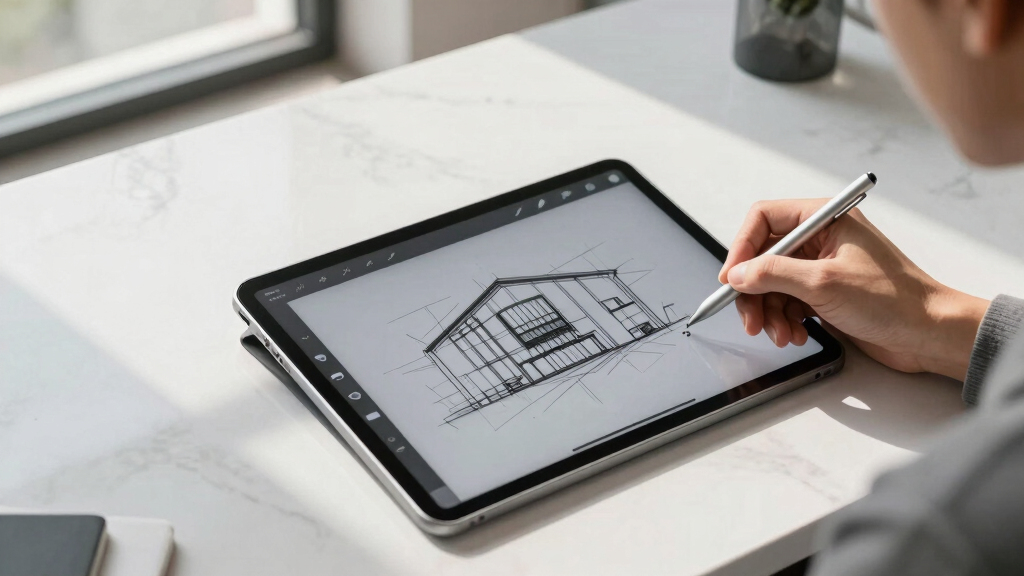

Choosing the best iPad Pro drawing tablet for architecture requires balancing performance, display quality, and portability. For instance, the Apple iPad Pro 13-inch (M5) stands out for its raw power and stunning display, making it ideal for detailed rendering and on-the-go work. Meanwhile, the RubensTab T11 Pro offers true independence with a standalone design, perfect for those who prefer mobility without carrying extra devices. The HUION Kamvas Pro 16 provides a large, color-rich screen suited for studio use, but it demands connection to a computer. Each option involves tradeoffs—whether in price, flexibility, or ease of use—so I’ll walk through what makes each suitable for different types of architect users.
Listen free for 30 days with Audible
Thousands of audiobooks and originals — cancel anytime.
Start your free trialAs an affiliate, we earn on qualifying purchases.
Key Takeaways
- The Apple iPad Pro offers unmatched portability combined with powerful hardware, but at a premium price.
- Drawing tablets like Huion and XP-Pen provide higher customization and larger screens, yet require connection to external devices.
- Standalone tablets like RubensTab excel for mobility but may have limitations in battery life and software ecosystem.
- Color accuracy and screen size are critical for detailed design work, influencing the best choices for professional architects.
- Ease of setup and compatibility vary, impacting how quickly an architect can start working on complex projects.
| HUION Kamvas Pro 16 Drawing Tablet with Screen, 15.6-inch, 120% sRGB, Touch Bar, Adjustable Stand |  | Best for Studio Use with High-Quality Display | Screen Size: 15.6 inches | Color Gamut: 120% sRGB | Contrast Ratio: 1000:1 | VIEW LATEST PRICE | See Our Full Breakdown |
| XPPen Artist 13.3 Pro 13.3″ Drawing Tablet with Screen, 16K, Full-Laminated |  | Best for Precision and Versatility | Screen Size: 13.3 inches | Display Resolution: Full HD 1920×1080 | Color Gamut: 88% NTSC (Adobe RGB ≥ 91%) | VIEW LATEST PRICE | See Our Full Breakdown |
| XPPen Artist 13.3 Pro V2 Drawing Tablet with Screen, 16K Pressure, Red Dial, 8 Keys |  | Best for High-Detail Professionals | Screen Size: 13.3 inches | Pressure Levels: 16,384 | Color Gamut: 125% sRGB, 107% Adobe RGB | VIEW LATEST PRICE | See Our Full Breakdown |
| Apple iPad Pro 13-inch (M5) with Ultra Retina XDR Display, 256GB, Wi-Fi 7, Face ID, Space Black |  | Best for Portability and Power | Display: 13-inch Ultra Retina XDR | Storage: 256GB | Processor: Apple M5 chip | VIEW LATEST PRICE | See Our Full Breakdown |
| RubensTab T11 Pro Standalone Drawing Tablet |  | Best for Mobility Without Compromise | Display: 10.1-inch Full HD IPS | Battery: 5800mAh, up to 5 hours | Charging: USB-C | VIEW LATEST PRICE | See Our Full Breakdown |
| iPad Pro drawing tablet for architect | Connectivity | Screen Size | Color Gamut |
|---|---|---|---|
| HUION Kamvas Pro 16 Drawing Ta | 3-in-1 USB-C cable | 15.6 inches | 120% sRGB |
| XPPen Artist 13.3 Pro 13.3" Dr | 3-in-1 cable | 13.3 inches | 88% NTSC (Adobe RGB ≥ 91%) |
| XPPen Artist 13.3 Pro V2 Drawi | USB-C | 13.3 inches | 125% sRGB, 107% Adobe RGB |
| Apple iPad Pro 13-inch | Wi-Fi 7 | — | — |
| RubensTab T11 Pro Standalone D | Wi-Fi | — | — |
More Details on Our Top Picks
HUION Kamvas Pro 16 Drawing Tablet with Screen, 15.6-inch, 120% sRGB, Touch Bar, Adjustable Stand
The HUION Kamvas Pro 16 stands out for its vibrant, true-to-life color display and large 15.6-inch screen, making it ideal for detailed architectural sketches and presentations. Its 120% sRGB coverage ensures color accuracy vital for realistic renderings. The adjustable stand and customizable shortcut keys boost ergonomic comfort and workflow efficiency. However, it requires connection to a computer, which can limit mobility and adds setup complexity for on-site work. Compared to the iPad Pro, it offers a larger display but sacrifices standalone flexibility.
Pros:- Vivid, color-accurate display with 120% sRGB coverage
- Responsive, tilt-supporting battery-free pen
- Customizable shortcut keys and ergonomic stand
- Single USB-C connection simplifies setup
Cons:- Requires connection to a computer or laptop
- No standalone functionality
- Learning curve for new users unfamiliar with pen tablets
Best for: Architects who prioritize high color fidelity and a large drawing area in a studio environment
Not ideal for: Architects needing portability or working primarily in the field without a computer
- Screen Size:15.6 inches
- Color Gamut:120% sRGB
- Contrast Ratio:1000:1
- Pen:Battery-free with tilt recognition
- Stand:Adjustable from 20 to 60 degrees
- Connectivity:3-in-1 USB-C cable
Our verdict“Best suited for studio-based architects demanding precise color and large workspace, but not ideal for on-the-go use.”
XPPen Artist 13.3 Pro 13.3″ Drawing Tablet with Screen, 16K, Full-Laminated
The XPPen Artist 13.3 Pro offers a high-resolution, fully-laminated display with excellent color accuracy, supporting up to 60° tilt and 16,384 pressure levels. Its compact 13.3-inch size makes it portable, yet it delivers detailed work with natural pressure sensitivity. The multifunctional red dial and customizable keys streamline workflow, especially useful for complex architectural drawings. The main tradeoff is its reliance on a computer, which limits mobility and adds setup steps compared to standalone tablets. It’s better suited for architects who want detailed control in a portable package.
Pros:- High color accuracy with vibrant display
- Supports tilt and pressure sensitivity for natural drawing
- Customizable shortcut keys and multifunction dial
- Compatible with major software on multiple OS
Cons:- Requires connection to a computer
- Learning curve for beginners
- Limited to 13.3-inch screen size
Best for: Architects who need a combination of portability, precision, and software flexibility
Not ideal for: Those who require a standalone device or work primarily on-site without a computer
- Screen Size:13.3 inches
- Display Resolution:Full HD 1920×1080
- Color Gamut:88% NTSC (Adobe RGB ≥ 91%)
- Tilt Support:Up to 60°
- Pressure Levels:16,384
- Connectivity:3-in-1 cable
Our verdict“Ideal for architects needing a portable yet precise drawing tool that works seamlessly with existing software, but not a standalone device.”
XPPen Artist 13.3 Pro V2 Drawing Tablet with Screen, 16K Pressure, Red Dial, 8 Keys
The XPPen Artist 13.3 Pro V2 offers an exceptional drawing experience with 16,384 pressure levels and wide color gamut support, making it perfect for detailed architectural renderings. Its customizable controls and adjustable stand improve workflow, and its compatibility across multiple OS makes it flexible. However, it requires connection to a computer and has a setup that might challenge complete beginners. Its high price reflects its professional-grade features, making it less suitable for casual or hobbyist architects.
Pros:- High color accuracy with wide gamut
- Responsive stylus with 16K pressure sensitivity
- Customizable keys and ergonomic stand
- Supports various operating systems
Cons:- Requires a computer connection
- Setup complexity for newcomers
- Higher price point
Best for: Professional architects who need maximum precision and color fidelity in their digital sketches
Not ideal for: Architects seeking a standalone device or those with limited budget
- Screen Size:13.3 inches
- Pressure Levels:16,384
- Color Gamut:125% sRGB, 107% Adobe RGB
- Brightness:250 cd/m²
- Viewing Angle:178°
- Connectivity:USB-C
Our verdict“Best for high-end professionals demanding the utmost in precision and color, at the expense of portability.”
Apple iPad Pro 13-inch (M5) with Ultra Retina XDR Display, 256GB, Wi-Fi 7, Face ID, Space Black
The Apple iPad Pro 13-inch (M5) combines raw computing power with a stunning Ultra Retina XDR display. Its M5 chip ensures smooth multitasking and rendering of complex models, making it an excellent choice for architects who need to work anywhere. The support for Apple Pencil transforms it into a highly responsive drawing device, and the device’s portability is unmatched. Its main tradeoff is the high cost—especially when adding accessories—and limited storage options in this specific configuration. Compared to dedicated drawing tablets, it offers less specialized features but excels in overall versatility.
Pros:- Powerful M5 chip for multitasking
- Stunning Ultra Retina XDR display
- Supports Apple Pencil for precise drawing
- Excellent for multitasking and presentations
Cons:- Premium price with accessories sold separately
- Limited storage in this model
- Not a dedicated drawing tablet, less customizable stylus features
Best for: Architects looking for a portable, powerful device capable of detailed work and quick sketches on the move
Not ideal for: Those who need a dedicated drawing device with larger screens or specialized pen features
- Display:13-inch Ultra Retina XDR
- Storage:256GB
- Processor:Apple M5 chip
- Battery Life:All-day
- Connectivity:Wi-Fi 7
- Color:Space Black
Our verdict“Best for architects prioritizing portability and power, willing to invest in a versatile device that handles both creative and professional tasks seamlessly.”
RubensTab T11 Pro Standalone Drawing Tablet
The RubensTab T11 Pro offers true independence from computers with its built-in 10.1-inch Full HD IPS display and high-sensitivity pen. Perfect for architects who need to work on-site, it supports multitouch gestures and provides up to 5 hours of battery life. Its portability is its biggest advantage, enabling quick sketches, annotations, and presentations without carrying extra gear. The tradeoff is its limited battery life and smaller screen size compared to larger tablets, which might impact detailed work or prolonged sessions. Still, it’s a versatile, lightweight option for fieldwork or quick conceptual sketches.
Pros:- Portability with standalone operation
- Vibrant 10.1-inch Full HD display
- Responsive pressure-sensitive stylus
- Supports multitouch gestures
Cons:- Limited battery life (~5 hours)
- Smaller screen for detailed work
- Pre-installed apps may need updates
Best for: Architects who need a standalone, portable device for quick ideas and on-the-fly adjustments
Not ideal for: Professionals needing extensive screen real estate or all-day battery life
- Display:10.1-inch Full HD IPS
- Battery:5800mAh, up to 5 hours
- Charging:USB-C
- Pen:Pressure-sensitive, no battery
- Connectivity:Wi-Fi
- Included Items:Stylus, gloves, cleaning cloth
Our verdict“Best for architects who prioritize mobility and quick sketching on-site, accepting some limitations in screen size and battery endurance.”

How We Picked
Our selection process focused on devices that balance display quality, stylus responsiveness, portability, and compatibility with professional architectural software. We prioritized models with high color accuracy, pressure sensitivity, and adjustable stands to meet the needs of architects who often work on detailed visualizations. We also considered user interface, connectivity, and overall value, aiming to include options suitable for both studio and field work. Tradeoffs like price, learning curve, and standalone versus connected operation were key factors in our evaluations.
Factors to Consider When Choosing Best IPad Pro Drawing Tablet For Architects
When selecting the best iPad Pro drawing tablet for architecture, key factors include display quality, stylus responsiveness, portability, and compatibility with professional software. A larger, color-accurate screen enhances detailed design work, while a responsive stylus with tilt and pressure sensitivity ensures precision. Portability is vital if you move between office and site, but some devices trade this for larger screens or better ergonomics. Compatibility with your workflow, whether on iOS or cross-platform, also influences your choice. Balancing these aspects will help you find a device that elevates your architectural projects without unnecessary compromises.
Display Quality and Size
For architects, a large, high-resolution display with accurate color reproduction is essential. It allows for detailed visualization, precise rendering, and better presentation of ideas. Devices like the iPad Pro excel here, offering ultra-retina displays with wide color gamut support, but they come at a higher price. On the other hand, larger dedicated tablets such as the Huion Kamvas Pro 16 provide more workspace for complex drawings. The choice hinges on whether you prioritize portability or maximum screen real estate for detailed work.
Stylus Performance
A stylus supporting tilt and pressure sensitivity offers natural drawing control, mimicking traditional tools. The Apple Pencil on the iPad Pro is highly responsive, making it ideal for detailed sketches and annotations. Similarly, the battery-free styluses on the XP-Pen and Huion tablets provide precise input with minimal lag. For architects, this translates into smoother lines, better shading, and more accurate modeling. Devices lacking these features may hinder fine detail work and slow down your creative process.
Portability and Standalone Use
Portability can be a game-changer for architects frequently on-site. The RubensTab T11 Pro offers full independence, functioning without a computer, while the iPad Pro combines power and mobility in a lightweight package. Conversely, most dedicated drawing tablets like Huion and XP-Pen require connection to a PC or Mac, which can limit mobility but offer larger screens and more customizable hardware. Your decision should reflect whether your work involves mostly studio work or frequent field visits.
Compatibility and Software Ecosystem
Ensure your chosen device supports your preferred software, such as AutoCAD, Revit, or SketchUp. The iPad Pro offers wide compatibility with iOS versions of these programs and supports Apple Pencil, making it versatile for quick edits and presentations. Dedicated tablets support Windows, macOS, and Linux software, but setup can be more involved. If seamless integration and multitasking are priorities, the iPad Pro may be the best fit, while dedicated tablets excel for detailed, software-specific workflows with more control options.
Frequently Asked Questions
Can I use the iPad Pro for detailed architectural drawings?
Absolutely. The iPad Pro’s Ultra Retina XDR display combined with the Apple Pencil provides excellent precision and color fidelity, making it suitable for detailed sketches, annotations, and even 3D model viewing. Its high-performance M5 chip supports multitasking and complex file handling, enabling architects to work efficiently on detailed projects with compatible apps.
Is a dedicated drawing tablet better than an iPad Pro for architecture?
It depends on your workflow. Dedicated tablets like Huion and XP-Pen often offer larger screens, customizable buttons, and more stylus options tailored for creative professionals. They tend to excel in color accuracy and pressure sensitivity, which are essential for detailed renderings. However, the iPad Pro offers greater portability, a versatile ecosystem, and seamless integration with familiar apps. For mobility and multitasking, the iPad Pro has clear advantages, but for studio work, dedicated tablets may provide more control.
Do I need a computer to use these drawing tablets?
Most dedicated drawing tablets like Huion Kamvas and XP-Pen require connection to a computer or laptop to operate, which can limit mobility. The RubensTab T11 Pro, however, is standalone, functioning without a separate device. The iPad Pro also operates independently, making it highly suitable for architects who need to work in various locations without lugging extra gear. Your choice should align with your preference for portability versus integration with desktop software.
Which device offers the best color accuracy?
The Apple iPad Pro with its Ultra Retina XDR display provides outstanding color accuracy and brightness, making it ideal for visualizing architectural details. Among dedicated tablets, the XP-Pen Artist 13.3 Pro V2 supports a wide color gamut (125% sRGB, 107% Adobe RGB), suitable for professional-grade color work. For the most critical color consistency, the iPad Pro’s display technology generally surpasses standard LCD panels, especially for presentations and client-facing work.
How important is the stylus type for architects?
The stylus is fundamental in achieving natural, precise control. A stylus with tilt and pressure sensitivity, like the Apple Pencil or XP-Pen’s high-end styluses, helps simulate real drawing tools, which is essential for shading, detailed sketches, and annotations. The choice of stylus directly impacts workflow efficiency and quality, so investing in a device with a responsive, ergonomic stylus is often worth the extra cost for architects demanding accuracy.
Conclusion
Architects who prioritize maximum portability and versatility should lean toward the iPad Pro, especially if multitasking and quick sketching in various environments are essential. Those working primarily in a studio setting with detailed, color-critical projects might prefer the Huion Kamvas Pro 16 or high-end XP-Pen options for their larger screens and customizable controls. For professionals needing a device that offers true independence without the need for a computer, the RubensTab T11 Pro provides a compelling balance of mobility and functionality. Your choice ultimately depends on whether you value portability, detailed control, or large workspace for complex architectural designs.
Fall Picks
fall essentials
As an affiliate, we earn on qualifying purchases.