
Educational science reference posters are one of the cheapest ways to turn blank wall space into a learning tool, but the quality gap between sets is wider than the prices suggest. Decorably’s 16 Energy Physical Science Posters earned my best overall spot for covering a topic most sets ignore — energy and physical science — with clean layouts that work from upper elementary through middle school. For younger classrooms, Jackinthebox’s 12-poster elementary set stands out for its friendlier visual density, while the 17-piece laminated biology set is the strongest pick for middle and high school depth. The main tradeoff you’ll face throughout this category is breadth versus depth: big multi-topic bundles look like a bargain but often spread thin, while subject-specific sets like the laminated periodic table chart go far deeper on a single topic. Read on for the full breakdown of all 13 sets and which one fits your grade level and budget.

Prime made for students and young adults
- Fast, free delivery for dorm and study essentials
- Prime Video and Amazon Music included
- Member-only deals
Key Takeaways
- Decorably‘s 16 Energy Physical Science Posters won best overall because physical science is the most underserved topic in this category — most bundles default to earth science and biology, leaving energy and matter concepts hard to wall-mount anywhere else.
- Sets that laminate or print on heavier stock (the 17-piece biology set, the double-sided periodic table) consistently outperformed bare-paper bundles for long-term durability, even when the bare sets had more pieces per dollar.
- The earth science category is oversaturated — five of the 13 sets cover nearly identical ground at 11x17in, so price per poster and readability, not content, became the deciding factors there.
- Poster count is a misleading value metric: the 25-piece life science set looks like the biggest bargain until you realize its smaller per-poster format limits readability from the back of a classroom.
- Only one product in the lineup (the Jauisus periodic table) is double-sided, effectively giving two references in one sheet — a format worth seeking out if wall space is limited.


| educational science reference poster | Material | Size | Number of Posters | Mounting |
|---|---|---|---|---|
| Shoparr Educational Posters | 250gsm paper | 11×17 inches | 14 | — |
| Decorably 16 Energy Physical S | 250gsm matte-laminated paper | 11×16 inches | 16 | Wall mount, unframed, indoor use |
| Jackinthebox 12 Science Poster | Double laminated thick card | 11.8 x 16.5 inches | 12 | — |
| Jauisus Laminated Periodic Tab | Laminated plastic | 8.7 x 11.65 inches | — | Wall mountable, unframed |
| Decorably 14 Earth Science Pos | FSC-certified 250gsm paper | 11×17 inches | 14 | — |
| YUSPENYE 14pcs Earth Science P | 250gsm paper with matte lamination | 11 x 16.5 inches | 14 | Adhesive dots included |
| 25 PCS Life Science Posters Se | Paper with double-sided glossy lamination | — | 25 | 7 sheets of adhesive dots included |
| 12-Piece Science Classroom Pos | Waterproof PVC | 17 x 11 inches | — | Not included |
| 12 Pack Science Posters for Cl | 250gsm paper with lamination | 11 x 17 inches | 12 | Not specified |
| BRIGHTENKIDZ Earth Science Pos | Laminated, waterproof, tear-resistant | 11 x 17 inches | 15 | Ready to hang with sustainable materials |
| Decorably 16 Biology Posters f | FSC-certified paper | 11 x 17 inches | 16 | Wall mount, indoor use |
| 17 Laminated Biology Posters | Thick paper with PET film coating | 11 x 16 inches | 17 | — |
| Science Posters Set for Classr | Paper with lamination | 14.8 x 11 inches | 2 | Adhesive dots (not included) |
More Details on Our Top Picks
Shoparr Educational Posters – 14 Earth Science Posters, 11x17in
This set earns the top spot because it pairs broad Earth Science coverage with the most durable build in this lineup. The 250gsm waterproof, matte-laminated paper means posters survive sticky fingers and accidental splashes — a real advantage over the Jackinthebox set, which is laminated but not rated waterproof. Compared with the Decorably 14-poster Earth Science set, coverage is similar, but Shoparr pulls ahead for humid classrooms or labs near sinks. Topics like Earth’s structure, moon phases, and the water cycle are broken down into clean, readable diagrams that work for multiple grade levels.
The tradeoff is focus: this is Earth Science only, so a teacher building a full science wall will need supplements like the Decorably Energy set. And at 11×17 inches, the text gets lost from the back of a large room.
Pros:- 14 posters covering the core Earth Science curriculum in one set
- Waterproof 250gsm paper outlasts standard laminated posters
- Matte finish eliminates glare from classroom lighting
- Clean, grade-flexible visuals work from upper elementary through middle school
Cons:- Earth Science only — no physics, chemistry, or biology content
- 11×17 inch size is hard to read from the back of a large classroom
Best for: Middle school Earth Science teachers and homeschool families who want durable, curriculum-aligned wall coverage
Not ideal for: Buyers wanting a multi-discipline science wall in one purchase — this set stays strictly within Earth Science
- Number of Posters:14
- Size:11×17 inches
- Material:250gsm paper
- Finish:Matte-laminated
- Waterproof:Yes
- Topics:Earth’s structure, moon phases, water cycle, and more
- Recommended Setting:Classrooms, homeschool, educational centers
Our verdict“The most balanced combination of coverage, durability, and price in this roundup — buy it if you teach Earth Science and want one set that lasts.”
Decorably 16 Energy Physical Science Posters for Classroom Decor, 11x16in
Most sets in this category lean Earth Science or biology, which makes this 16-poster physics collection genuinely hard to replace. Energy is a notoriously abstract unit to teach, and these posters translate kinetic, potential, and related concepts into labeled illustrations students can absorb passively from the wall. The glare-proof matte finish matches the Shoparr set’s quality, and the ready-to-display packaging means no flattening rolled posters for days — a small thing that saves real setup time compared with tube-shipped alternatives.
Sixteen posters is also the largest count in this batch, giving more wall coverage per dollar. The catch: it’s physics only, ships unframed, and unlike the Jackinthebox set there’s no lamination beyond the coating, so corners scuff faster in high-traffic hallways.
Pros:- 16 posters — the deepest single-subject set in this batch
- Rare physics-focused option in a market dominated by Earth Science sets
- Glare-proof matte finish stays readable under fluorescent lighting
- Arrives flat and ready to display without unrolling
Cons:- Physics-only coverage leaves gaps for mixed-discipline classrooms
- No frames or mounting accessories included
- Slightly smaller 11×16 inch format than the 11×17 competitors
Best for: Physical science and physics teachers who want energy concepts reinforced daily through classroom decor
Not ideal for: Elementary general-science teachers — the topic depth skews toward upper middle school and high school
- Number of Posters:16
- Size:11×16 inches
- Material:250gsm matte-laminated paper
- Subject:Physics / Energy
- Finish:Tear-proof, glare-proof matte
- Mounting:Wall mount, unframed, indoor use
- Recommended Setting:Classrooms, homeschool
Our verdict“The clear pick for physics classrooms, since almost no competing set in this roundup covers energy concepts at all.”
Jackinthebox 12 Science Posters for Kids Classroom Decor, Elementary School
Where the Shoparr and Decorably sets assume some baseline science vocabulary, this collection is built for younger readers — content developed with input from science teachers and simplified enough for elementary students, with the periodic table, food chain, and water cycle rendered in kid-friendly layouts. The double-laminated thick card stock is the toughest construction here, sturdier than the Jauisus chart’s single lamination and better suited to low shelves and desk edges where younger students handle posters directly.
At 11.8 x 16.5 inches, the size lands between competitors — large enough for group viewing, though still shy of what a big lecture hall needs. The main compromise is breadth: 12 posters spanning mixed topics means thinner coverage per subject than the dedicated 14- or 16-poster sets, and nothing arrives framed or mounted.
Pros:- Teacher-reviewed content pitched correctly for elementary readers
- Double lamination survives hands-on handling better than coated alternatives
- Mixed topics (periodic table, food chain, water cycle) suit general-science walls
- Large 11.8 x 16.5 inch format readable from student desks
Cons:- Only 12 posters with less depth per topic than specialized sets
- No framing or mounting accessories included
- Elementary-level simplification may feel basic for advanced students
Best for: Elementary teachers and homeschooling parents who want durable, multi-topic posters kids can interact with
Not ideal for: High school educators needing detailed diagrams — the simplification that helps younger students limits depth
- Number of Posters:12
- Size:11.8 x 16.5 inches
- Material:Double laminated thick card
- Topics:Periodic table, water cycle, food chain, and more
- Grade Range:Elementary to high school, homeschooling
- Content Development:Created with science teacher input
Our verdict“The most age-appropriate and physically durable choice for younger classrooms, especially where students will touch the posters.”
Jauisus Laminated Periodic Table of Elements Chart, Double-Sided Chemistry Reference Chart, Study Guide for High School & College Classroom, Small Science Educational Poster (8.7 x 11.65 inches)
Every other product here is a wall display; this one is a working study tool. The double-sided format puts the full periodic table on one face and chemistry equations with study-guide material on the other — effectively two references in the footprint of a sheet of printer paper. The laminated plastic construction handles daily flipping and desk use far better than paper posters like the Shoparr set, which are designed to hang, not to be picked up. At 8.7 x 11.65 inches, it fits on a desk corner, inside a binder, or on a narrow lab station shelf.
The obvious tradeoff is size: this is not a classroom wall chart. Students in the back row can’t read it, and compared with the Jackinthebox periodic table poster, the elements are necessarily compressed. There’s no mounting hardware, and advanced college students may find the guide side too basic.
Pros:- Double-sided design delivers periodic table plus equations in one chart
- Laminated plastic survives constant handling and desk use
- Compact footprint suits dorm desks, binders, and lab stations
- Affordable single-chart purchase instead of a full poster set
Cons:- Small size makes it unusable as a classroom wall reference
- Study-guide content may be too basic for advanced college coursework
- No mounting hardware for wall display
Best for: High school and college chemistry students who want a personal desk reference rather than classroom decor
Not ideal for: Teachers wanting a whole-class periodic table display — the small format fails that job entirely
- Size:8.7 x 11.65 inches
- Material:Laminated plastic
- Design:Double-sided
- Content:Periodic table plus chemistry equations and study guide
- Grade Level:High school and college
- Mounting:Wall mountable, unframed
- Weight:Lightweight
Our verdict“Buy this as a personal study aid, not decor — it competes with flashcards and reference sheets, not with the poster sets above.”
Decorably 14 Earth Science Posters for Classroom
On paper this set overlaps heavily with the Shoparr 14-poster Earth Science collection — same poster count, same 11×17 size, same 250gsm matte-laminated stock. The differentiator is the FSC-certified paper, which makes it the pick for schools with sustainability purchasing policies or eco-focused charter and Waldorf programs. Content leans contemporary too, with climate change included alongside plate tectonics and the water cycle, where some competing sets stop at traditional geology topics.
Choosing it over Shoparr means giving up the waterproof rating — a meaningful difference near sinks or in humid rooms — and buyers should note the flat-shipped posters may still want framing for a polished permanent display, which adds cost the sticker price hides. It’s also positioned as classroom decor rather than a student-handled reference.
Pros:- FSC-certified paper supports green purchasing requirements
- Includes climate change alongside classic geology topics
- Durable 250gsm matte-laminated stock resists wear and glare
- Flat shipping means posters are display-ready on arrival
Cons:- Lacks the waterproof rating of the Shoparr Earth Science set
- Framing may be needed for a finished look, adding hidden cost
- Duplicates much of the Shoparr set’s coverage without its durability edge
Best for: Schools and programs with sustainability commitments who want modern Earth Science topics on responsibly sourced materials
Not ideal for: Individual students or desk use — this is a wall display set, and the per-poster format assumes classroom display
- Number of Posters:14
- Size:11×17 inches
- Material:FSC-certified 250gsm paper
- Finish:Matte-laminated
- Topics:Plate tectonics, water cycle, climate change, and more
- Shipping:Flat-packed, ready to display
- Recommended Setting:Classroom wall display
Our verdict“The right Earth Science set when certified sustainable materials matter more than a waterproof rating.”
YUSPENYE 14pcs Earth Science Posters, 11×16.5in Classroom Decor
This set stands out for striking a smart middle ground between depth and price. Where the 12-Piece Science Classroom Posters Set spreads itself across unrelated disciplines, the YUSPENYE set stays focused on Earth science fundamentals — water cycle, rock cycle, plate tectonics, solar system — giving teachers coherent unit-by-unit coverage. The matte lamination is a genuine advantage over glossy alternatives like the 25 PCS Life Science Posters Set: diagrams remain readable from side angles and under harsh fluorescent classroom lighting. Adhesive dots included in the box mean no extra shopping before Monday morning. The tradeoff is modest sizing; at 11×16.5 inches, these won’t anchor a large wall the way dedicated display pieces can, and there’s nothing interactive for independent study.
Pros:- Cohesive Earth science curriculum coverage across 14 topics
- Matte lamination kills glare under classroom lighting
- Thick 250gsm stock resists curling and wear
- Mounting dots included
Cons:- Smaller than typical display posters, limiting wall impact
- No interactive or digital companion materials
Best for: Middle school Earth science teachers who want coordinated unit coverage without glare issues
Not ideal for: Anyone decorating a very large wall or hallway — the footprint is modest per poster
- Number of Posters:14
- Size:11 x 16.5 inches
- Material:250gsm paper with matte lamination
- Theme:Earth Science
- Use:Classroom decor, teaching aids
- Mounting:Adhesive dots included
Our verdict“The most sensible pick for teachers who value focused curriculum alignment and glare-free readability over sheer size.”
25 PCS Life Science Posters Set
If sheer volume of life science content is the goal, nothing else in this lineup comes close. With 25 posters spanning cells to animal classification, this set out-covers the BRIGHTENKIDZ 15 Pack by ten charts, making it better suited to teachers building an entire biology wall rather than supplementing a few units. The double-sided glossy lamination adds real waterproof durability for classrooms where posters get touched daily. That gloss has a cost, though: under direct light, reflections can obscure fine anatomical detail — the opposite of the YUSPENYE matte finish. The mixed sizing (18 large plus 7 small title cards) helps with layout flexibility but can look uneven on a uniform bulletin board.
Pros:- Largest poster count in this batch at 25 pieces
- Waterproof and tear-resistant for daily handling
- Mixed sizes allow layered bulletin board layouts
- Adhesive dots included
Cons:- Glossy lamination creates glare under direct lighting
- Uneven poster sizes can make displays look inconsistent
Best for: Biology teachers and homeschooling parents furnishing an entire science wall on one purchase
Not ideal for: Rooms with strong overhead lighting where glossy reflections would wash out diagram detail
- Number of Posters:25
- Large Poster Size:18 posters at 14.9 x 11 inches
- Title Card Size:7 posters at 5.9 x 5.9 inches
- Material:Paper with double-sided glossy lamination
- Themes:Cell structure, human anatomy, plant physiology, animal classification
- Mounting:7 sheets of adhesive dots included
Our verdict“The quantity king for biology — buy it when coverage matters more than polish.”
12-Piece Science Classroom Posters Set
Elementary teachers juggling multiple subjects get the widest topical spread here — scientific method, matter, weather, and life cycles sit alongside Earth science and the solar system. Compared with the YUSPENYE 14-piece set, which goes deep on Earth science alone, this set trades depth for breadth, which is exactly right for a self-contained classroom where one wall serves every subject. The minimal-text layouts are the real differentiator: younger students who would be overwhelmed by dense diagrams in the BRIGHTENKIDZ biology set can parse these at a glance. The waterproof PVC material is the toughest in this batch. The catch — no mounting hardware at all, so budget for tape or clips.
Pros:- Broadest subject mix: six distinct science themes in one set
- Waterproof PVC construction is the most durable here
- Minimal text suits early readers
- Vibrant visuals hold young attention spans
Cons:- No mounting accessories included
- Oversimplifies topics for older students
Best for: Elementary teachers covering multiple science subjects with one wall display
Not ideal for: Middle and high school teachers needing detailed diagrams for specific units
- Quantity:12 posters
- Size:17 x 11 inches
- Material:Waterproof PVC
- Themes:Earth science, scientific method, solar system, matter, weather, life cycles
- Reading Level:Elementary and middle school
- Mounting:Not included
Our verdict“The right choice for generalist elementary classrooms where variety beats depth.”
12 Pack Science Posters for Classroom, Earth & Planet Education
Compared directly with the YUSPENYE 14-piece set, this 12-pack offers nearly identical Earth science coverage — Earth’s structure, water cycle, plate tectonics, volcanoes — at a typically lower per-poster cost, which makes it the budget-friendly default for teachers buying out of pocket. It even includes niche processes like weathering and erosion that shallower sets skip. The lamination on 250gsm stock handles daily classroom wear without issue. The tradeoffs are subtle but real: with one fewer size option and two fewer posters than YUSPENYE, buyers lose a bit of flexibility, and unlike the 12-Piece PVC set, this is standard laminated paper rather than fully waterproof plastic.
Pros:- Strong value per poster for Earth science content
- Includes weathering and erosion topics rivals skip
- Laminated 250gsm stock holds up to daily use
- Standard 11×17 size fits common bulletin boards
Cons:- Only one size available, no layout flexibility
- Paper lamination is less rugged than PVC alternatives
Best for: Budget-conscious teachers who want core Earth science topics for the lowest per-poster price
Not ideal for: Buyers who want maximum poster count or premium PVC durability — other sets here deliver both
- Number of Posters:12
- Size:11 x 17 inches
- Material:250gsm paper with lamination
- Themes:Earth’s structure, atmosphere, earthquakes, volcanoes, water cycle, moon, sun, solar system, rock cycle, plate tectonics, weathering, erosion
- Grade Level:Elementary and middle school
- Mounting:Not specified
Our verdict“The smart money pick when the goal is dependable Earth science coverage without paying for extras.”
BRIGHTENKIDZ Earth Science Posters for Classroom, 15 Pack 11×17 Educational
Despite the ‘Earth Science’ wording in the title, this set is squarely biology-focused — cell structure, body systems, DNA, genetics — and it fills a gap this lineup otherwise leaves to the pricier 25 PCS Life Science set. Where that set wins on quantity, BRIGHTENKIDZ wins on diagram clarity: each of the 15 charts pairs a clean illustration with a concise explanation, which serves middle and high school students better than the visual-only approach of the elementary 12-Piece PVC set. The waterproof, tear-resistant laminate matches anything else here. The honest drawback is coverage: 15 posters can’t fully furnish a year of biology, and buyers wanting physics or Earth science will need a second set entirely.
Pros:- Clear labeled diagrams with concise written explanations
- Waterproof, tear-resistant lamination
- 15 posters is substantial coverage for one subject
- 11×17 size reads well from across a classroom
Cons:- Title misleads — content is biology, not Earth science
- Biology-only scope requires supplementary sets for full curricula
Best for: Middle and high school biology teachers who prioritize labeled detail over poster count
Not ideal for: Buyers expecting Earth science content based on the title, or anyone wanting single-set science coverage
- Number of Posters:15
- Size:11 x 17 inches
- Material:Laminated, waterproof, tear-resistant
- Themes:Cell structure, human body systems, DNA, genetics
- Grade Level:Middle and high school
- Mounting:Ready to hang with sustainable materials
Our verdict“The best diagram-driven biology option here, provided you know going in that it’s life science, not Earth science.”
Decorably 16 Biology Posters for High School and Elementary Classrooms
Where most classroom poster sets—like the 17 Laminated Biology Posters below—chase brightness, this Decorably set takes a calmer route with neutral tones and FSC-certified paper. That eco-credential is the whole story here: schools with sustainability mandates or green procurement policies get a 16-poster biology library that doesn’t trade durability for ethics. The matte lamination cuts glare under fluorescent classroom lighting, which glossy alternatives struggle with, making diagrams readable from side angles. Coverage spans topics from cells to organ systems at a level that works for both middle and high school, though the muted palette won’t pop on a competition-style bulletin board the way the PET-coated sets do. Framing isn’t included, so budget for mounting strips.
Pros:- FSC-certified materials satisfy school sustainability requirements
- Matte lamination eliminates glare from overhead classroom lights
- 16 posters cover a wide span of biology topics in one purchase
- Content level bridges middle school and high school audiences
Cons:- Biology-only set with no cross-subject flexibility
- No framing or mounting hardware included
- Neutral palette is too muted for highly decorative spaces
Best for: Science teachers at eco-certified schools who need broad biology coverage with glare-free readability under harsh lighting
Not ideal for: Decor-focused buyers wanting vivid, attention-grabbing wall displays — the neutral tones read as understated, not lively
- Size:11 x 17 inches
- Number of Posters:16
- Material:FSC-certified paper
- Laminate:Matte-laminated
- Theme:Biology
- Color:Neutral tones
- Mounting:Wall mount, indoor use
Our verdict“This pick makes the most sense for eco-conscious science departments that value readable diagrams and certified materials over vivid decor.”
17 Laminated Biology Posters – Human Body System, Cell Anatomy, DNA, Photosynthesis – Educational Science Charts for Middle & High School
If posters in your classroom get touched, taped, and tugged daily, this is the set built for that abuse. The PET film coating makes each of the 17 charts waterproof and tear-resistant—a step beyond the paper-based Decorably set, which handles moisture far less gracefully. Compared with the 25 PCS Life Science Posters Set, you get fewer posters, but the diagrams here are more focused on core curriculum: body systems, DNA, photosynthesis, and cell anatomy with clear, simplified labeling that middle schoolers can actually parse. The slightly smaller 11×16-inch footprint helps when wall real estate is tight, though displaying all 17 still demands serious space. Teachers who rotate visuals by unit will appreciate how easily these wipe clean after sticky-fingered handling.
Pros:- Waterproof and tear-resistant PET coating withstands classroom wear
- 17 charts cover the core biology curriculum comprehensively
- Clear, simplified labels work well for middle school readers
- Versatile for bulletin boards, labs, and small-group study areas
Cons:- Displaying the full set requires substantial wall space
- Biology-only content offers no breadth across other sciences
Best for: Middle and high school biology teachers in high-traffic classrooms or labs who need waterproof, wipeable visuals that survive daily student contact
Not ideal for: Buyers wanting cross-subject science decor — this set covers biology exclusively and duplicates content you may already own
- Number of Posters:17
- Size:11 x 16 inches
- Material:Thick paper with PET film coating
- Waterproof:Yes
- Tear-Resistant:Yes
- Topics:Human body systems, cell anatomy, DNA, photosynthesis
- Grade Level:Middle & high school
Our verdict“The strongest choice when durability is the deciding factor—these posters outlast paper alternatives in hands-on lab environments.”
Science Posters Set for Classroom Decorations, 14 4/5″x11″
Sometimes you don’t need a 16-poster wall takeover—just a couple of bright accents above a reading nook or on a door. This two-poster set fills that niche at a price far below the Decorably 16 Biology Posters, and its compact footprint fits spots where a full curriculum set won’t. The lamination adds real longevity for an inexpensive set, and the colorful print suits everything from primary classrooms to high school hallways. The tradeoff is obvious: with only two posters, this offers decor value rather than reference depth—there’s no systematic topic coverage like the 17-chart biology set provides. It also needs adhesive dots for mounting, which aren’t always included, so factor that small add-on into the true cost.
Pros:- Very low cost per set for budget-limited buyers
- Laminated finish extends lifespan despite the low price
- Compact 14.8 x 11-inch size fits doors, windows, and narrow walls
- Broad age-range appeal from primary through high school
Cons:- Only two posters in the entire set
- Requires separately purchased adhesive dots for mounting
Best for: Teachers or parents wanting an inexpensive, colorful science accent for a small wall, door, or window without committing to a full poster set
Not ideal for: Anyone building a curriculum-aligned reference wall — two posters can’t provide the topic coverage of larger sets
- Size:14.8 x 11 inches
- Number of Posters:2
- Material:Paper with lamination
- Mounting:Adhesive dots (not included)
- Application:Wall, bulletin board, window
- Grade Range:Primary through high school
Our verdict“A sensible filler pick for small spaces and tight budgets—just don’t expect it to function as an actual reference library.”
How We Picked
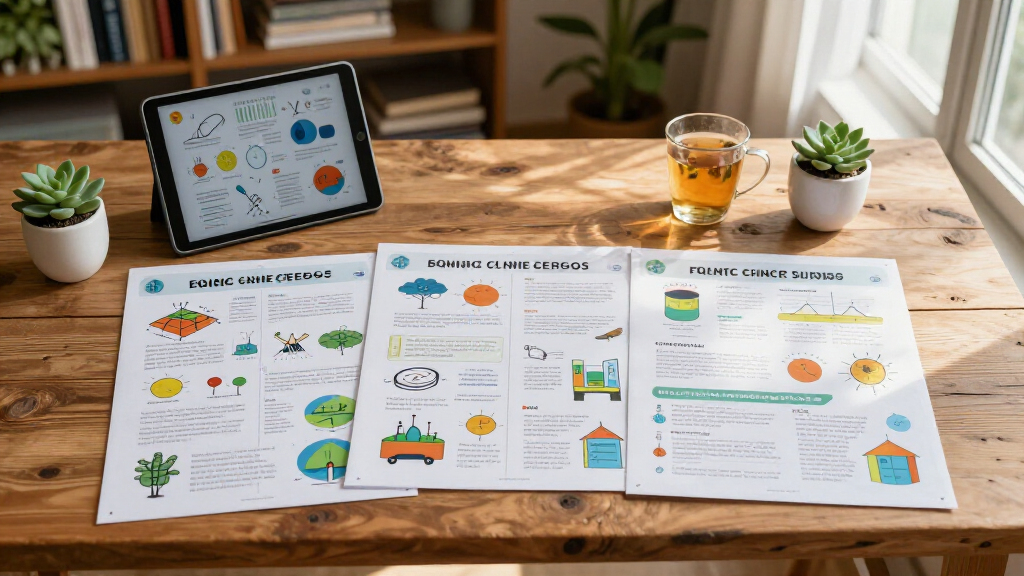
I evaluated each set against four factors that actually affect how a poster performs on a wall. Content accuracy and grade fit came first: a poster with vague or mislabeled diagrams is worse than no poster, so I checked whether terminology matched standard curricula for the intended grade band. Readability at distance was second — a chart crammed with tiny text fails its core job in a 25-seat classroom, so I favored sets with clear hierarchy and generous font sizing relative to poster dimensions. Durability was third, weighing lamination, paper weight, and edge quality, since these are products that get taped, stapled, and touched daily. Finally, I assessed value per usable poster, which is different from price per poster: a cheap 20-pack where half the posters duplicate or underperform is worse value than a pricier 12-pack where every sheet pulls its weight.
The ranking logic follows subject coverage gaps first, then execution quality within each subject. Because earth science sets dominate this category and largely duplicate each other, only the strongest two earned top-half placements, while unique niches — physical science, double-sided chemistry reference, deep biology anatomy — ranked higher for filling holes most buyers can’t fill elsewhere.
Factors to Consider When Choosing Educational Science Reference Posters
Before you pick a set, it helps to understand the patterns and pitfalls that shaped this entire ranking. These are the factors that separate a poster set you’ll keep for years from one you’ll quietly replace by winter break.
Match the Subject to Your Curriculum, Not the Poster Count
The single most common mistake in this category is buying the biggest bundle and hoping it covers what you teach. A 25-piece life science set is useless in a physics classroom, no matter how good the price per poster looks. Start from your actual units of study — energy, earth systems, cells, chemistry — and buy to fill those walls specifically. Buyers who shop by piece count often end up with three earth science sets and nothing for physical science, which is exactly why the Decorably energy set ranked so high here. One focused set that matches your curriculum beats two generic bundles every time.
Readability From the Back Row
Poster dimensions only tell part of the story. A smaller 8.5×11 sheet with large, bold labels can be read across a room, while a crowded 11×17 sheet with dense paragraphs cannot. Look at the preview images for text hierarchy: headings, labeled diagrams, and short captions beat paragraphs every time. This matters most for younger students and larger classrooms, where a poster the kids can’t read becomes decoration rather than reference. If the product photos show paragraphs of body text, treat that as a warning sign regardless of the poster’s size.
Lamination and Paper Stock Determine Lifespan
Bare paper posters are the budget default, but they curl at the edges within weeks of taping, and they don’t survive accidental contact with student hands or cleaning spray. Laminated sets cost more upfront yet routinely last multiple years, which changes the real cost per year of use dramatically. A middle path is buying bare posters and laminating them yourself, but by the time you pay for lamination, factory-laminated sets often cost the same or less. The sets in this roundup that come pre-laminated earned durability advantages that justified their higher rankings. Think of lamination as an investment in not re-buying the same posters next August.
Grade Band Fit: Cartoon Style vs. Technical Detail
Visual style is not just decoration — it signals grade level. Cartoon-style illustrations with rounded fonts work for K-5 but feel patronizing to middle schoolers, while technically detailed anatomical charts can overwhelm elementary students. Sets aimed at elementary classrooms sacrifice scientific precision for approachability, and sets aimed at high school assume vocabulary that younger students haven’t learned. When a listing says “elementary through high school,” be skeptical: most sets truly target one band. Check whether the diagrams include labels your students will actually recognize from their lessons.
Wall Space and Mounting Logistics
A 25-poster set assumes you have 25 spots to hang things, and many teachers simply don’t. Measure your usable wall and bulletin board space before ordering, and remember that posters placed above doorways or on cabinet sides need to be legible from odd angles and distances. Double-sided options like the periodic table chart effectively halve your space requirements by putting two references on one sheet. Also check what mounting hardware or adhesive is included — most sets ship with nothing, and glue dots for 20 posters add real cost. Overflow posters end up in a drawer, which is money wasted.
When to Pay More for a Single Deep Reference
Multi-poster bundles give breadth; single-subject references give depth. If you teach chemistry or anatomy, one detailed, durable periodic table or body-system chart will outlast and out-teach any bundle. These single references cost more per sheet but are used daily rather than glanced at occasionally. The buyers who regret purchases in this category are usually the ones who bought breadth when they needed depth — a general science bundle in an AP chemistry room serves no one. Paying premium makes sense when the poster anchors an entire semester of content.
Frequently Asked Questions
Are bare paper posters good enough, or should I only buy laminated ones?
Bare paper works fine if the posters will hang high, untouched, in a low-humidity room for a single school year. The moment you expect multi-year use, student interaction, or any exposure to classroom cleaning routines, lamination pays for itself. Factory-laminated sets also arrive flat rather than rolled, which saves you the frustrating process of flattening curled posters under books for a week. Self-lamination is an option, but quality pouches for 12-16 posters typically cost more than the price difference between bare and pre-laminated sets. My general rule: bare posters for home school or one-off events, laminated for permanent classroom walls.
How many posters do I actually need for a classroom?
Fewer than most sets contain. A typical classroom has meaningful wall space for 8-14 posters at readable size, plus a bulletin board or two. A 25-piece set sounds generous, but you’ll likely hang 15 and store the rest. What matters more than quantity is placement strategy: a handful of posters directly tied to your current unit, positioned where students actually look, outperform a full wall of static decoration that becomes invisible after two weeks. Buy the set whose content matches your curriculum, not the one with the biggest piece count, and rotate posters by unit if you want variety.
Which science subject is hardest to find good posters for?
Physical science — energy, forces, waves, and matter — is the most underserved topic by a wide margin. This roundup was dominated by earth science sets, with five nearly identical options, plus plenty of biology and general science bundles. Energy and physics concepts, which are central to middle school NGSS standards, show up in only one or two sets worth buying. If you teach physical science, prioritize those sets even at a higher price, because your alternatives are genuinely thin. Earth science teachers, by contrast, can afford to be picky on price and print quality since competition between sets keeps standards high.
Can I use the same poster set for both elementary and middle school students?
Only if the set uses precise-but-simple labeling, which is rarer than listings suggest. Most sets cluster toward one band: cartoon-heavy sets lose middle schoolers’ respect, while detail-heavy charts lose elementary students entirely. Look for sets with realistic but clean illustrations and vocabulary that bridges both levels — terms like “photosynthesis” rather than “how plants make food,” but without high school-level chemical notation. The earth science sets in this lineup tend to bridge better than the anatomy-heavy biology sets, which lean older. If you teach across grades, buy one bridging set rather than trying to average two specialized ones.
Is a double-sided poster like the periodic table chart actually practical?
It depends entirely on where you hang it. On a wall, one side is permanently hidden, which halves its value. On a door, a divider, a cabinet side, or hung from a ceiling hook with a swivel, both sides stay accessible and it becomes two references in one footprint. The format makes the most sense where wall space is scarce, such as shared classrooms or small home school areas. If you plan to wall-mount it permanently, a single-sided large periodic table is the better buy. Check your mounting situation before paying extra for the two-sided feature.
Conclusion
For most classrooms, Decorably’s 16 Energy Physical Science Posters is the best overall pick — it fills the category’s biggest content gap with the execution quality the best earth science sets already have. If budget drives your decision, the YUSPENYE 14-piece earth science set and the 12-pack earth and planet set deliver solid readability and content at the lowest usable cost per poster. On the premium end, the 17-piece laminated biology set justifies its price with anatomy depth and durability that will survive years of middle and high school use. Elementary teachers buying their first classroom set should start with the Jackinthebox 12-poster set, which trades scientific density for age-appropriate clarity. And for specific needs: chemistry teachers get the most from the double-sided Jauisus periodic table, while space-constrained rooms should look at compact sets like the 14.8×11-inch bundle. Whatever you choose, buy for your curriculum first and piece count second — that single rule separates every satisfying purchase in this roundup from the disappointing ones.
Halloween Picks
halloween
As an affiliate, we earn on qualifying purchases.