Science education is not simply the memorization of facts. It is a way of learning how to observe, ask precise questions, evaluate evidence, and revise an explanation when new information appears. The best learning environments combine trustworthy reference materials with experiments, models, instruments, and opportunities for independent exploration.
This hub will help students, families, educators, and lifelong learners navigate the main types of science-learning resources. Whether you are assembling a home study area, supporting classroom work, choosing a reference book, or introducing a learner to scientific tools, the goal is the same: match the resource to the learner and the question being investigated.
Building a Strong Foundation in Science
A balanced science education usually has three connected parts: knowledge, practice, and reflection. Reference resources supply established knowledge. Hands-on activities let learners test ideas and observe phenomena. Reflection turns those experiences into explanations that can be communicated and challenged.
No single book, kit, or device covers all three parts equally well. A detailed encyclopedia may answer factual questions but offer little practical investigation. An experiment kit may generate excitement without explaining the underlying theory in depth. Effective learning therefore comes from combining complementary resources rather than searching for one universal solution.
Start With the Learner’s Questions
Before choosing materials, identify what the learner is trying to do. A student completing a school assignment needs a clear, age-appropriate source that is easy to navigate. A curious child exploring insects may benefit more from a field guide and magnification tool. An older student learning electronics will require accurate technical references, measurement equipment, and a safe place to work.
- For quick factual orientation, begin with a broad reference book.
- For deeper understanding, compare explanations from multiple reputable sources.
- For practical skills, add structured experiments or guided projects.
- For independent inquiry, provide tools that allow observation and measurement.
- For long-term engagement, connect science to everyday surroundings and interests.

Chemistry: a QuickStudy Laminated Reference Guide (QuickStudy Academic)
As an affiliate, we earn on qualifying purchases.
As an affiliate, we earn on qualifying purchases.
Choosing Science Reference Books
Reference books remain valuable because they present information in a deliberately organized form. A well-designed science reference can help a learner see connections among biology, chemistry, physics, Earth science, astronomy, and engineering. It also provides a stable starting point before the learner encounters the enormous volume of information available online.
Selection should begin with reading level and scope. Younger readers often need concise explanations, diagrams, labeled illustrations, and definitions close to the relevant text. More advanced students may need detailed tables, mathematical examples, source notes, glossaries, and indexes. The guide to the best science reference books for students offers a useful starting place for comparing student-oriented options.
It is also worth distinguishing between general and specialized references. A general volume is helpful for browsing or answering questions across several disciplines. A specialized resource can provide greater depth in subjects such as anatomy, geology, astronomy, or experimental methods. Readers building a broader library can explore these educational science reference books to consider different formats and areas of emphasis.
How to Evaluate a Reference Resource
- Check whether the subject coverage matches the learner’s curriculum or interests.
- Look for a contents page, index, glossary, and logical chapter structure.
- Assess whether diagrams clarify the text rather than merely decorate the page.
- Confirm that technical terms are defined at an appropriate level.
- Prefer resources that distinguish established evidence from hypotheses or simplified models.
- Consider whether the book encourages further questions, activities, or reading.
Reference materials are most useful when learners actively work with them. Encourage students to summarize an explanation in their own words, compare two diagrams, create a concept map, or write down questions that the text does not answer. These habits turn reading into investigation.

UNGLINGA 150 Experiments Science Kits for Kids Chemistry Lab S.T.E.MToys
- Number of Experiments: 150 science experiments for kids
- Educational Topics: Earth, surface tension, chemistry, physics
- Instruction Manual: Well-illustrated, step-by-step guide
As an affiliate, we earn on qualifying purchases.
As an affiliate, we earn on qualifying purchases.
Moving From Reading to Hands-On Investigation
Experiments make abstract ideas visible. A learner may read about density, electrical circuits, crystal formation, or plant growth, but manipulating materials reveals variables, limitations, and unexpected results. Hands-on work also develops patience, measurement skills, and the ability to follow a procedure accurately.
Experiment kits can reduce the effort required to gather compatible materials. They are particularly helpful when an adult or educator wants a structured sequence of activities. The collection of interactive science experiment kits can help readers explore options across different interests and learning stages.
Some resources combine explanatory material with tools or activity components. These can bridge the gap between a conventional reference book and an open-ended laboratory setup. For learners who benefit from this integrated approach, the guide to educational science reference kits for hands-on learning provides a focused overview.
Make Every Activity an Investigation
A science activity becomes more meaningful when the learner makes a prediction, records observations, and explains the outcome. Even a simple demonstration can support genuine inquiry if students are asked what changed, what stayed constant, and what evidence supports their conclusion.
- Read the complete procedure and safety guidance before beginning.
- Identify the question being investigated.
- Write down a prediction and the reason for it.
- Change one variable at a time when the activity permits.
- Record measurements, sketches, and unexpected observations.
- Repeat trials when repetition is practical and safe.
- Compare the result with the original prediction.
Adult supervision should reflect the learner’s age, the materials involved, and the activity’s instructions. Chemicals, heat, electricity, glassware, sharp components, and small parts may require additional controls. A resource labeled educational is not automatically suitable for every learner or setting.

SenseYo 10 PCS Mini Magnifying Glass for Kids, 5X Small Kid Magnifier for Hobbies and Science
- Magnifier Material: High-definition acrylic lens
- Magnification Power: 5X clear imaging
- Suitable for Observation: Ideal for reading and exploring
As an affiliate, we earn on qualifying purchases.
As an affiliate, we earn on qualifying purchases.
Observation Tools and Scientific Instruments
Scientific instruments extend the senses. Magnification reveals surface structures that cannot be resolved by the unaided eye, while electronic instruments make changing signals measurable. Learning to use tools also teaches an important principle: observations depend partly on the instrument’s capabilities and limits.
Microscopes for Everyday Discovery
Microscopy can connect biology, materials science, environmental studies, and ordinary household observations. Leaves, fibers, soil particles, printed paper, and prepared specimens can all become subjects for comparison. Portable digital models may be convenient when learners want to display or capture magnified views on a compatible screen. The guide to portable digital microscopes for students covers options intended for accessible observation.
Magnification alone does not determine usefulness. Consider image clarity, focusing method, illumination, working distance, software compatibility, and how easily the learner can position a specimen. Students should also understand that a digital microscope and a traditional compound microscope may serve different purposes.
Electronics and Signal Exploration
Older students, makers, and electronics learners eventually move from assembling circuits to examining how signals behave. A waveform generator can create controlled electrical signals for testing and prototyping, but it belongs in a more advanced learning environment where users understand equipment limits and safe circuit practices. Readers developing an electronics workspace can consult this overview of arbitrary waveform generators for electronics prototyping.
Technical equipment should be chosen around the actual project requirements. Relevant considerations can include frequency needs, output characteristics, connectivity, interface complexity, documentation, and compatibility with other instruments. Beginners generally benefit from mastering voltage, current, resistance, basic circuits, and measurement principles before progressing to sophisticated signal generation.
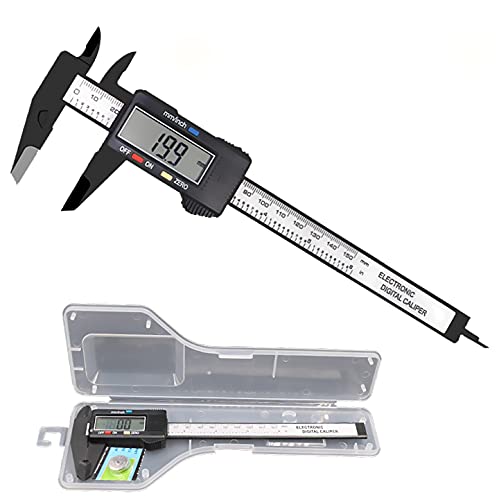
Digital Caliper, inch and Millimeter Conversion,LCD Screen displays 0-6" Caliper Measuring Tool, Automatic Shutdown, Suitable for DIY/Jewelry Measurement
- Multiple Measurement Modes: Inner, outer, depth, and step measurements
- Safe Plastic Pins: No short circuit risk during measurement
- Precise Measurement Range: 0-6 inches / 0-150mm with ±0.2mm accuracy
As an affiliate, we earn on qualifying purchases.
As an affiliate, we earn on qualifying purchases.
Models, Maps, and Visual Learning
Models help learners reason about objects or systems that are too large, small, distant, slow, fast, or complex to examine directly. Globes, anatomical models, molecular structures, timelines, and diagrams all simplify reality in purposeful ways. Their educational value comes not only from what they show, but also from discussing what they omit or distort.
A globe can support geography, Earth science, astronomy, scale, and spatial reasoning. Constructing one adds a lesson about how flat surfaces become three-dimensional forms. Families and educators interested in an activity that combines mapping with model building can review these folding paper globes.
Ask learners to compare a model with photographs, maps, measurements, or written descriptions. They might investigate why map projections alter shapes, why classroom models cannot preserve every true scale, or how labels influence attention. This teaches students to treat models as reasoning tools rather than perfect replicas.
Creating a Science-Friendly Learning Space
A productive science area does not need to resemble a formal laboratory. It needs reliable storage, adequate light, a stable work surface, access to reference materials, and clear rules for tools and specimens. Keeping notebooks, pencils, measuring tools, and frequently used books within reach makes it easier to capture questions when they arise.
The atmosphere of the space matters as well. Maps, botanical illustrations, astronomical charts, geometric objects, or historical scientific imagery can prompt curiosity. Those shaping a study room around this visual language may find ideas among vintage-inspired home decor, while still prioritizing function over appearance.
Learners who are sensitive to noise or working in a distracting environment may need a quieter setup. Seating position, scheduled focus periods, soft furnishings, and appropriate listening equipment can all play a role. Caregivers considering personal audio should pay particular attention to fit, volume management, durability, and supervision; this guide to child-safe headphones for kids addresses that specialized need.
Supporting Different Kinds of Learners
Some students prefer to read before attempting an activity. Others understand an idea only after manipulating a model or seeing a demonstration. Many need repeated movement between text, visuals, discussion, and practice. Rather than assigning a fixed “learning style,” observe which combination helps the learner explain and apply the concept independently.
- Use diagrams and models to support spatial reasoning.
- Invite learners to explain a concept aloud in everyday language.
- Break long investigations into short, visible stages.
- Offer advanced extensions without rushing foundational skills.
- Let students choose some topics while maintaining a balanced science foundation.
- Revisit earlier predictions so progress becomes visible.
Accessibility should be considered from the beginning. Look at reading demands, fine-motor requirements, visual contrast, audio needs, physical reach, and the complexity of instructions. A resource is educationally effective only when the learner can engage with it meaningfully and safely.
Developing Scientific Literacy for Life
Scientific literacy means more than knowing scientific vocabulary. It includes recognizing testable questions, interpreting graphs, understanding uncertainty, identifying weak evidence, and separating correlation from causation. These skills help people evaluate health information, environmental claims, technology news, and everyday marketing.
Encourage learners to ask who produced a claim, what evidence was collected, whether the method is described, and whether other explanations were considered. They should also learn that uncertainty is not a failure of science. Responsible scientific communication states what is known, how confidently it is known, and what remains unresolved.
The most valuable science-learning collection is therefore not necessarily the largest. It is one whose parts work together: accessible references for orientation, deeper sources for explanation, activities for testing ideas, instruments for careful observation, and notebooks for recording how understanding changes. Begin with a real question, choose the simplest suitable resource, and let each answer lead naturally to the next investigation.