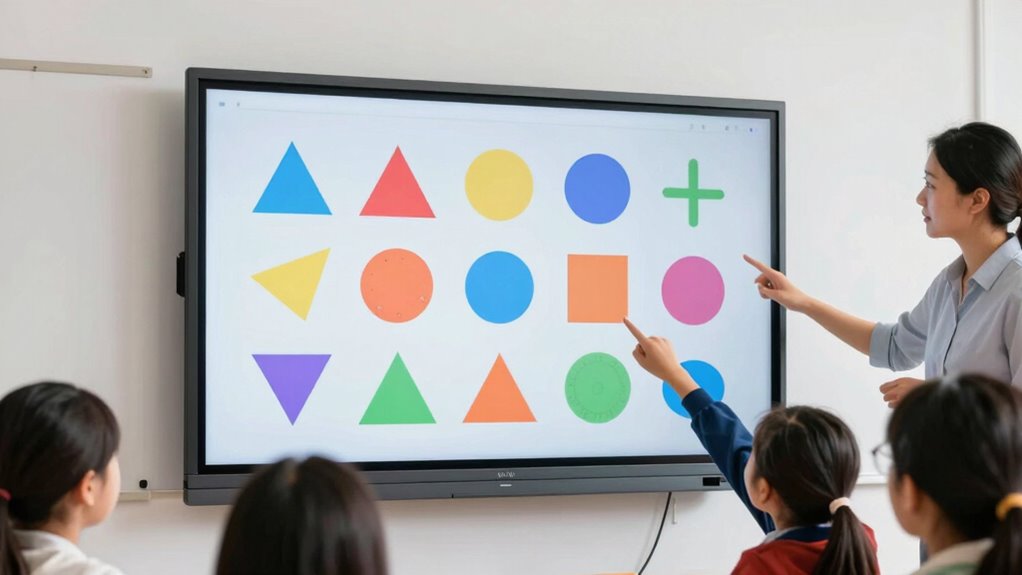

Interactive displays work well for geometry demonstrations because they let you visualize and manipulate shapes in real time, making complex concepts easier to understand. You can explore different views, switch between models, and physically interact with digital objects. This active engagement reinforces learning, appeals to various styles, and encourages exploration. Plus, instant feedback helps correct misunderstandings quickly. Keep exploring, and you’ll discover even more ways these tools can transform your understanding of geometry.
Key Takeaways
- They provide real-time manipulation of 3D models, making complex geometric concepts more understandable.
- Interactive displays support multisensory engagement, reinforcing learning through active participation.
- Multiple representations (e.g., nets, cross-sections) cater to diverse learning styles and clarify relationships.
- They enable exploration and immediate feedback, encouraging experimentation and correcting misconceptions instantly.
- Collaborative features foster teamwork and communication, enhancing engagement and retention of geometric principles.
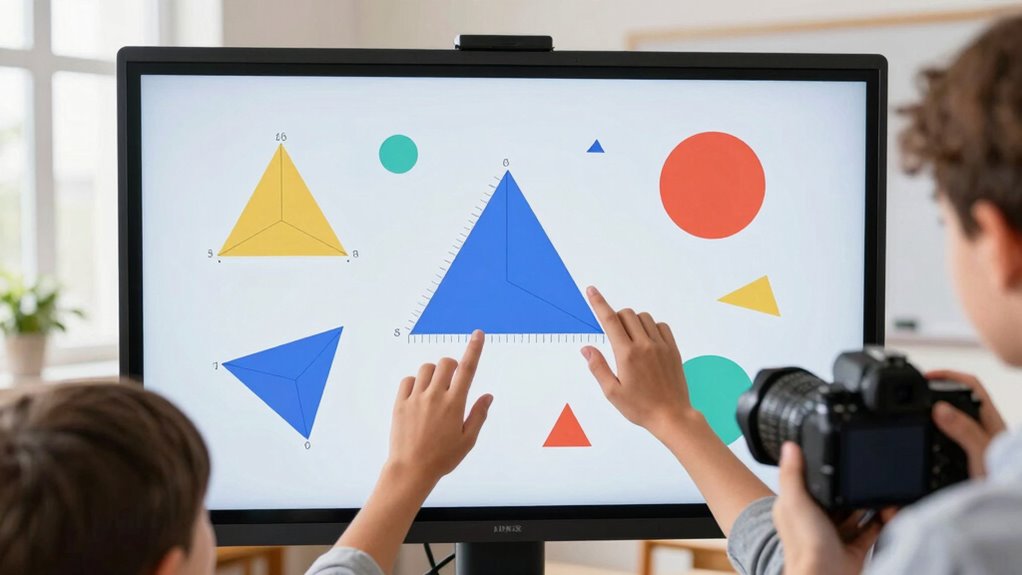
Interactive displays have revolutionized the way geometry is taught and understood by making abstract concepts tangible and engaging. When you use these tools, you tap into the power of Augmented Reality (AR), which overlays digital information onto the real world, creating immersive experiences that help you visualize complex shapes and relationships. With AR, you can manipulate 3D objects in real time, giving you a clearer understanding of geometric principles that often seem elusive when only presented on paper or static screens. This kind of dynamic visualization not only sparks curiosity but also deepens your comprehension of spatial relationships.
Interactive displays with AR make complex geometric concepts tangible and engaging through immersive, real-time 3D manipulation.
Tactile learning plays a significant role in why interactive displays are so effective for geometry demonstrations. By physically interacting with digital models—rotating, resizing, or dissecting shapes—you engage multiple senses, which reinforces your understanding. This active involvement transforms passive observation into a hands-on experience, making the learning process more memorable. When you can touch and manipulate geometric figures, you’re more likely to grasp their properties and how they relate to other shapes or concepts. The tactile feedback from these displays bridges the gap between abstract theory and concrete understanding, enabling you to explore geometry from different angles intuitively. Incorporating multisensory engagement further enhances this learning process by appealing to various sensory modalities.
Another reason these displays work so well is their ability to present multiple representations of the same concept simultaneously. For instance, you might see a 3D model of a cube, its net unfoldings, and its cross-sections all on the same screen. This multi-representational approach caters to diverse learning styles, ensuring that visual, kinesthetic, and even auditory learners get the most out of each lesson. It’s easier to understand how different views relate to each other when you can switch seamlessly between representations, which fosters a more comprehensive grasp of geometric principles. Incorporating diverse learning styles makes these tools even more effective for a broad range of students.
Furthermore, interactive displays encourage exploration and experimentation without the fear of making mistakes. You can try different configurations, test hypotheses, or explore properties of shapes freely. This trial-and-error process promotes a deeper, more active form of learning, empowering you to discover solutions on your own. The immediate feedback provided by these displays helps you correct misconceptions in real time, making your learning journey more efficient and engaging. Additionally, learning through experimentation promotes critical thinking and problem-solving skills that are essential in mastering geometry concepts.
Additionally, integrating interactive displays with other educational tools can enhance collaborative learning, allowing students to work together on geometric problems in a shared digital environment. This social aspect fosters communication and teamwork, further enriching the learning experience.
In essence, the combination of AR, tactile learning, multi-modal representations, and the freedom to explore makes interactive displays an invaluable tool for geometry demonstrations. They transform complex, abstract ideas into accessible, engaging experiences that enhance understanding and retention. When you embrace these technologies, you’re not just learning geometry—you’re experiencing it in a way that sticks with you long after the lesson ends.
As an affiliate, we earn on qualifying purchases.
Frequently Asked Questions
How Do Interactive Displays Improve Student Engagement in Geometry Lessons?
Interactive displays boost your student participation by making geometry lessons more dynamic and engaging. They allow students to actively manipulate shapes and diagrams, which enhances visual learning and helps them grasp complex concepts more easily. When students interact directly with the display, they stay focused and motivated, turning passive observation into active exploration. This hands-on approach makes geometry lessons more memorable and encourages deeper understanding.
Can Interactive Displays Be Integrated With Existing Classroom Technology?
Like Da Vinci blending art and science, you can seamlessly integrate interactive displays with your existing classroom technology. Ensuring technology compatibility is key, and many modern displays easily connect with devices you already use. However, effective integration also requires teacher training, so you feel confident in leveraging these tools. With proper support, you transform your lessons into dynamic, engaging experiences that captivate your students’ curiosity and foster deeper understanding.
What Are the Cost Considerations for Implementing Interactive Geometry Displays?
You should consider the cost comparison between interactive displays and traditional teaching tools, as well as ongoing maintenance expenses. While interactive displays often require a higher upfront investment, they can reduce costs over time by replacing multiple devices. Keep in mind, maintenance expenses like repairs and updates can add up. Weigh these factors to determine if the benefits of interactive geometry displays justify the initial and ongoing costs for your classroom.
How Durable Are Interactive Displays for Daily Classroom Use?
You might wonder if interactive displays can handle daily classroom demands. Rest assured, their screen durability is impressive, designed to withstand frequent touch and occasional bumps. Maintenance requirements are minimal—regular cleaning keeps them in top shape, and most models are built with toughened glass. With proper care, these displays remain reliable throughout the school year, ensuring your geometry lessons stay engaging without worries about wear and tear.
Do Interactive Displays Support Different Learning Styles Effectively?
Yes, interactive displays support different learning styles effectively. You can incorporate multisensory learning by combining visual, auditory, and tactile interactions, which helps students grasp complex concepts. Tactile interaction allows hands-on engagement, catering to kinesthetic learners. By adapting activities to various preferences, you make geometry lessons more inclusive and engaging, ensuring all students can actively participate and understand the material better through these versatile, interactive tools.
As an affiliate, we earn on qualifying purchases.
Conclusion
Imagine teaching geometry as exploring a maze with a flashlight. Interactive displays act like that flashlight, illuminating complex shapes and relationships instantly. When you engage students with hands-on tools, they’re more likely to grasp concepts and retain information. Research shows that active participation boosts understanding by 75%. Just like exploring a maze becomes exciting with a guiding light, using interactive displays transforms abstract geometry into a clear, memorable adventure that sparks curiosity and deepens learning.
As an affiliate, we earn on qualifying purchases.
As an affiliate, we earn on qualifying purchases.