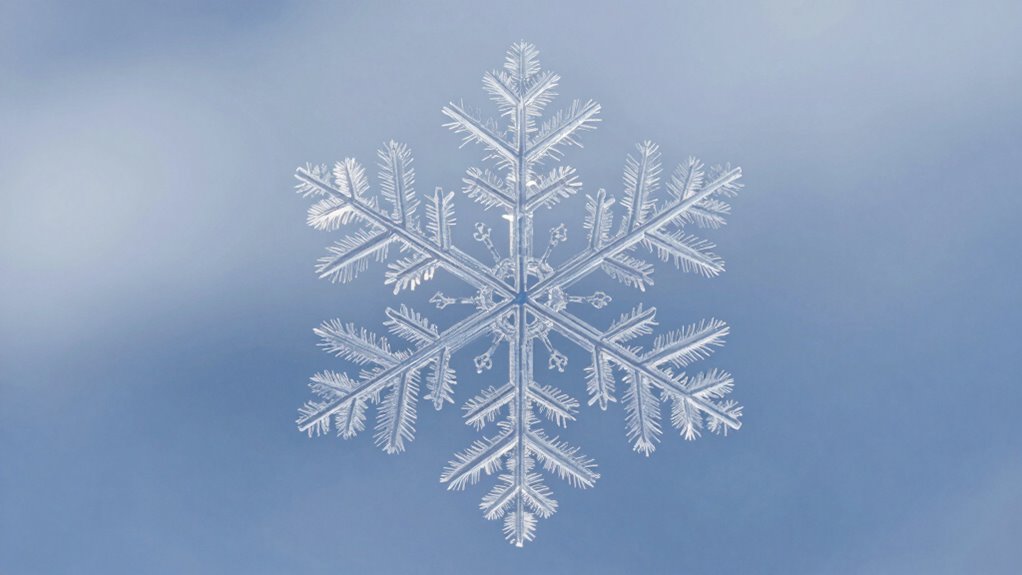

Snowflakes are a masterclass in symmetry and variation because they form through precise molecular bonds that create six-fold, hexagonal patterns, giving them natural symmetry. At the same time, their structures constantly change based on atmospheric conditions like temperature and humidity. This interplay results in unique, intricate designs, making no two snowflakes alike. If you want to discover more about how nature balances order with chaos in each snowflake, keep exploring.
Key Takeaways
- Snowflakes form through molecular bonds that favor hexagonal symmetry, creating a six-fold pattern.
- Variations in atmospheric conditions cause diverse, unique structures in each snowflake.
- Rapid environmental changes during formation lead to intricate, fractal-like branch patterns.
- The balance of order (molecular bonds) and chaos (environmental fluctuations) results in complex designs.
- No two snowflakes are identical, showcasing perfect symmetry combined with natural variation.
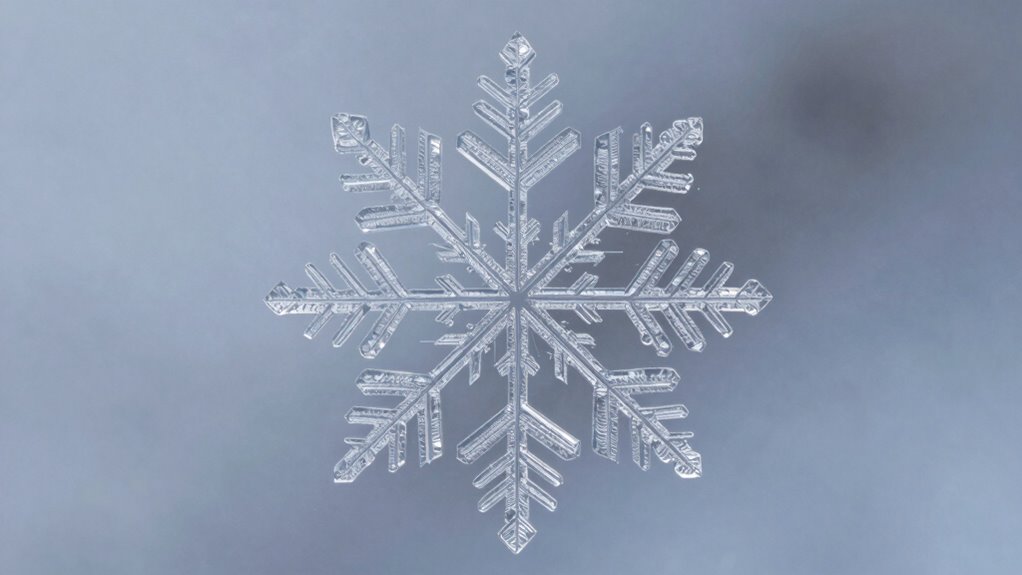
Every winter, as snowflakes drift from the sky, they showcase an incredible display of symmetry and variation. This natural wonder begins with crystal formation, a process that’s both intricate and precise. When water vapor in the atmosphere cools and condenses around tiny particles, it forms ice crystals. The way these crystals grow depends heavily on atmospheric conditions—temperature, humidity, and pressure all influence their shape. As the crystal develops, water molecules arrange themselves in a hexagonal pattern because of the molecular structure of ice, creating the foundation for the snowflake’s symmetry. This consistent pattern is what makes each snowflake’s six-sided symmetry so striking, yet no two are exactly alike, thanks to the constantly changing atmospheric conditions as the snowflake forms and falls.
The environment plays a vital role in shaping each snowflake’s unique design. Slight variations in temperature or humidity at different stages of its journey through the clouds cause differences in how water molecules attach themselves to the growing crystal. For example, a snowflake forming in colder, drier air might develop sharp, needle-like branches, while one encountering more moisture might grow into a more elaborate, plate-like structure. These variations happen rapidly, often within seconds or minutes, leading to an astonishing diversity of snowflake patterns. Even minor fluctuations in atmospheric conditions can produce entirely different structures, making each snowflake a one-of-a-kind masterpiece. The crystal formation process itself relies on the precise molecular bonds that favor specific geometric arrangements, emphasizing the importance of environmental factors. Understanding this molecular bonding reveals how delicate and finely tuned the process truly is. Interestingly, the geometric arrangements of ice crystals are a prime example of nature’s ability to combine order with complexity. In addition, researchers have found that the temperature and humidity during formation are critical in determining the final structure of each snowflake.
As the snowflake continues to grow and descend, its symmetry remains mostly intact, but the pattern’s complexity increases. The six-fold symmetry is maintained because the molecular bonds in ice favor this hexagonal arrangement, even as the crystal’s branches branch out into intricate, fractal-like shapes. This balance between symmetry and variation results in snowflakes that are perfectly symmetrical on a basic level, yet uniquely detailed in their branches and surface textures. It’s this delicate interplay that captures your attention—the way nature combines order and chaos seamlessly. You see it in the way each snowflake’s structure echoes the principles of crystal formation, driven by the precise way water molecules bond under specific atmospheric conditions. This interplay between order and chaos is what makes snowflakes a true masterclass in both symmetry and variation.
As an affiliate, we earn on qualifying purchases.
Frequently Asked Questions
How Do Environmental Factors Influence Snowflake Formation?
Environmental factors, like atmospheric moisture and temperature, directly influence snowflake formation. As moisture in the air freezes onto a ice crystal, molecular bonding occurs, shaping the snowflake’s intricate patterns. Variations in temperature and humidity cause different growth rates on each arm, leading to unique symmetry and complexity. You’ll find that even slight changes in these factors create a stunning diversity of snowflake designs, showcasing nature’s delicate artistry.
Can Snowflakes Be Perfectly Identical?
You might be surprised, but no two snowflakes are perfectly identical—it’s estimated the odds are around 1 in 1 quintillion! Each snowflake forms with unique crystal patterns due to varying environmental factors, influencing molecular arrangements. These tiny differences in temperature and humidity create intricate, one-of-a-kind designs. So, while snowflakes share symmetry, their variations make every single one a tiny masterpiece of nature’s craftsmanship.
Why Do Snowflakes Have Different Shapes Despite Similar Conditions?
You’ll notice snowflakes have different shapes because crystal patterns form uniquely as they grow. Temperature effects play a key role, influencing how water molecules arrange themselves on each snowflake. Slight variations in humidity or temperature cause subtle differences in crystal patterns, leading to diverse shapes. Even under similar conditions, tiny environmental changes create unique snowflakes, showcasing nature’s intricate beauty and the fascinating complexity behind each one’s individual form.
How Long Does It Take for a Snowflake to Form?
It takes about 30 minutes to a few hours for a snowflake to form, depending on crystal growth and atmospheric conditions. As water vapor condenses around a nucleus, the snowflake develops its intricate patterns. Variations in temperature, humidity, and airflow influence the growth rate and shape, making each snowflake unique. You can see how these environmental factors shape the delicate structures during the snowflake’s brief journey through the sky.
Are Snowflakes Unique to Specific Climates or Regions?
You might think snowflakes are region-specific, but thanks to snowflake genetics and atmospheric patterns, each one forms uniquely regardless of location. Ironically, the climate influences their shape, yet no two are exactly alike worldwide. It’s a beautiful contradiction: the environment shapes their design, but individuality remains universal. So, whether you’re in the Arctic or a temperate zone, you’re likely to witness snowflakes with fascinating variations born from the same natural rules.
As an affiliate, we earn on qualifying purchases.
Conclusion
Next time you catch a snowflake, remember it’s a tiny masterpiece of symmetry and variation. Imagine holding one that’s perfectly balanced yet uniquely intricate—like a tiny, frozen sculpture. It’s a reminder that even in nature’s fleeting moments, there’s a harmony of design. Just as no two snowflakes are identical, your own moments of creativity and individuality stand out beautifully in a world full of patterns. Embrace your unique shape—like a snowflake, you’re one of a kind.
As an affiliate, we earn on qualifying purchases.
As an affiliate, we earn on qualifying purchases.