
TL;DR
Recent observations indicate that installing artificial beaver dams significantly increased juvenile coho salmon survival rates from 8% to 60%. This development could influence future habitat restoration efforts.
Recent field observations have confirmed that the installation of artificial beaver dams has led to a dramatic increase in juvenile coho salmon survival rates, rising from 8% to 60%. This finding is significant for habitat restoration efforts and salmon conservation strategies, attracting attention from environmental scientists and policymakers.
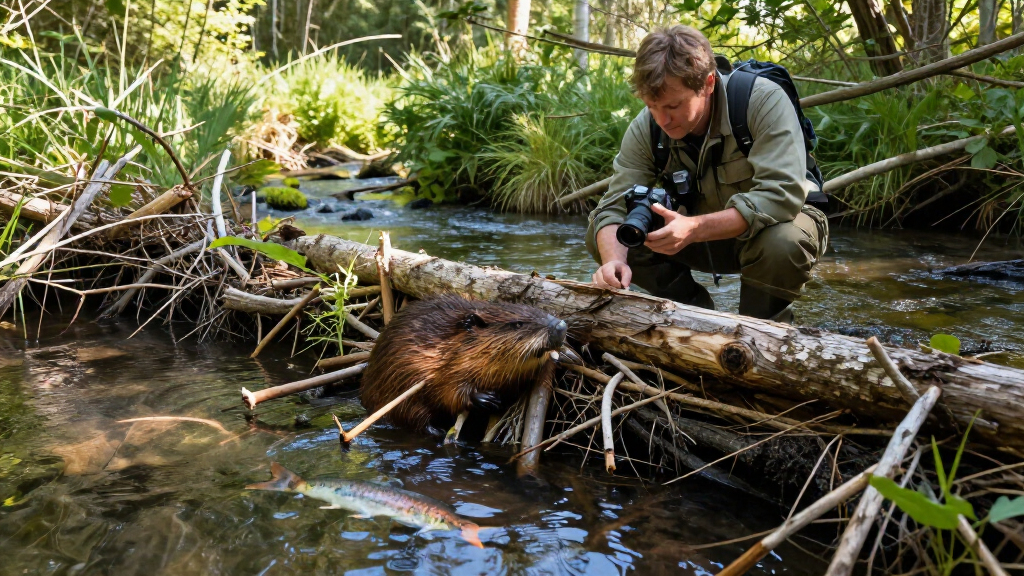
In a series of recent field studies, conservationists installed artificial beaver dams in a targeted freshwater habitat known for low juvenile salmon survival. The data shows a marked improvement in survival rates, with juvenile coho salmon thriving in the modified environment. The increase from 8% to 60% was observed over a period of several months, suggesting a strong positive effect of the artificial dams.
Experts involved in the project attribute the success to the dams’ ability to mimic natural beaver activity, which improves water retention, creates complex habitats, and stabilizes stream flow. The artificial dams are constructed using natural materials and designed to replicate the ecological functions of real beaver dams, aiming to restore natural processes in degraded habitats.
While the results are promising, the observations are preliminary, and researchers emphasize the need for ongoing monitoring to confirm long-term benefits and assess potential ecological impacts. The project was conducted in collaboration with local environmental agencies and conservation groups, with initial funding from environmental grants.
Implications for Salmon Conservation Strategies
The observed increase in juvenile coho salmon survival rates from 8% to 60% represents a potential breakthrough in habitat restoration methods. If these results are sustained over longer periods, artificial beaver dams could become a key tool in efforts to recover declining salmon populations, which face threats from habitat loss, climate change, and other environmental pressures.
This development highlights the importance of restoring natural stream processes and could influence future policies aimed at habitat enhancement. The success also suggests that mimicking natural ecosystem engineers like beavers can have substantial ecological benefits, potentially reducing the need for more invasive or expensive interventions.
However, environmental experts caution that further research is needed to understand the full ecological impacts, including effects on other species and stream dynamics. The findings could also prompt discussions about the scalability of artificial beaver dam projects in different regions.
As an affiliate, we earn on qualifying purchases.
Background on Beavers and Salmon Habitats
Beavers are known as ecosystem engineers because their dam-building activities create complex aquatic habitats that support diverse species, including salmon. Natural beaver dams historically played a crucial role in maintaining healthy streams, moderating water flow, and providing refuge for juvenile fish.
In recent decades, habitat degradation, urbanization, and the loss of beaver populations have led to the decline of natural dam-building, negatively impacting salmon survival. Conservation efforts have increasingly focused on restoring beaver populations and their ecological functions as a means to support salmon recovery.
Artificial beaver dams have been tested as a conservation tool, aiming to replicate natural processes in degraded habitats. Early pilot projects showed mixed results, but recent data suggests potential for significant ecological benefits, especially in terms of juvenile fish survival.
The current interest in artificial dams is part of a broader trend toward nature-based solutions for habitat restoration, driven by increasing awareness of ecosystem services and the need for cost-effective, sustainable interventions.
As an affiliate, we earn on qualifying purchases.
Uncertainties About Long-Term Effects and Scalability
It is not yet clear whether the increased survival rates will be sustained over multiple years or in different ecological contexts. The long-term ecological impacts of artificial beaver dams, including effects on other aquatic species and stream health, remain under study. Researchers are also uncertain about the scalability of this approach across diverse habitats and regions, and whether similar results can be replicated elsewhere.
As an affiliate, we earn on qualifying purchases.
Next Steps in Monitoring and Expanding Artificial Dam Use
Researchers plan to continue monitoring the sites over the coming years to assess the durability of the survival rate improvements and ecological impacts. Additional pilot projects are likely to be launched in other degraded habitats to test scalability. Policymakers and conservation groups are also considering integrating artificial beaver dams into broader habitat restoration programs, pending further evidence of long-term benefits.
As an affiliate, we earn on qualifying purchases.
Key Questions
How do artificial beaver dams improve salmon survival?
They mimic natural beaver activity, creating complex habitats, stabilizing water flow, and increasing water retention, which benefits juvenile salmon survival.
Are artificial beaver dams safe for the environment?
Initial studies suggest they support ecological functions similar to natural dams, but long-term impacts are still under study.
Can this approach be used in other regions?
Researchers are testing scalability, but results so far are promising; further studies are needed to confirm effectiveness elsewhere.
What are the main challenges in implementing artificial beaver dams?
Challenges include ensuring ecological compatibility, long-term durability, and acceptance by local communities and regulators.
Source: hn