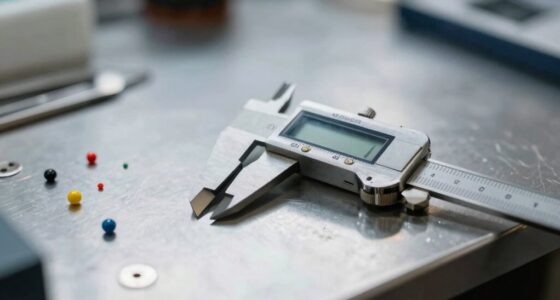
Surface roughness, specifically the Ra value, measures how smooth or uneven a surface feels and looks, affecting its performance, durability, and appearance. Think of Ra as a score that shows how much the surface deviates from a perfectly smooth line—lower numbers mean the surface is smoother. Understanding what Ra indicates helps you assess if a surface will work well for your needs. To learn what these numbers really mean, keep exploring the details below.
Key Takeaways
- Ra measures the average height difference between high and low points on a surface.
- It indicates how smooth or rough a surface feels and looks.
- Lower Ra values mean a smoother surface; higher Ra means rougher.
- Ra is used as a standard number to compare surface finishes accurately.
- Measuring Ra helps ensure surfaces meet quality and performance requirements.
What Is Surface Roughness and Why Is It Important?

Surface roughness refers to the microscopic variations and unevenness on a material’s surface. It directly impacts the surface finish, influencing how the part looks and feels. A smooth surface often means better performance, easier cleaning, and less wear, especially in applications like medical devices or aerospace components. Maintaining consistent surface roughness helps you meet manufacturing tolerances, ensuring parts fit and function properly. If the roughness is too high, it can lead to increased friction, corrosion, or fatigue failure. Conversely, too smooth a surface might require extra processing, increasing costs. Understanding surface roughness allows you to control quality, optimize manufacturing processes, and achieve the desired balance between appearance, performance, and cost. Additionally, measuring surface roughness accurately with appropriate tools is essential for maintaining manufacturing quality and ensuring the final product meets specifications. Proper measurement techniques and understanding the significance of roughness parameters help maintain consistency and reliability in production. Recognizing the role of surface finish in overall product durability is crucial for long-term performance. Moreover, advancements in nanotechnology are enabling more precise control and measurement of surface roughness at the microscopic level, opening new possibilities for high-performance applications.
What Does Ra Mean in Surface Roughness?
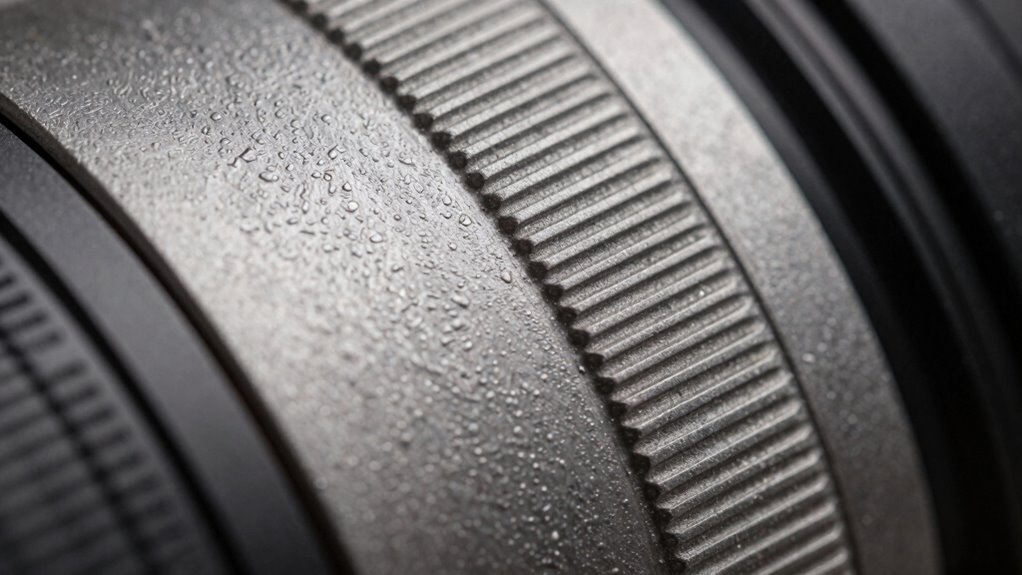
Ra, or average roughness, measures the overall height variations of a surface. You can assess it using different techniques like profilometers and surface analyzers. Understanding Ra helps guarantee your parts meet quality standards and perform reliably. Additionally, accurate measurement of surface roughness can influence website performance metrics by ensuring the surfaces involved meet precise specifications. Recognizing the importance of body jewelry measurements and the proper selection of materials can further enhance the reliability of surface assessments. Incorporating standardized measurement methods can also improve measurement consistency across different testing environments. Moreover, consistent Ra measurement practices are essential for maintaining manufacturing quality control in various industries.
Ra Definition and Meaning
Have you ever wondered what the term “Ra” really means when evaluating surface roughness? Ra stands for average roughness, a key parameter in surface roughness measurement standards. It quantifies the average deviation of a surface’s profile from its mean line over a specified length. Basically, Ra provides a single number that describes how rough or smooth a surface feels and looks. This measurement helps manufacturers ensure parts meet quality and performance criteria. Ra is widely used because it’s simple and standardized, making it easy to compare surfaces across different applications. While it doesn’t capture every detail of surface texture, it remains a reliable, straightforward way to assess surface quality according to measurement standards.
Ra Measurement Techniques
To accurately measure Ra, technicians use various surface roughness testing techniques that capture the surface profile’s deviations. Contact methods like stylus profilometers trace the surface, providing precise Ra readings essential for evaluating coating adhesion. Non-contact techniques, such as optical interferometry and laser scanning, offer rapid, non-destructive measurements, especially useful for delicate surfaces. These methods help determine how surface roughness influences corrosion resistance, as smoother surfaces generally resist corrosion better. By selecting the appropriate technique, you guarantee reliable data, which supports quality control and performance evaluation. Whether using stylus profilometers or optical methods, understanding Ra measurement techniques allows you to evaluate surface conditions accurately, ultimately improving coating longevity and resistance to environmental damage.
Ra’s Role in Quality
Understanding what Ra signifies in surface roughness is essential for evaluating quality because it quantifies the average deviations of a surface profile from its mean line. In manufacturing standards, Ra provides a clear benchmark to guarantee products meet specific surface finish criteria. During quality control, measuring Ra helps you verify that surfaces adhere to required levels, reducing defects and failures. A lower Ra indicates a smoother surface, often correlating with better performance, corrosion resistance, and aesthetic appeal. Conversely, higher Ra values may signal issues like poor machining or wear. By consistently monitoring Ra, you assure your manufacturing processes produce reliable, high-quality parts that meet industry standards and customer expectations. Additionally, understanding surface finish parameters like Ra can help optimize manufacturing settings for better efficiency and product longevity. Monitoring Ra also assists in identifying wear and degradation over time, which is crucial for maintaining product integrity and extending service life. This focus on surface finish directly impacts the overall quality and longevity of your products, especially when natural factors influence surface wear and degradation over time.
How Do You Measure Ra? Tools and Techniques
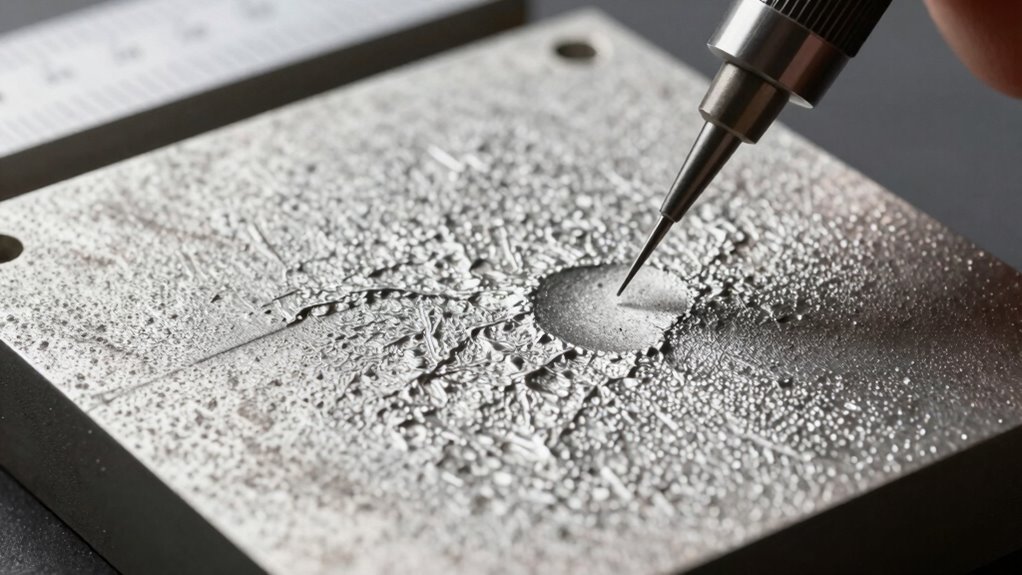
Ever wondered how surface roughness, specifically Ra, is accurately measured? You typically use surface profilometers, which can be contact or non-contact devices. Tactile sensors are common in contact profilometers, where a stylus traces the surface to record height variations. The process involves moving the sensor across the surface and collecting data points to calculate Ra. Measurement accuracy is crucial to ensure reliable data. Additionally, understanding the measurement methods helps in selecting the right tool for your specific surface analysis needs. Knowing the instrument calibration process is also vital for maintaining measurement precision, especially when comparing different surfaces or materials.
What Do Different Ra Values Tell Us?

Have you ever wondered what different Ra values reveal about a surface’s quality? Higher Ra numbers indicate a rougher surface, which can affect how parts interact or wear over time. Lower Ra values mean a smoother finish, often essential for applications requiring tight tolerances or low friction. When comparing surface finish, Ra provides a straightforward way to assess roughness levels quickly. A rough surface might be suitable for applications needing better adhesion, while a smoother one might be necessary for precision components or aesthetic reasons. Understanding what different Ra values tell you helps in making informed decisions about manufacturing processes, material choices, and final product performance. Additionally, knowing the surface roughness measurement process can help ensure accurate and consistent evaluation of finishes. Recognizing how surface roughness impacts performance guides engineers in selecting the appropriate finish for each specific use. Moreover, being aware of the Ra measurement standards ensures comparability and reliability of the data across different industries. Familiarity with the measurement techniques also helps in troubleshooting and improving manufacturing quality. Gaining insight into the manufacturing tolerances associated with various Ra levels further supports optimal design and production outcomes.
Why Ra Matters in Real-World Applications
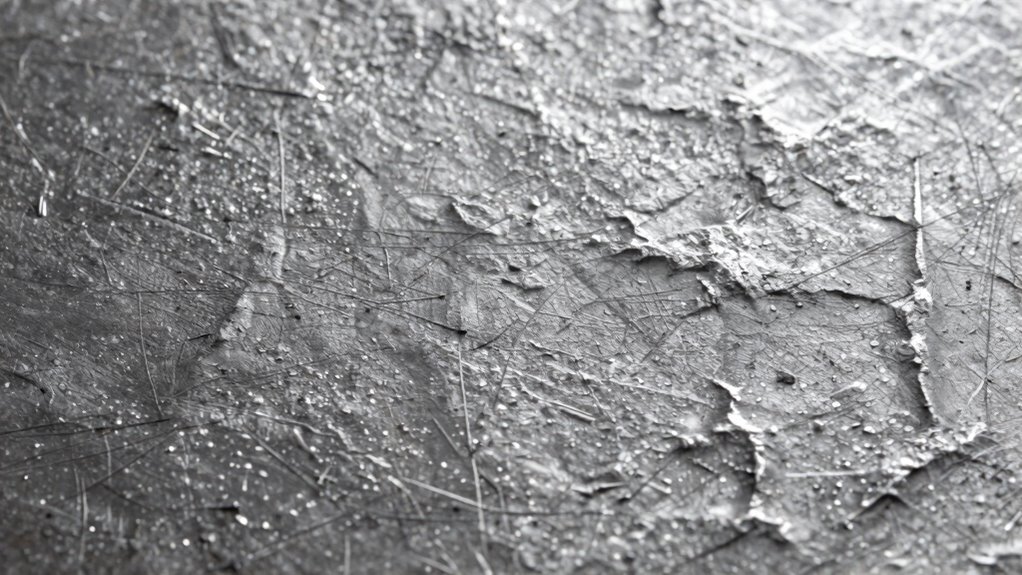
Different Ra values directly impact how surfaces perform in real-world situations. A smoother surface finish, indicated by a low Ra, reduces friction, minimizes wear, and prevents corrosion, which is vital in machinery and precision components. Conversely, a higher Ra may be acceptable in applications where appearance or grip is more important than smoothness. Maintaining proper manufacturing tolerance ensures your parts fit correctly and function reliably. If Ra is too high or too low, it can cause assembly issues or premature failure. Knowing why Ra matters helps you select the right surface finish for your specific needs, balancing performance, durability, and cost. Proper surface roughness can also influence the effectiveness of coating adhesion and other finishing processes. By understanding the significance of Ra, you can better control quality and ensure your products meet both functional and aesthetic expectations.
Best Practices for Accurate Surface Roughness Testing
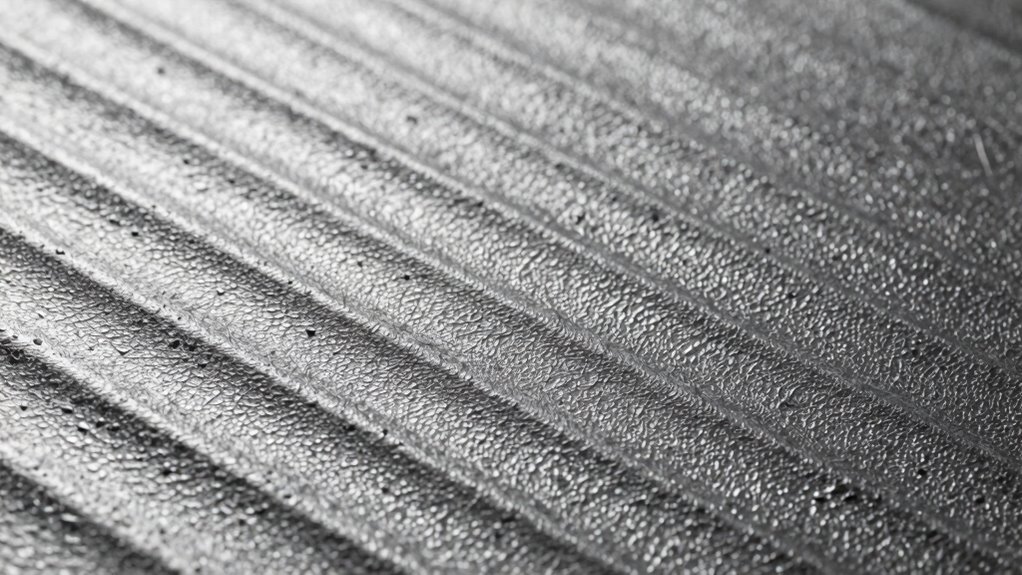
To guarantee accurate surface roughness testing, you must follow standardized procedures and calibrate your equipment regularly. This ensures measurement precision and consistent results. Always use the appropriate stylus or probe suited for your surface finish, and clean your tools to prevent contamination. Perform tests under stable environmental conditions—temperature and humidity can affect readings. Environmental control is critical for reliable measurements. Properly maintaining your equipment and adhering to standardized testing protocols helps achieve precise measurements, ultimately giving you a true understanding of your surface finish and ensuring quality control. Additionally, understanding surface measurement techniques can further enhance your testing accuracy. Being aware of measurement uncertainty factors can help you interpret your results more confidently.
Frequently Asked Questions
How Does Surface Roughness Affect Product Lifespan?
Surface roughness directly impacts your product’s lifespan by influencing surface wear and corrosion resistance. A rougher surface tends to wear faster, leading to early failure, while a smoother finish reduces wear and resists corrosion better. When you control surface roughness, you enhance durability, minimize maintenance, and extend your product’s life. So, maintaining an ideal surface finish is key to ensuring your product performs well over time.
Can Ra Be Used to Compare Different Materials?
You can use Ra for material comparison, but keep in mind that Ra variability can differ due to surface treatments or manufacturing processes. While it provides a useful baseline, it’s not always perfect for comparing vastly different materials. To get the most accurate insights, consider supplementing Ra with other surface metrics and understanding each material’s specific context, ensuring your comparisons are meaningful and truly reflect performance differences.
What Environmental Factors Influence Surface Roughness Measurements?
Environmental conditions, like temperature, humidity, and vibrations, can substantially impact your surface roughness measurements. Fluctuating temperatures may cause material expansion or contraction, skewing results, while humidity affects measurement device performance. Vibrations can introduce errors, reducing measurement accuracy. To guarantee reliable readings, control these environmental factors as much as possible during testing. This helps you get consistent data and accurately compare surface roughness across different samples.
How Often Should Surface Roughness Be Tested in Manufacturing?
You should perform surface roughness measurements regularly throughout manufacturing, especially after key process steps or when equipment settings change. The measurement frequency depends on your product specifications and quality standards. Use appropriate testing methods, like stylus or optical profilometers, to guarantee consistent accuracy. Regular testing helps catch deviations early, maintain quality, and reduce rework or scrap, keeping your production efficient and your products reliable.
Are There Industry Standards for Acceptable Ra Levels?
Yes, industry benchmarks set acceptable Ra levels for different applications, ensuring consistent quality assurance. You should refer to these standards to determine the appropriate surface roughness for your specific industry, whether it’s automotive, aerospace, or manufacturing. By aligning with these benchmarks, you guarantee your products meet safety, performance, and aesthetic requirements. Regularly checking your surface roughness against industry standards helps maintain high-quality outputs and reduces the risk of defects.
Conclusion
Understanding Ra helps you gauge surface quality effectively. Did you know that over 70% of manufacturing defects are linked to surface imperfections? By mastering surface roughness testing, you can guarantee better product performance and customer satisfaction. Keep in mind, accurate Ra measurements are essential—small errors can lead to costly rework or failure. So, stay precise and informed, and you’ll always produce surfaces that meet your standards and expectations.