
To compare measuring microscopes without overpaying, focus on key features like calibration ease, build quality, and durability. Look for models with clear digital readouts or automated calibration routines to guarantee accuracy and save time. Check the manufacturer’s maintenance instructions and consider long-term costs. Opt for a sturdy build to improve stability and reduce calibration frequency. If you keep these tips in mind, you’ll find a reliable, cost-effective microscope. Continue exploring to discover more helpful insights.
Key Takeaways
- Prioritize models with straightforward calibration features and digital readouts to ensure accuracy without additional expenses.
- Evaluate build quality and durability to reduce long-term maintenance and calibration costs.
- Compare initial prices alongside expected calibration, maintenance, and support expenses for true value.
- Test ease of calibration and user-friendliness to minimize errors and time-consuming adjustments.
- Consider manufacturer support and availability of calibration accessories to avoid hidden or costly upgrades.
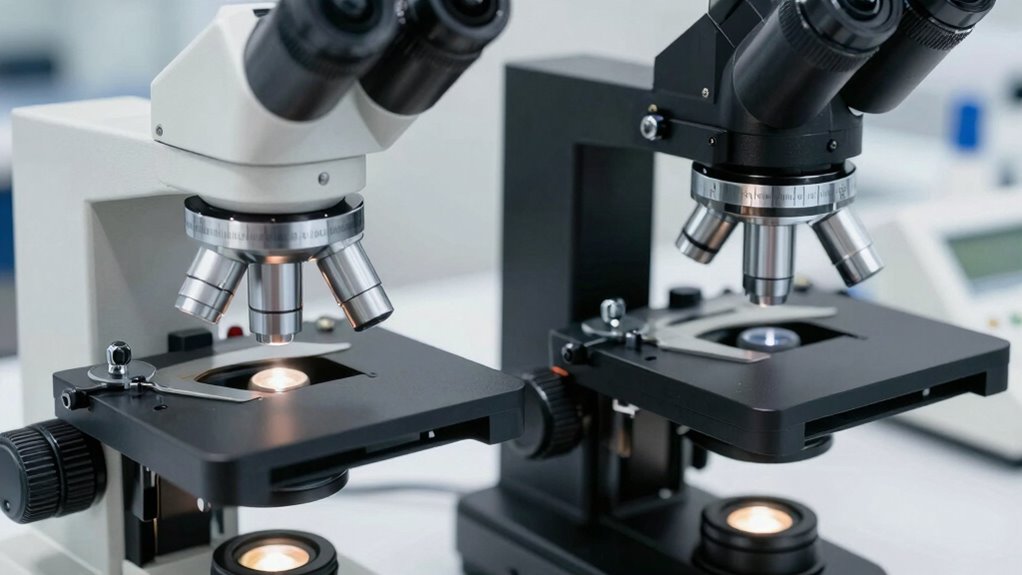
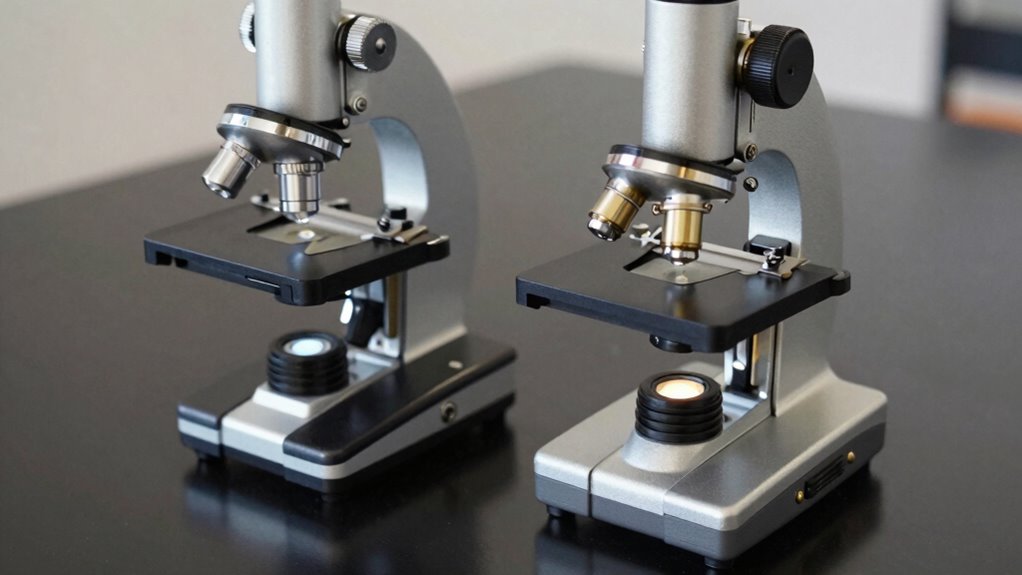
When choosing a measuring microscope, understanding the key differences between models is vital to making an informed decision. One of the most important factors to weigh is how each microscope handles calibration, which directly impacts measurement accuracy. Look for models that offer straightforward calibration techniques—ideally, those that allow you to calibrate quickly and precisely using standard calibration tools. Some microscopes feature digital readouts or built-in calibration routines, making it easier to maintain accuracy without extensive technical knowledge. Avoid models that lack clear calibration procedures or require complicated adjustments, as these can lead to measurement errors over time and end up costing you more in the long run. Proper calibration procedures and features that support consistent accuracy are essential to ensuring reliable measurements.
Another essential aspect is maintenance. Proper maintenance tips can greatly extend the lifespan and reliability of your measuring microscope. Check whether the manufacturer provides detailed guidance on routine cleaning, lubrication, and part inspection. Regularly cleaning lenses with proper cleaning solutions and soft cloths prevents dust and smudges from affecting measurement accuracy. Keep moving parts, such as focus mechanisms and stage controls, well-lubricated to guarantee smooth operation. Don’t overlook the importance of protecting the instrument from dust, moisture, and temperature fluctuations, which can compromise precision. Choosing a model with accessible parts for maintenance or one that’s designed for easy upkeep can save you money and hassle over time. Being aware of instrument durability and how it influences long-term performance can help you select a model that maintains accuracy over its lifespan. Additionally, understanding the manufacturing quality can provide insights into the long-term stability of calibration and overall reliability. Recognizing the role of material quality in construction can also help you choose a microscope that withstands daily use and environmental challenges.
When comparing different measuring microscopes, evaluate the build quality and how it influences calibration stability. Higher-quality models often feature more durable components that hold calibration longer and require less frequent adjustments. Don’t just focus on initial price; think about the total cost of ownership, including maintenance and calibration needs. Some models might seem affordable upfront but demand costly calibration equipment or frequent professional servicing, which can add up quickly. Conversely, investing a bit more in a model with user-friendly calibration techniques and simple maintenance tips can pay off by reducing downtime and ensuring you get the most accurate measurements. Additionally, consider the availability of customer support and how easily you can access technical assistance if issues arise.
Finally, test how intuitive the calibration process is during demonstrations or trials. A user-friendly calibration routine can save you time and prevent errors. Look for features like digital displays or automated calibration steps that simplify the process. Remember, a measuring microscope is an investment in precision, so balancing cost with features that support reliable calibration and easy maintenance will help you avoid overpaying while ensuring you get the accuracy you need.
digital measuring microscope with calibration routine
As an affiliate, we earn on qualifying purchases.
As an affiliate, we earn on qualifying purchases.
Frequently Asked Questions
How Do Measuring Microscopes Differ From Standard Microscopes?
Measuring microscopes differ from standard microscopes mainly in precision features like calibration standards, which guarantee accurate measurements, and optical clarity, which provides sharp, detailed images essential for precise analysis. While standard microscopes focus on viewing samples, measuring microscopes are designed for exact measurements, often including reticles and digital readouts. When comparing, check these features to avoid overpaying for unnecessary capabilities and ensure you get the right tool for your needs.
What Features Are Essential for Industrial Measurement Accuracy?
Think of industrial measurement accuracy as a finely tuned symphony; every feature must harmonize. You need precise calibration procedures to keep measurements on pitch, ensuring consistency over time. Optical resolution is your conductor’s baton, revealing minute details that standard microscopes miss. Look for rugged build quality, stable illumination, and precise stage movement. These essentials guarantee your microscope delivers reliable, high-precision measurements, making your work both accurate and trustworthy.
Can Measuring Microscopes Be Used for Biological Samples?
Measuring microscopes can be used for biological samples, especially for biological imaging. You’ll need to guarantee proper sample preparation to get clear, accurate results. Use appropriate slides, stains, or coverslips to enhance visibility and contrast. While some microscopes are specifically designed for biological applications, others might require modifications. Always verify that the microscope’s features meet your biological imaging needs to avoid overpaying for unnecessary capabilities.
How Important Is Magnification Range in Measurement Microscopes?
Oh, the grandeur of magnification range! You’ll find it essential in measurement microscopes for magnification versatility and measurement precision. A broad range lets you adapt to various samples, ensuring you don’t miss tiny details or get lost in the grandeur. Without it, your measurements could be as unreliable as a weather forecast. So, prioritize a good magnification range to keep your precision sharp and your versatility intact.
What Maintenance Is Required for Measuring Microscopes?
To keep your measuring microscope accurate, you need to follow proper maintenance. Regular calibration procedures ensure measurements stay precise, so check and adjust settings periodically. Clean the lenses and optical components using recommended cleaning protocols to prevent dust and smudges from affecting clarity. Also, inspect and lubricate moving parts as needed. Proper maintenance prolongs your microscope’s lifespan and guarantees reliable measurements, saving you money and ensuring consistent results.
sturdy construction measuring microscope
As an affiliate, we earn on qualifying purchases.
As an affiliate, we earn on qualifying purchases.
Conclusion
When comparing measuring microscopes, you shouldn’t just look at price — consider features and accuracy to get the best value. Did you know that investing in the right microscope can improve measurement precision by up to 30%? That’s a significant boost for your work and savings in the long run. Take your time, do your research, and choose wisely to avoid overpaying while ensuring premium performance. Your careful decision today pays off tomorrow.
calibration tools for measuring microscopes
As an affiliate, we earn on qualifying purchases.
As an affiliate, we earn on qualifying purchases.
maintenance kit for measuring microscopes
As an affiliate, we earn on qualifying purchases.
As an affiliate, we earn on qualifying purchases.