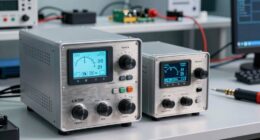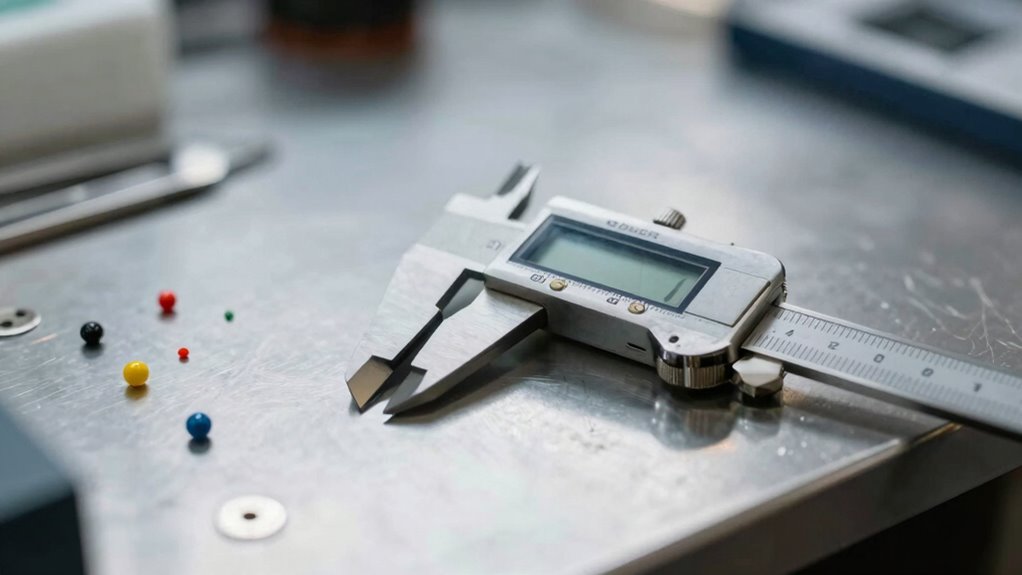
An error budget helps you understand and manage where measurement errors come from so you can guarantee data accuracy. Common sources include instrument limitations like finite resolution and calibration errors, environmental factors like temperature changes and vibrations, and human mistakes such as procedural lapses. External influences like electromagnetic interference also impact measurements. By identifying and controlling these sources, you can better allocate error margins and improve overall measurement reliability—if you want to know how to do this effectively, keep exploring the details.
Key Takeaways
- Measurement errors originate from sensor limitations, environmental factors, calibration inaccuracies, and human procedural mistakes.
- Environmental influences like temperature, humidity, vibrations, and electromagnetic interference cause systematic drift and distortions.
- Sensor drift and response time constraints lead to gradual inaccuracies and dynamic measurement errors.
- Calibration errors, improper data processing, and outdated routines introduce biases and long-term inaccuracies.
- Human errors such as procedural lapses, misinterpretation, fatigue, and insufficient training impact data quality.
What Is an Error Budget: and Why Does It Matter?
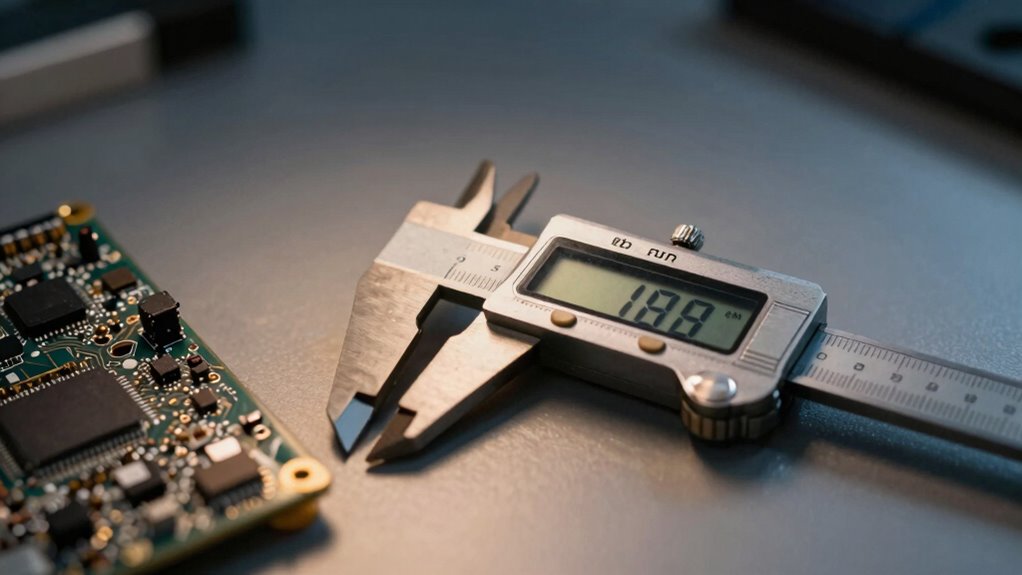
An error budget is the maximum amount of allowable service downtime or performance deviation for a system within a specified period. It helps you understand how much error is acceptable before service quality is impacted. Sensor drift, a gradual change in sensor accuracy, can consume part of this budget if not managed properly. Data redundancy plays a vital role in maintaining the accuracy of measurements, allowing you to cross-check data and identify errors before they affect the system. By setting an error budget, you can balance performance and reliability, ensuring that small deviations don’t escalate into bigger issues. This approach helps you prioritize maintenance, calibrations, and system improvements, ultimately keeping your system running smoothly within the defined limits. Recognizing factors like measurement accuracy is essential, as it directly influences how effectively you can stay within your error budget. Additionally, understanding sensor calibration and its impact on measurement reliability is crucial for maintaining system integrity. Incorporating redundant measurements can further enhance system robustness by providing backup data sources to verify accuracy. Moreover, regular monitoring of error sources can help detect and mitigate issues proactively, safeguarding the overall system performance.
Where Do Measurement Errors Come From? The Main Sources

Understanding where measurement errors originate is key to managing your error budget effectively. One main source is sensor drift, which causes readings to gradually shift over time, leading to inaccuracies. Environmental factors, aging components, or temperature changes often cause drift. Data smoothing techniques can help reduce the impact of random noise, but they don’t eliminate systematic errors like drift. Additionally, measurement errors can stem from external influences, such as electromagnetic interference or vibrations, which distort signals. Recognizing these sources allows you to implement better calibration routines and error mitigation strategies. For example, proper sensor maintenance can significantly reduce the effects of drift and external interference. Monitoring sensor performance over time can also help identify early signs of drift or other issues. Incorporating error correction algorithms into your data processing can further enhance measurement accuracy. Furthermore, understanding systematic errors enables you to develop targeted correction methods, improving measurement reliability. Being aware of measurement noise sources helps you choose appropriate filtering approaches. By understanding how sensor drift and data smoothing affect your measurements, you can refine your approach and improve the overall accuracy of your data collection process.
How Instrument Limitations Cause Measurement Uncertainty
Instrument limitations directly contribute to measurement uncertainty by imposing physical or technical boundaries on what your instruments can accurately capture. Your instrument’s precision determines how finely it can measure a parameter, and any limitations here cause inherent uncertainty. Sensor limitations, such as finite resolution or response time, also restrict measurement accuracy. For example, a sensor might have a limited number of measurable levels, leading to quantization errors. These constraints mean you can’t achieve perfect measurements, only approximate them within certain bounds. Recognizing how instrument precision and sensor limitations affect your data helps you understand the inherent uncertainties in your measurements. Additionally, measurement resolution plays a crucial role in defining the smallest change detectable by your instrument, impacting overall accuracy. The response time of a sensor can also introduce errors, especially in dynamic measurements where rapid changes occur. Proper Instrument calibration is essential for minimizing these uncertainties and ensuring measurement reliability. Being aware of the calibration process can help identify potential sources of error and improve measurement consistency. This understanding allows you to better evaluate your measurement’s reliability and plan appropriate calibration or correction strategies.
Environmental Factors That Lead to Measurement Errors
Environmental factors can considerably impact measurement accuracy by introducing external influences that distort your data. Environmental influences such as temperature fluctuations, humidity, and air currents can cause measurement drift or fluctuations. External disturbances like vibrations, electromagnetic interference, or even changes in atmospheric pressure can interfere with sensitive instruments, leading to errors. These External disturbances often act unpredictably, making it imperative to account for them in your measurement setup. Implementing environmental controls such as shielding, stabilization, or environmental enclosures can significantly reduce their impact. Recognizing how external disturbances affect your data is crucial for maintaining measurement precision, so implementing proper controls is essential. Additionally, understanding measurement error sources allows you to identify which environmental factors need mitigation strategies. Managing these influences effectively helps in maintaining measurement accuracy and ensures reliable results. Ignoring these influences risks compromising the reliability of your measurements, so understanding and managing environmental factors is essential for achieving precise and accurate results.
Human Errors and Operational Mistakes That Impact Data Quality
Human errors and operational mistakes are common sources of measurement inaccuracies that can undermine data quality. Human oversight often leads to procedural lapses, such as incorrect data entry or misinterpretation of results. These mistakes may seem minor but can considerably impact the accuracy of your measurements. Recognizing these issues helps you implement safeguards like checklists or double-check systems. To understand better, consider this table:
| Error Type | Impact on Data Quality |
|---|---|
| Human oversight | Missed errors, inconsistent data |
| Procedural lapses | Data gaps, incorrect procedures executed |
| Fatigue | Reduced attention, increased mistakes |
| Lack of training | Misuse of equipment, misinterpretation of data |
| Distractions | Oversights, incomplete data collection |
Additionally, continuous training can help keep personnel vigilant and reduce mistakes over time. Implementing standardized procedures ensures consistency across data collection efforts. Moreover, fostering a culture of quality emphasizes the importance of accuracy and attention to detail in every task. Addressing these human factors is essential for maintaining reliable, high-quality data. Emphasizing training and education can significantly reduce errors and improve overall data integrity, especially when combined with error detection methods to catch mistakes early.
How Calibration and Data Processing Introduce Measurement Errors
Calibration and data processing are critical steps that can introduce measurement errors if not performed correctly. Poor calibration procedures can cause systematic errors by misaligning instruments or using incorrect reference standards, leading to inaccurate data. Similarly, flawed data processing techniques, such as improper filtering or calculation methods, can distort the true measurement signals. Even small mistakes in calibration routines—like overlooking environmental factors or failing to regularly verify calibration accuracy—can compound errors over time. Measurement accuracy can be compromised if calibration procedures are inconsistent or outdated. Inadequate data processing may also introduce bias or noise, reducing measurement reliability. To minimize these errors, you need to follow precise calibration procedures and apply sound data processing techniques. Ensuring meticulous calibration and careful data handling helps maintain measurement integrity and reduces uncertainty in your results.
Creating an Effective Error Budget to Improve Measurement Accuracy

To create an effective error budget, you need to start by setting clear measurement goals that define what accuracy you require. Next, you should allocate error margins carefully to guarantee each component stays within its limits. This approach helps you identify potential issues early and improve your overall measurement reliability.
Setting Clear Measurement Goals
Setting clear measurement goals is essential for establishing an effective error budget. When you define precise objectives, you create a solid foundation for goal setting that aligns with measurement standards. Clear goals help you identify which errors are acceptable and which need reduction, ensuring your efforts target the most impactful areas. Without specific targets, you risk misallocating resources or overlooking critical sources of error. By articulating what you want to achieve, you can better tailor your measurement process and set realistic, achievable benchmarks. Well-defined goals also facilitate communication among team members, making sure everyone understands the measurement standards and expectations. Ultimately, clear measurement goals guide your entire error management strategy, leading to more accurate, reliable results.
Allocating Error Margins Properly
Allocating error margins properly is key to building a reliable error budget that enhances measurement accuracy. You need to understand sensor limitations to assign realistic error margins, avoiding overconfidence or excessive caution. Recognize that sensors have inherent constraints, which can contribute to measurement uncertainty. Incorporate data validation techniques to identify and correct anomalies, ensuring your error margins reflect true measurement capabilities. By carefully distributing error allowances based on sensor performance and data validation results, you prevent one source from dominating your overall uncertainty. This balanced approach helps you develop an effective error budget, making your measurements more trustworthy. Proper allocation guides decision-making, improves calibration strategies, and ultimately increases confidence in your measurement results.
Frequently Asked Questions
How Can I Prioritize Sources of Measurement Errors Effectively?
To prioritize sources of measurement errors effectively, start with thorough error analysis to identify the biggest contributors. Focus on data calibration processes, guaranteeing instruments are accurately calibrated to reduce systematic errors. Regularly review calibration records and compare measurements over time. Address the most significant error sources first to improve overall accuracy, then refine calibration and measurement procedures continuously. This approach ensures you target efforts where they’ll have the greatest impact.
What Role Does Sensor Aging Play in Measurement Inaccuracies?
Think of your sensor as a seasoned sailor steering rough seas; over time, it experiences sensor drift, subtly veering off course. As it ages, calibration challenges grow, making measurements less reliable. This gradual shift impacts accuracy, just like a compass losing its true north. To keep your measurements precise, you need to regularly calibrate and replace aging sensors, ensuring they stay true and dependable in your data voyage.
How Do Software Bugs Affect Measurement Data Quality?
Software bugs can profoundly impact your measurement data quality by causing software glitches that lead to incorrect readings or data corruption. When these bugs occur, they may introduce errors or inconsistencies, which compromise the accuracy of your measurements. You should regularly update and test your software to minimize these issues, ensuring your data remains reliable and precise despite potential software-related challenges.
Can Measurement Errors Be Completely Eliminated?
You can’t completely eliminate measurement errors, but you can reduce them. Calibration issues and external interference are common culprits that contribute to errors. Regular calibration ensures your instruments stay accurate, while shielding against external interference reduces disruptions. While perfection isn’t possible, proactive maintenance and proper setup considerably improve data quality, helping you get as close to accurate measurements as feasible.
What Are Best Practices for Monitoring Error Budget Performance Over Time?
To monitor error budget performance effectively, you should set up continuous error detection and anomaly detection systems. Regularly review metrics and logs to identify deviations early. Automate alerts for anomalies, so you can respond promptly. Use dashboards to visualize error trends over time, and establish thresholds to flag potential issues. Consistently analyzing these data points helps you maintain a healthy error budget and improve system reliability.
Conclusion
Understanding where measurement errors originate helps you build a solid error budget. By addressing instrument limitations, environmental factors, human mistakes, and data processing issues, you can markedly improve accuracy. Remember, “A stitch in time saves nine”—tackle errors early to prevent bigger problems later. With careful attention and continuous improvement, you’ll achieve more reliable measurements and better decision-making. Keep refining your process, and accuracy will follow.