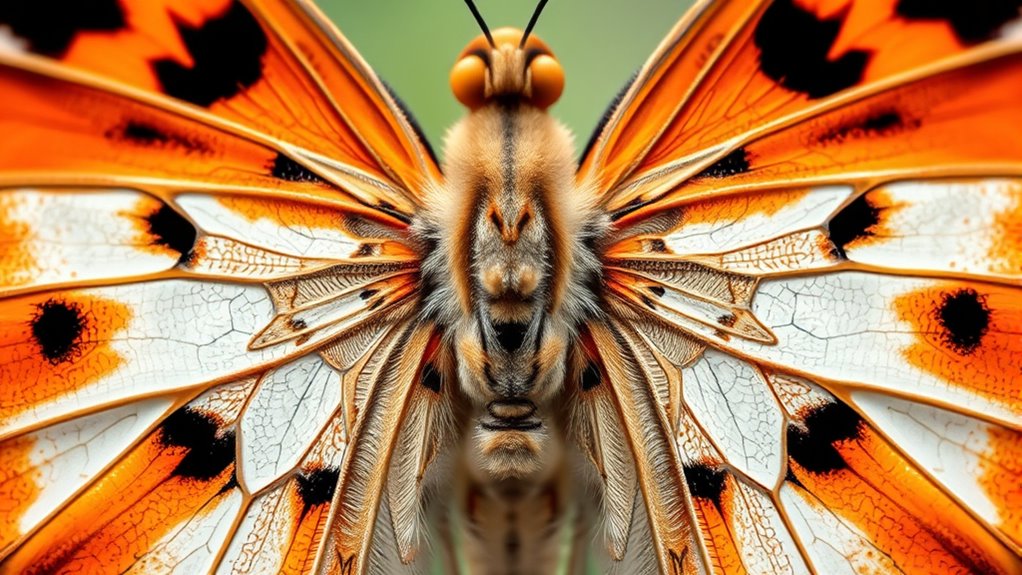

Symmetry is a unifying concept across math, art, and nature that helps you see the deep order and beauty in the world around you. In math, it appears through patterns and transformations that reveal underlying structures. In art, it creates balance and harmony, drawing your attention and evoking emotions. In nature, symmetry reflects efficiency and survival, from butterfly wings to human bodies. Keep exploring to discover how symmetry connects these fields and shapes our understanding of the universe.

Prime made for students and young adults
- Fast, free delivery for dorm and study essentials
- Prime Video and Amazon Music included
- Member-only deals
Key Takeaways
- Symmetry appears in math through groups that preserve shapes, revealing underlying structures and patterns across different systems.
- In art, symmetry creates balance and harmony, enhancing aesthetic appeal and conveying cultural or emotional messages.
- Natural symmetry reflects evolutionary efficiency, aiding in movement, survival, and communication in species like butterflies and humans.
- Symmetry acts as a bridge connecting math, art, and nature, helping us understand complex systems and appreciate their interconnectedness.
- Recognizing symmetry uncovers the universe’s underlying order, influencing scientific laws, artistic design, and natural phenomena.
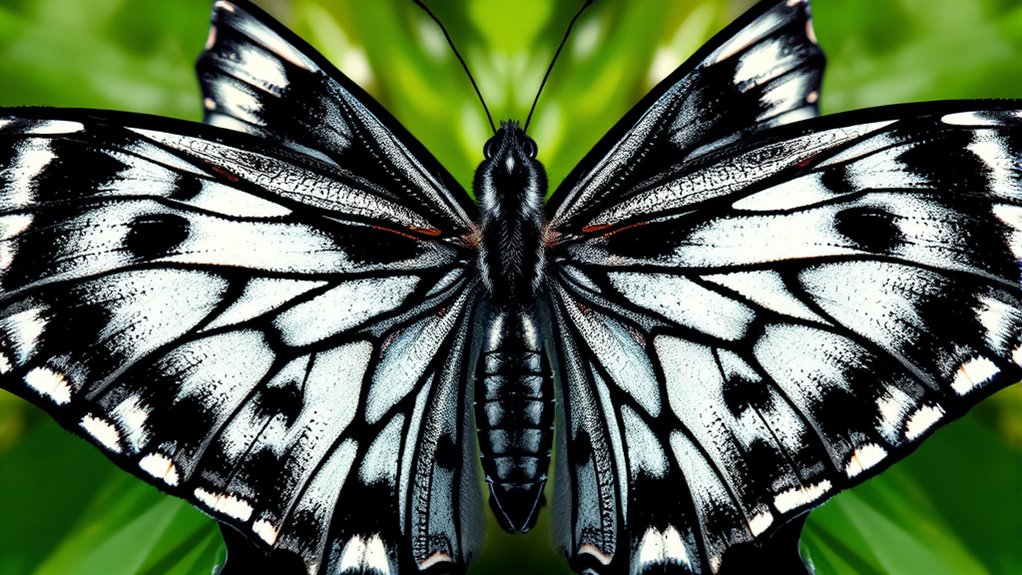
Have you ever wondered why symmetry appears so frequently in math, art, and nature? It’s because symmetry taps into a fundamental sense of order and harmony that resonates across different fields. In math, symmetry manifests through mathematical groupings—sets of transformations that preserve certain properties of shapes or structures. These groupings, called groups in mathematical terms, help us understand how objects can be rotated, reflected, or translated while remaining fundamentally unchanged. Recognizing these patterns allows mathematicians to classify shapes, solve equations, and explore the deep structure underlying everything from simple polygons to complex molecules. This systematic approach to symmetry reveals the inherent patterns that govern the universe, making it a powerful tool for understanding the world around you. Mathematical groupings serve as the foundation for many symmetry-related concepts, illustrating how abstract structures underpin observable phenomena.
Symmetry reveals hidden patterns and order through transformations that leave structures unchanged.
In art, symmetry provides artistic balance, creating images that feel stable, pleasing, and complete. When you look at a painting or sculpture, you might notice how symmetrical elements draw your eye and establish a sense of harmony. Artists often use symmetry intentionally to evoke specific emotions or convey order. Whether it’s the mirrored halves of a face, the balanced composition of a landscape, or the repetitive patterns in decorative arts, symmetry guides your perception and enhances aesthetic appeal. It’s not just about making things look pretty; symmetry helps communicate cultural values, spiritual beliefs, and even social structures. By arranging elements in a balanced way, artists craft visual stories that resonate deeply with viewers, tapping into an instinctive appreciation for order and beauty.
In nature, symmetry appears as a reflection of evolutionary efficiency and survival strategies. Many organisms exhibit symmetrical forms—think of butterfly wings, flower petals, or the bilateral symmetry of the human body. This natural symmetry isn’t accidental; it often plays a role in how creatures move, attract mates, or adapt to their environments. The symmetry you see in natural patterns is also a result of physical and biological laws that favor stability and functionality. For example, the radial symmetry of a starfish allows it to sense and respond to stimuli from all directions. Symmetry in nature helps ensure balance, functional efficiency, and resilience. It’s a visual language that nature uses to communicate, protect, and thrive.
Throughout your experience of the world, symmetry acts as a bridge connecting math, art, and nature. It’s a universal principle that makes complex systems comprehensible and aesthetically pleasing. Recognizing the mathematical groupings behind symmetrical patterns deepens your understanding of structure, while appreciating artistic balance enhances your perception of beauty. In nature, symmetry reminds you of the interconnectedness and harmony that pervades life. By exploring symmetry, you gain insight into the underlying order of the universe, revealing how it influences everything from scientific laws to artistic expression and natural design.
As an affiliate, we earn on qualifying purchases.
Frequently Asked Questions
How Does Symmetry Influence Human Perception and Cognition?
Symmetry greatly influences your visual perception and cognitive processing by making objects appear more organized and familiar. When you see symmetrical patterns, your brain quickly recognizes balance and harmony, simplifying complex visuals. This ease of processing helps you feel more comfortable and engaged with your surroundings. Symmetry also enhances aesthetic appeal, guiding your attention and shaping your overall understanding of the world around you.
Can Symmetry Be Artificially Created or Manipulated in Digital Media?
Yes, you can definitely create or manipulate symmetry in digital media. Using tools like graphic editors, you can generate digital symmetry and design synthetic patterns that mimic natural symmetry. These techniques allow you to craft perfect or intentionally imperfect symmetrical images, enhancing visual appeal or conveying specific ideas. Digital symmetry gives you endless possibilities to experiment with, making your artwork or media more engaging and balanced.
Are There Types of Symmetry That Are Considered More Aesthetically Pleasing?
You might find that certain types of symmetry, like bilateral or radial, are more aesthetically pleasing because they create a sense of visual harmony and balance. Your aesthetic preferences often favor symmetry that feels natural and familiar, enhancing the overall beauty and coherence of a design or artwork. These symmetrical forms tend to evoke feelings of stability and order, making them more appealing to your eye and subconscious sense of harmony.
How Does Symmetry Evolve in Biological Systems Over Time?
You’ll find that symmetry in biological systems evolves through developmental processes, offering evolutionary advantages like improved mobility and camouflage. For example, around 80% of animals exhibit bilateral symmetry, which helps them move efficiently. Over time, natural selection favors symmetrical features because they enhance survival and reproduction. As environments change, symmetry can become more pronounced or diminish, reflecting adaptations that increase an organism’s chances of thriving in its habitat.
What Are the Latest Discoveries Linking Symmetry to Physics Theories?
You should know that recent discoveries link symmetry to physics theories like supersymmetry and quantum entanglement. Researchers explore how symmetrical patterns emerge in quantum states, potentially revealing new particles predicted by supersymmetry. These insights might unify fundamental forces, offering a deeper understanding of the universe’s fabric. As you follow these developments, you’ll see symmetry’s role as a bridge between abstract theory and observable phenomena.
As an affiliate, we earn on qualifying purchases.
Conclusion
As you recognize symmetry, you see it as a mirror reflecting harmony across worlds. It’s the heartbeat in art, the blueprint in nature, and the language of mathematics. Symmetry symbolizes balance and connection, reminding you that everything is part of a greater pattern. When you embrace this unity, you open a deeper understanding of the universe’s hidden design—where beauty and order intertwine, revealing that we’re all connected through the silent language of symmetry.
natural symmetry educational kit
As an affiliate, we earn on qualifying purchases.
As an affiliate, we earn on qualifying purchases.
As an affiliate, we earn on qualifying purchases.
Fall Picks
fall essentials
As an affiliate, we earn on qualifying purchases.
![Terence Tao Explains 6 Essential Mathematical Concepts [Video]](https://geometr.info/wp-content/uploads/2026/09/terence-tao-explains-6-essential-mathematical-concepts-video-featured-560x300.jpg)