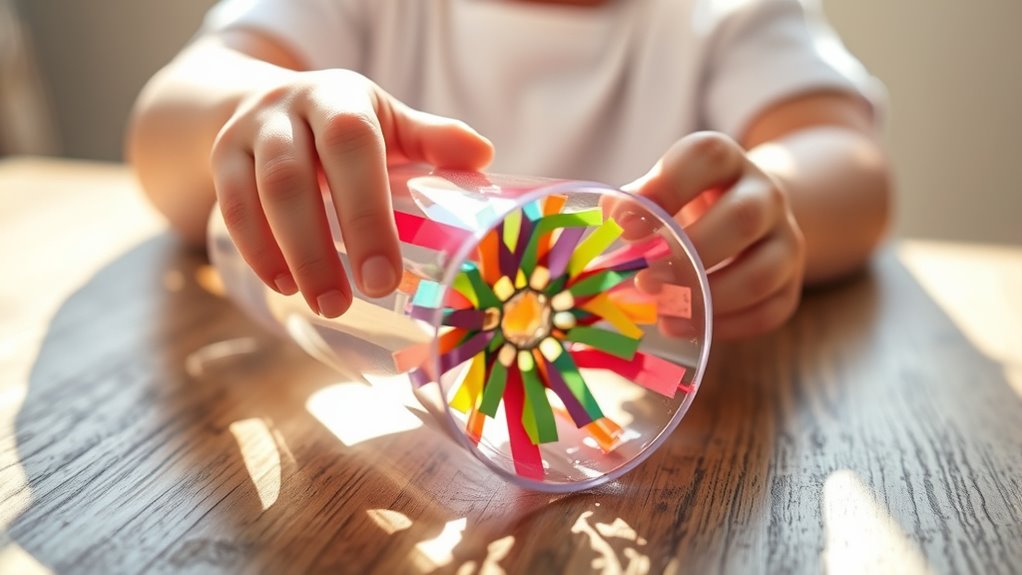

Building your own kaleidoscope with mirrors is a fun, hands-on project that combines science and creativity. First, gather mirrors, a tube, colorful objects, and some tape. Arrange the mirrors in a triangular shape inside the tube and secure them well. Add small bright objects inside, then look through the viewing end and rotate the tube to see mesmerizing, symmetrical patterns form. Keep exploring different arrangements and materials to reveal even more stunning illusions. If you keep experimenting, you’ll discover the magic behind optical illusions.
Key Takeaways
- Gather materials such as mirrors, a tube, colorful objects, and tape to assemble the kaleidoscope.
- Arrange mirror strips in a triangle and tape edges to form a seamless loop for reflections.
- Insert colorful objects inside the tube to create vibrant, repeating patterns when viewed through the end.
- Rotate or shake the tube to observe dynamic, shifting kaleidoscopic images.
- Personalize and experiment with different materials and mirror arrangements to explore unique visual effects.

Have you ever wondered how a kaleidoscope creates its mesmerizing patterns? It all comes down to optical illusions—how your eyes interpret multiple reflections to produce stunning, symmetrical designs. When you build your own kaleidoscope, you’re diving into a world of creative crafts that blend science and artistry. This hands-on project not only sparks your curiosity but also lets you understand the magic behind those enthralling images you see through a kaleidoscope’s tubes.
To start, you’ll need some basic materials: mirrors, a tube, colorful objects, and a viewing end. The key is the mirrors. Arrange three or more small mirror strips in a triangular shape, taping their edges together to form a tight, seamless loop. When you look through the tube, these mirrors reflect the objects inside, creating a complex network of images. This is where optical illusions come into play—your brain perceives many images folded into one, giving the illusion of endless patterns. The better your mirror alignment, the more intricate and symmetrical the patterns will be. It’s a simple yet powerful way to learn how reflections can manipulate perception.
Next, insert your colorful objects—beads, small stones, or even bits of fabric—into the tube between the mirrors. When you look into the open end, you’ll see how the reflections multiply these objects into a beautiful, kaleidoscopic mosaic. As you rotate or shake the tube, the patterns shift, showcasing the dynamic nature of optical illusions. This act of creating and observing patterns turns a basic craft into a fascinating exploration of visual perception. It’s like making your own window into a constantly changing universe of shapes and colors.
Insert colorful objects into your kaleidoscope and watch reflections create mesmerizing, shifting patterns of shapes and colors.
Part of what makes building a kaleidoscope so engaging is the creative freedom it offers. You can experiment with different mirror arrangements, use various materials inside, or decorate your tube to personalize your craft. Each variation produces unique visual effects, and you’ll quickly see how small adjustments can change the entire pattern. This process enhances your understanding of how light and reflection work together to produce the illusions that mesmerize us. Plus, it’s satisfying to see your own creation come to life and produce stunning visuals that you made with your own hands.
In essence, constructing a kaleidoscope is more than just a fun project; it’s a chance to explore optical illusions firsthand while engaging in creative crafts. You become both inventor and observer, learning how simple materials can turn into a mesmerizing tool for visual wonder. So, grab your supplies and start building—your personalized kaleidoscope awaits, ready to reveal the beautiful illusions hiding in everyday objects.

S&S Worldwide Educraft Kaleidoscopes Craft Kit, 6-3/4" Size, Pack of 25, Silver
MAGICAL KIDS KALEIDOSCOPE EXPERIENCE: Create an amazing 25 kaleidoscopes that captivate the imagination, allowing children and adults alike…
As an affiliate, we earn on qualifying purchases.
As an affiliate, we earn on qualifying purchases.
Frequently Asked Questions
What Are the Best Materials for Making Durable Kaleidoscope Mirrors?
When choosing materials for durable kaleidoscope mirrors, focus on their mirror coatings to guarantee high reflective quality. You should look for glass or acrylic mirrors with a silver or aluminum coating, as these offer excellent reflectivity and durability. These coatings help maintain clarity over time, even with frequent use. Avoid cheap or poorly coated materials, as they can degrade quickly, reducing the mirror’s effectiveness and the overall visual experience.
How Can I Customize My Kaleidoscope Design for Unique Patterns?
Imagine your kaleidoscope as a canvas of endless possibilities. You can create unique patterns by experimenting with vibrant color combinations and playful mirror arrangements. Mix different shapes and angles to craft mesmerizing designs that reflect your personality. Don’t be afraid to try bold contrasts or subtle hues. With each twist, your personalized touches will turn simple reflections into a enthralling dance of colors and patterns, making your kaleidoscope truly one-of-a-kind.
What Safety Precautions Should I Take During Assembly?
When assembling your kaleidoscope, prioritize safety by wearing eye protection to shield your eyes from potential debris. Handle sharp edges carefully to avoid cuts, and use tools properly to prevent accidents. Keep your workspace organized and work slowly to stay aware of your surroundings. Always supervise children during assembly, and clean up any small or sharp materials immediately. These precautions help guarantee a safe and enjoyable building experience.
Can I Incorporate Electronic Elements Into My Kaleidoscope?
You can absolutely incorporate electronic integration into your kaleidoscope, adding a new dimension of creativity. Imagine LED illumination transforming your design, enhancing colors, and creating mesmerizing light patterns. By integrating small electronic components, you can make your kaleidoscope interactive, dynamic, and unique. Just guarantee you handle the electronics carefully, keep safety in mind, and choose compatible parts to seamlessly blend electronic elements with your reflective masterpiece.
How Do Different Prism Shapes Affect the Visual Patterns?
Different prism shapes profoundly influence the visual patterns you see through a kaleidoscope. Prism angles determine the complexity and symmetry of reflections, with sharper angles creating more intricate designs. Shapes like triangular or hexagonal prisms promote reflection symmetry, producing balanced, mesmerizing patterns. Experimenting with various prism shapes and angles lets you customize your kaleidoscope’s visuals, revealing unique, enthralling patterns that change with each turn.

Marsui 8 Pieces Shatter Proof Plastic Mirror Craft 4 x 6 Inch Small Mirror Tiles Bulk with Soft Round Corners Double Sided Protective Film Reflector Sheets Art Craft Supply for Bathroom Home Decor
What will you get: the package comes with a total of 8 pieces of plastic mirrors, sufficient quantity…
As an affiliate, we earn on qualifying purchases.
As an affiliate, we earn on qualifying purchases.
Conclusion
Now that you’ve built your own kaleidoscope, you can explore endless patterns, create vibrant designs, and enjoy beautiful moments. With your hands, your imagination, and your newfound skills, you can marvel at the ever-changing images you craft. Keep experimenting, keep discovering, and keep appreciating the magic of reflection. Your kaleidoscope is more than a toy—it’s a window to wonder, a tool for creativity, and a reminder that beauty is always within your reach.

77mm Kaleidoscope Filter, Colorful Prism Variable Number of Shooting Objects Gourmet Wedding Effect SLR Accessories
This is a cool tool for photography, make your photos unique without having to use any effects or…
As an affiliate, we earn on qualifying purchases.
As an affiliate, we earn on qualifying purchases.

DOITOOL 15 Pcs Kaleidoscope Making Kit, Blank DIY Kaleidoscopes for Kids, DIY Paper Craft Materials, Hand Made Science Experiment Projects, Creative Art Activities for Home and Classroom
15 Pcs Kaleidoscope Kit: Ignite a passion for science and optics as children explore light reflection and symmetry…
As an affiliate, we earn on qualifying purchases.
As an affiliate, we earn on qualifying purchases.