Choosing the right compass and protractor depends on your project needs and budget. Opt for durable materials like metal for accuracy or plastic for lighter use. Consider size based on whether you need detailed work or large-scale measurements. Look for features like adjustable arms, clear markings, and comfortable grips to improve precision and comfort. If you keep these tips in mind, you’ll find the best tools for your tasks and discover more tips to enhance your work.
Key Takeaways
- Choose durable materials like metal for stability and plastic for lightweight convenience, based on project needs.
- Select the appropriate size: larger compasses for extensive circles, smaller ones for detailed work.
- Ensure protractors have clear, easy-to-read markings and adjustable features for precise measurements.
- Consider ergonomic design and comfortable grips to reduce fatigue during prolonged use.
- Match tool features to your specific task, balancing accuracy, control, and ease of handling.
Choosing the right compass and protractor is essential for accuracy and ease in your geometric and drafting tasks. Whether you’re working on urban planning projects or creating artistic designs, the tools you select can substantially impact the quality of your work. When it comes to urban planning, precise measurements are critical for laying out roads, zoning boundaries, and infrastructure. A reliable compass helps you draw accurate circles and arcs, which are fundamental in mapping out complex layouts. Similarly, a protractor enables you to measure and construct exact angles, ensuring that your plans are both functional and precise. For artistic design, these tools serve a different purpose but are equally important. They help you achieve symmetry, proportion, and intricate details, all of which enhance the visual appeal of your artwork. Selecting the right compass and protractor allows you to translate your creative ideas into accurate, professional-looking sketches.
Choosing the right compass and protractor enhances accuracy in urban planning and artistic design projects.
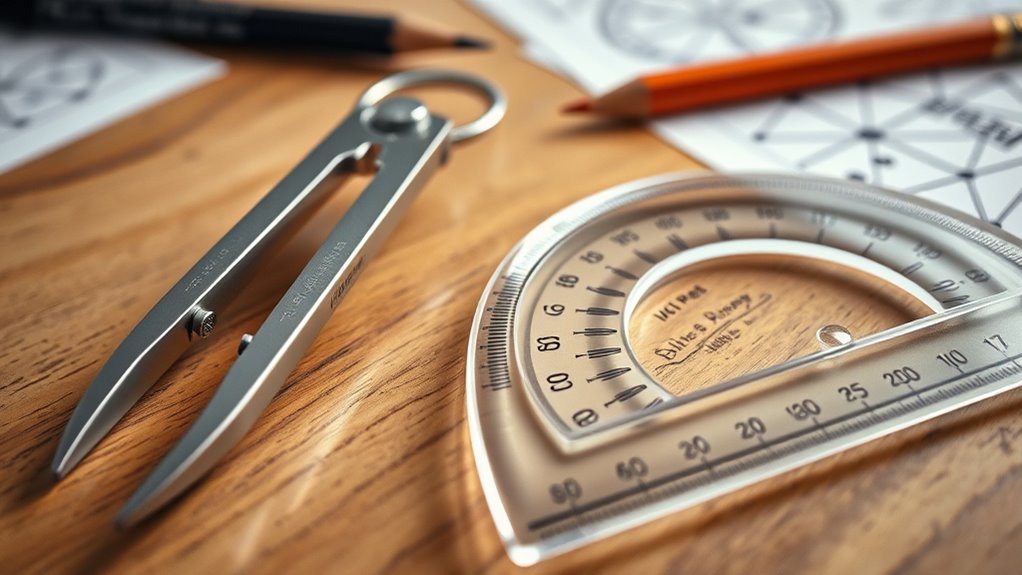
Start by considering the quality and material of your tools. Metal compasses tend to be more durable and provide stability, making them suitable for detailed work in artistic design or large-scale urban planning. Plastic compasses are lightweight and budget-friendly, ideal for students or casual users who don’t require extensive durability. When choosing a protractor, look for one made from transparent plastic or glass. Transparency allows you to see your drawing underneath, helping you align your measurements precisely. A protractor with clear markings and a sturdy edge will give you more control, especially when working on complex angles or detailed layouts.
Size is another critical factor. Smaller compasses are excellent for fine, detailed work, while larger models provide more stability and are better suited for drawing bigger circles or arcs. For urban planning, where measurements can be extensive, a larger compass minimizes errors and improves accuracy. For artistic design, a smaller compass offers more precision for intricate patterns or detailed sketches. The same applies to protractors; a 180-degree protractor is standard, but specialized versions with additional features like rulers or adjustable arms can be very useful depending on your project.
Finally, consider comfort and ease of use. A well-designed handle or grip can reduce hand fatigue during lengthy projects. Adjustable features, such as a locking screw on a compass, ensure your measurements stay consistent, which is essential when working on detailed, precise drawings. Whether you’re mapping out city layouts or creating detailed artwork, choosing the right compass and protractor isn’t just about accuracy — it’s about making your work more efficient, enjoyable, and professional. Understanding geometric tools and their proper use can significantly enhance your drafting skills. With the right tools in hand, you’ll find it easier to bring your ideas to life with confidence and precision.
Frequently Asked Questions
What Materials Are Best for Durable Compasses and Protractors?
When choosing compasses and protractors, you want materials with first-rate durability and manufacturing quality. Metal, like stainless steel or brass, offers strength and resistance to wear, making your tools last longer. High-quality plastics, such as acrylic or polycarbonate, also provide durability while being lightweight. Opt for products with solid construction and precise manufacturing, ensuring your compass or protractor remains accurate and reliable over time.
How to Calibrate My Compass and Protractor for Accuracy?
To guarantee your compass and protractor stay reliable, start with simple calibration techniques like checking measurements against a known standard. For accuracy verification, compare your tools’ readings with a trusted reference or use a test measurement. Gently adjust the pivot or markings if needed. Regular calibration keeps your tools precise, so your drawings and measurements remain trustworthy, giving you confidence in every project you undertake.
Are Digital Compasses More Reliable Than Traditional Ones?
Digital compasses often offer better digital accuracy and quick readings, making them reliable for precise navigation. However, your preferences matter; some users prefer traditional compasses for their simplicity and durability. Digital options may be affected by electronic interference, while traditional compasses work well in various conditions. Ultimately, choose based on your specific needs and environment, ensuring you get the most dependable tool for your navigation tasks.
How Do I Choose a Compass for Extended Fieldwork?
Imagine holding a compass that’s so precise, it guides you through a jungle of magnetic interference like a lighthouse in a storm. For extended fieldwork, choose one with minimal magnetic interference and an ergonomic design that feels like an extension of your hand. Look for durable, waterproof models with adjustable declination. This way, you’ll navigate confidently, no matter how long the journey or how tricky the magnetic environment.
What Are Common Mistakes to Avoid When Using a Protractor?
When using a protractor, avoid common pitfalls that can affect measurement accuracy. Don’t forget to align the baseline correctly and make sure the vertex is properly positioned for precise readings. Watch out for reading angles from the wrong scale, as many protractors have two. Also, avoid parallax errors by looking straight at the measurement mark. By being mindful of these mistakes, you’ll get more accurate results and improve your overall measurements.
Conclusion
Choosing the right compass and protractor isn’t just about tools; it’s about trusting your judgment and understanding their true purpose. Remember, precision tools enhance your skills, but your knowledge guides their use. Just as explorers rely on their instruments to find new paths, your careful choice and understanding can lead you to accurate results. Believe in the power of quality tools paired with your insight—sometimes, trusting the process reveals more than just measurements; it uncovers confidence.