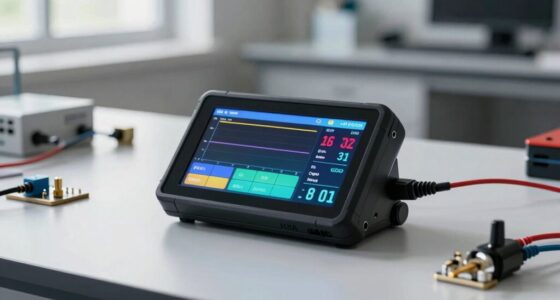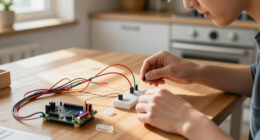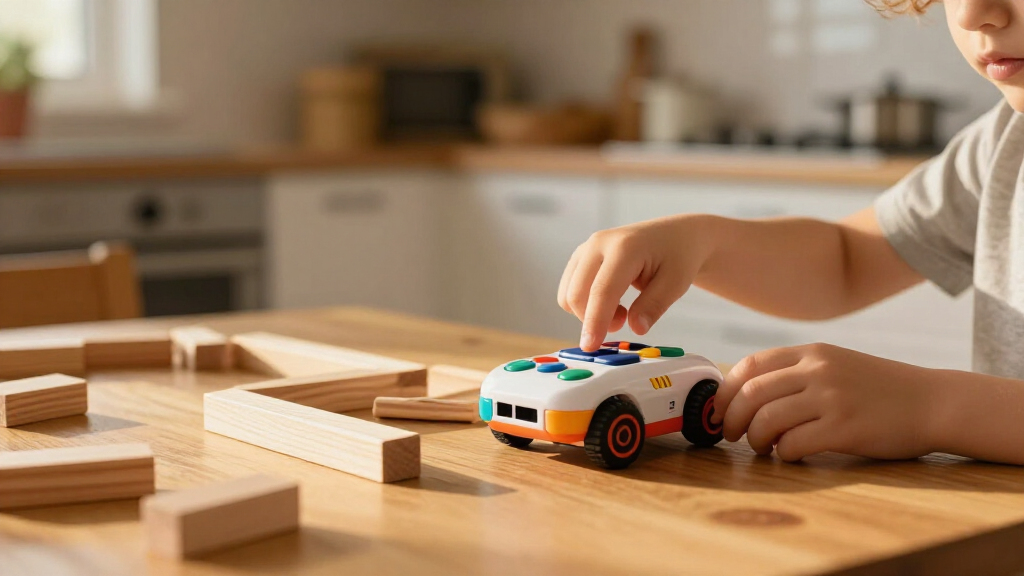

Children’s programmable STEM learning toys range from screen-free floor robots to app-connected building kits, and the right choice depends heavily on your child’s age, patience for assembly, and how much tablet time you want involved. The Makeblock mBot stands out as the best overall pick because it blends real hardware assembly with block-based coding that grows with a child from ages 8 through 12. For younger kids, the Learning Resources Botley teaches genuine coding logic without any screen at all, while the BirdBrain Finch Robot 2.0 offers the deepest programming depth for families serious about long-term STEM learning. The main tradeoffs in this category are ease of use versus coding depth, and entertainment value versus educational substance. Keep reading for the full breakdown of all 12 options.

Prime made for students and young adults
- Fast, free delivery for dorm and study essentials
- Prime Video and Amazon Music included
- Member-only deals
Key Takeaways
- The Makeblock mBot earned the top spot because it is the only kit that balances genuine assembly, block-based coding, and room to grow into Python — most rivals excel at just one of those three.
- Screen-free options (Botley, Switcheroo Coding Crew, Ozobot markers) proved far better for ages 4–7, while app-dependent kits like the Finch 2.0 and Kyanio only pay off once a child can read and navigate menus.
- The two Sillbird 5-in-1 kits look nearly identical on paper but differ in remote versus app programming; the app version carries more long-term value despite more setup friction.
- Showy robots like the Ruko 1088 and the gesture-control RC robot prioritize performance over programming depth — fine as gifts, weaker as learning tools.
- Non-robotic sets like the STEM Explorers Machine Makers teach engineering thinking but require pairing with a separate coding product to cover the programmable side of STEM.
| Sillbird 5-in-1 STEM Robot Building Kit with Remote Control |  | Best for Build-and-Play Variety | Brand: Sillbird | Models: 5-in-1 | Block count: 596 | VIEW LATEST PRICE | See Our Full Breakdown |
| Programmable RC Robot Toy with Gesture Control, Singing and Dancing |  | Best for Younger First-Time Programmers | Programmable actions: Up to 50 | Control methods: Remote control and gesture control | Remote control range: Up to 98 ft | VIEW LATEST PRICE | See Our Full Breakdown |
| Makeblock mBot STEM Coding Robot Kit for Kids Ages 8–12 | 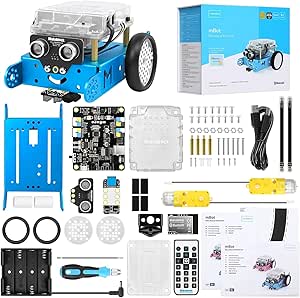 | Best for Coding Progression | Brand: Makeblock | Model: 90053 | Recommended age: 8 years and up | VIEW LATEST PRICE | See Our Full Breakdown |
| Educational Insights Artie 3000 Coding and Drawing Robot |  | Best for Visual Coding Projects | Brand: Educational Insights | Model: Artie 3000 | Model number: 1125 | VIEW LATEST PRICE | See Our Full Breakdown |
| Learning Resources Botley the Coding Robot |  | Best Screen-Free Coding Starter | Recommended age: 5+ | Maximum program length: 80 steps | Coding features: Loops and if/then logic | VIEW LATEST PRICE | See Our Full Breakdown |
| Ozobot Ozo at Home Interactive Coding Robot Kit for Kids Ages 5+ |  | Best for Guided Coding Progression | Recommended age: 5+ | Guided activities: 27 | Programming methods: Color Code Markers and Ozobot Blockly | VIEW LATEST PRICE | See Our Full Breakdown |
| Ruko 1088 Programmable Smart Robot Toy for Kids, Gold |  | Best for Interactive Robot Play | Recommended age: 4–9 years | Height: 15.8 inches | Control methods: App, 2.4 GHz remote, voice commands, and gravity sensor | VIEW LATEST PRICE | See Our Full Breakdown |
| Learning Resources Switcheroo Coding Crew |  | Best for Screen-Free Beginners | Age range: 4–6 years | Pieces: 46 | Robot modes: Code Mode and Play Mode | VIEW LATEST PRICE | See Our Full Breakdown |
| BirdBrain Finch Robot 2.0 STEM Coding Robot with micro:bit |  | Best for Advanced Coding Growth | Recommended age: 5–16 years | Controller: micro:bit required; inclusion not specified | Coding languages and platforms: MakeCode, Snap, Python, Java, Swift, and Kotlin | VIEW LATEST PRICE | See Our Full Breakdown |
| Kyanio 3-in-1 STEM Robotics Kit with Remote, App Control, and Programming |  | Best for Build-and-Code Projects | Recommended age: 8–14 years | Piece count: 560 | Build options: Robot, tracked vehicle, and cannon tank | VIEW LATEST PRICE | See Our Full Breakdown |
| Sillbird 5-in-1 STEM Robot Building Kit with Remote and App Control |  | Best Multi-Build Value | Pieces: 488 | Build options: 5-in-1, including robot, dinosaur, car, and tank | Recommended age: 8+ | VIEW LATEST PRICE | See Our Full Breakdown |
| children’s programmable STEM learning toy | Recommended age |
|---|---|
| Sillbird 5-in-1 STEM Robot Bui | 8+ |
| Programmable RC Robot Toy with | 3–12 years |
| Makeblock mBot STEM Coding Rob | 8 years and up |
| Educational Insights Artie 300 | 7–12 years |
| Learning Resources Botley the | 5+ |
| Ozobot Ozo at Home Interactive | 5+ |
| Ruko 1088 Programmable Smart R | 4–9 years |
| Learning Resources Switcheroo | — |
| BirdBrain Finch Robot 2.0 STEM | 5–16 years |
| Kyanio 3-in-1 STEM Robotics Ki | 8–14 years |
| Sillbird 5-in-1 STEM Robot Bui | 8+ |
More Details on Our Top Picks
Sillbird 5-in-1 STEM Robot Building Kit with Remote Control
The Sillbird kit puts building at the center: children assemble one of five models from 596 blocks, then control the robot with a remote or Bluetooth app. Its creative coding adds a programmable element to the construction play, while LED eyes, sound effects, and water mist give the robot playful features beyond movement. Compared with the Makeblock mBot, Sillbird offers more model variety and a more toy-like experience, while mBot has clearer routes into Scratch, Arduino, and expanded electronics projects. That makes Sillbird a better fit for kids drawn to making and transforming robots than for those ready for a structured coding curriculum. Assembly takes time, and the water mist needs water added. The rechargeable battery supports up to 40 minutes of play per charge.
Pros:- Five build options provide variety from one 596-block kit
- Combines hands-on construction with app-based creative coding
- Remote and Bluetooth app control offer different ways to play
- Rechargeable battery provides up to 40 minutes per charge
Cons:- Assembly is required before play
- Water mist feature requires adding water
Best for: Ages 8+ who enjoy building different robot forms and want app-based creative coding alongside remote play.
Not ideal for: Children who want a ready-to-play robot or families seeking a more direct Scratch and Arduino learning path.
- Brand:Sillbird
- Models:5-in-1
- Block count:596
- Recommended age:8+
- Control options:Remote control and Bluetooth app
- Features:LED eyes, sound effects, water mist, creative coding
- Battery:Rechargeable
- Play time:Up to 40 minutes per charge
Our verdict“Choose Sillbird for a build-focused STEM toy with multiple models and playful app coding.”
Programmable RC Robot Toy with Gesture Control, Singing and Dancing
This robot makes programming feel like play through recordable action sequences, gesture responses, songs, dances, and stories. It can store up to 50 programmed actions, giving children room to experiment with what happens when moves are combined. The age range starts at 3, which makes it more accessible for younger children than the Makeblock mBot or Artie 3000, both aimed at older learners and more formal coding activities. The tradeoff is that its programming is centered on robot actions rather than a stated coding language or progressively deeper projects. Remote control reaches up to 98 feet, and playtime is listed at about 60 minutes after a roughly two-hour USB charge. Families looking for early cause-and-effect play may find that balance appealing; children seeking screen-based coding instruction may outgrow it.
Pros:- Stores up to 50 programmed actions
- Offers both remote and gesture control
- Includes singing, dancing, walking, and storytelling play
- Provides about 60 minutes of play per charge
Cons:- USB charging takes about two hours
- Programming focuses on robot actions rather than named coding platforms
Best for: Families with children ages 3–7 who want simple action programming, gesture play, and a rechargeable interactive robot.
Not ideal for: Older children ready for Scratch, Python, or robotics projects with expandable electronics.
- Programmable actions:Up to 50
- Control methods:Remote control and gesture control
- Remote control range:Up to 98 ft
- Charging time:About 2 hours
- Playtime:About 60 minutes
- Material:ABS plastic
- Dimensions:8.27 × 3.93 × 2.95 in
- Power:Built-in rechargeable lithium battery
- Recommended age:3–12 years
Our verdict“Pick this robot for young children who learn through playful action sequences more than formal coding lessons.”
Makeblock mBot STEM Coding Robot Kit for Kids Ages 8–12
The mBot is the strongest choice here for children who want a clear path from building to coding. Its roughly 15-minute assembly leads into line-following and obstacle avoidance, while tutorials, coding cards, and compatible apps help make early projects more guided. Scratch and Arduino support give it more room to grow than the Sillbird kit, whose appeal leans more toward multiple builds and playful robot features. The mBot also works as a remote-control car, so children can explore movement before tackling programming. Its broader ecosystem—100+ electronic modules and 500+ parts—can extend the learning, though those possibilities also suit families willing to add components over time. A practical drawback is that the four AA batteries for the robot and CR2025 for the remote are not included.
Pros:- Connects hands-on robotics with Scratch and Arduino programming
- Line-following and obstacle-avoidance functions make code outcomes visible
- Tutorials, coding cards, and compatible apps support guided learning
- Compatible with more than 100 electronic modules and 500 parts
Cons:- Four AA batteries and a CR2025 remote battery are not included
- Add-on compatibility may require extra components to explore its full range
Best for: Ages 8+ who want guided robotics projects now and the option to advance into Scratch, Arduino, and compatible add-ons.
Not ideal for: Families who want a rechargeable kit ready to use without sourcing batteries or children who mainly want multi-model construction play.
- Brand:Makeblock
- Model:90053
- Recommended age:8 years and up
- Programming platforms:Scratch and Arduino
- Assembly time:About 15 minutes
- Robot batteries:4 AA batteries, not included
- Remote control battery:CR2025, not included
- Compatible add-ons:100+ electronic modules and 500+ parts
Our verdict“Choose the mBot for a child ready to progress from a buildable robot into Scratch and Arduino projects.”
Educational Insights Artie 3000 Coding and Drawing Robot
Artie 3000 turns code into patterns drawn on paper, giving children a visible result they can inspect and change. It supports Blockly and Snap! alongside JavaScript and Python, so the same drawing activity can suit a beginner or a child ready to work with text-based code. Compared with Botley, Artie asks children to use a tablet or computer, but it offers more coding-language range and a creative output that can be saved as a drawing. Its password-protected Wi-Fi connection works without internet access, which keeps connectivity local while allowing device control. The setup depends on a Wi-Fi-enabled computer or tablet, and four AA batteries are not included. This is a focused choice for children who like art and patterns; it has less emphasis on free-moving robot play than the mBot.
Pros:- Makes code outcomes visible through robot-drawn designs
- Supports Blockly, Snap!, JavaScript, and Python
- Works over password-protected Wi-Fi without internet access
- Includes washable markers and activity cards
Cons:- Requires a Wi-Fi-enabled tablet or computer
- Four AA batteries are not included
Best for: Ages 7–12 who enjoy drawing and want to see how block-based or text-based code changes a design.
Not ideal for: Families seeking screen-free coding or children without access to a Wi-Fi-enabled tablet or computer.
- Brand:Educational Insights
- Model:Artie 3000
- Model number:1125
- Recommended age:7–12 years
- Supported coding languages:Blockly, Snap!, JavaScript, Python
- Connectivity:Password-protected Wi-Fi; no internet required
- Included components:Robot, 4 washable markers, quick start guide, activity cards
- Power:4 AA batteries, not included
Our verdict“Choose Artie 3000 for a device-based coding toy that turns programs into drawings.”
Learning Resources Botley the Coding Robot
Botley teaches early coding concepts through hands-on, screen-free programs entered with its remote programmer. Sequences can be up to 80 steps, and loops and if/then logic give children practice with more than simple move commands. The included coding cards, tiles, detachable arms, and obstacles help turn abstract instructions into activities children can arrange and follow. Compared with Artie 3000, Botley avoids a tablet or computer entirely, making it a stronger fit for families who want coding play away from screens. Artie offers more named programming languages, though, so it may suit older learners seeking a route toward text-based code. Botley’s concepts can take practice, especially for younger children, and its appeal is focused on sequencing and logic rather than construction or drawing.
Pros:- Works without a screen
- Supports programs up to 80 steps
- Introduces loops and if/then logic
- Includes cards, tiles, obstacles, and detachable arms for varied activities
Cons:- Programming concepts may take practice for beginners
- Does not provide the coding-language range offered by Artie 3000
Best for: Children ages 5+ who are beginning to learn sequencing and logic through physical, screen-free activities.
Not ideal for: Older learners seeking coding-language instruction or a robot that they can build and modify.
- Recommended age:5+
- Maximum program length:80 steps
- Coding features:Loops and if/then logic
- Screen-free:Yes
- Included robot:Botley coding robot
- Programming control:Remote programmer
- Included accessories:Detachable arms, 40 coding cards, tiles, and obstacles
Our verdict“Pick Botley for an accessible screen-free introduction to sequencing, loops, and logic.”
Ozobot Ozo at Home Interactive Coding Robot Kit for Kids Ages 5+
Ozobot Ozo at Home earns this spot for giving beginners a clear path from physical coding to screen-based programming. Children can start by drawing routes with color code markers and using magnetic tiles, then move on to Ozobot Blockly and engineering challenges. That progression offers more coding structure than the play-focused Ruko 1088, while keeping activities shorter and more guided than the open-ended projects possible with the BirdBrain Finch Robot 2.0. Its 27 activities give families a ready-made sequence for practice, though children who prefer to jump between activities may find the suggested order restrictive. Blockly also depends on access to a computer or tablet, so the kit’s screen-free start does not cover every stage of learning.
Pros:- 27 guided activities offer a planned sequence of practice
- Begins with screen-free color coding and magnetic tiles
- Adds Blockly for a step toward digital programming
- Combines coding with problem-solving and engineering challenges
Cons:- Blockly activities require a computer or tablet
- Many activities are designed to be completed in order
Best for: Families who want a guided route from hands-on, screen-free coding to beginner Blockly activities.
Not ideal for: Children ready for open-ended, multi-language robotics projects, or families without a computer or tablet for Blockly.
- Recommended age:5+
- Guided activities:27
- Programming methods:Color Code Markers and Ozobot Blockly
- Learning formats:Mystical Forest Mat, Blank Magnetic Board, Color Codes, Ozobot Blockly, and engineering challenges
- Activity lengths:10, 15, 25, or 30 minutes
- Included accessories:Charging cable and protective case
Our verdict“Choose Ozo at Home if you want structured beginner lessons that progress from physical coding to Blockly.”
Ruko 1088 Programmable Smart Robot Toy for Kids, Gold
The Ruko 1088 makes programmable play feel social: children can direct its movements through an app, remote, voice commands, or a gravity sensor, then use its songs, stories, and expressions to shape the interaction. That breadth of controls gives it more character-driven play than the mission-based Learning Resources Switcheroo Coding Crew, but it provides less clearly structured coding practice than Ozobot Ozo at Home with its guided activities and progression to Blockly. Its 9 flexible joint motors make movement a central part of the experience, while Bluetooth speaker functionality adds another entertainment use. Those features suit children who learn through playful experimentation; families seeking a focused sequence of coding challenges may find the entertainment features distract from the programming. Charging also has a cable compatibility limitation.
Pros:- Supports app, remote, voice command, and gravity sensor control
- Programmable songs, stories, and expressions invite creative play
- Nine flexible joint motors support varied movement
- Rechargeable battery is included
Cons:- USB-C to USB-C cables are not supported for charging
- Warranty coverage is limited to 30 days against manufacturer defects
- Entertainment features may offer less structured coding practice than Ozo at Home
Best for: Children ages 4–9 who are drawn to expressive robots and want several ways to control one.
Not ideal for: Families prioritizing guided coding lessons or children who need a coding-first activity with a clear learning sequence.
- Recommended age:4–9 years
- Height:15.8 inches
- Control methods:App, 2.4 GHz remote, voice commands, and gravity sensor
- Flexible joint motors:9
- Songs and stories:10 songs and 4 stories
- Expressions:10
- Power source:Rechargeable lithium-ion battery
- Included components:Robot, remote control, USB charging cable, and user manual
Our verdict“Pick the Ruko 1088 for expressive, multi-control robot play when guided coding lessons are not the main priority.”
Learning Resources Switcheroo Coding Crew
Switcheroo Coding Crew is a strong first coding toy for younger children because its push-button commands turn sequencing into a visible rescue mission. The three vehicle shells and puzzle town map give each activity a playful setting, while challenge cards provide prompts for repeat practice. Compared with Ozobot Ozo at Home, it keeps the experience screen-free and easier to start, but it does not offer a later move into Blockly. The BirdBrain Finch Robot 2.0 reaches much further into sensors and text-based coding, though its range may be more than a preschool beginner needs. Switcheroo’s appeal is its focused simplicity; children who have mastered basic command sequences may outgrow its beginner scope. AAA batteries are also required and are not included.
Pros:- Screen-free push-button commands make sequencing tangible
- Three vehicle shells support different rescue scenarios
- Puzzle cards and challenge cards encourage repeat play
- Code Mode and Play Mode offer distinct ways to interact
Cons:- Requires AAA batteries, which are not included
- Designed for younger beginner learners and may be outgrown
- Does not provide the digital coding progression available with Ozo at Home
Best for: Families and early-years classrooms introducing children ages 4–6 to sequencing through hands-on play.
Not ideal for: Older children or beginners who want a progression into block-based or text-based programming.
- Age range:4–6 years
- Pieces:46
- Robot modes:Code Mode and Play Mode
- Vehicle shells:Police car, fire truck, and construction vehicle
- Included cards:9 puzzle cards and 15 math and coding challenge cards
- Power:AAA batteries (not included)
- Model number:LER3108
Our verdict“Choose Switcheroo for a simple, screen-free first step into coding for younger children.”
BirdBrain Finch Robot 2.0 STEM Coding Robot with micro:bit
BirdBrain Finch Robot 2.0 stands apart for learners who want a coding toy that can grow from block-based activities into text-based programming. Its support for platforms and languages including MakeCode, Snap, Python, Java, Swift, and Kotlin gives it a much broader learning runway than the beginner-focused Learning Resources Switcheroo Coding Crew. Sensors for line tracking, obstacle detection, and light let children connect code to physical responses, while tutorials help them get started. That flexibility comes with setup demands: the robot requires a micro:bit controller, and the product information does not say whether one is included. It also depends on compatible devices and software, unlike a simple button-command toy. For children ready to build projects and revisit them at higher coding levels, those demands can be worthwhile.
Pros:- Supports both block-based and text-based coding
- Sensors enable projects that respond to lines, obstacles, and light
- Works with tablets and major desktop operating systems
- Includes 30+ free tutorials and offers 7+ hours of battery life
Cons:- Requires a micro:bit controller, and inclusion is not specified
- Software and device compatibility add setup needs for beginners
- Offers a steeper learning path than simple push-button options like Switcheroo
Best for: School-age learners, teens, and adult beginners who want sensor-based projects and a path from blocks to text coding.
Not ideal for: Families wanting a ready-to-use first coding toy without sourcing a micro:bit or setting up programming software.
- Recommended age:5–16 years
- Controller:micro:bit required; inclusion not specified
- Coding languages and platforms:MakeCode, Snap, Python, Java, Swift, and Kotlin
- Sensors:Line tracking, obstacle detection, and light sensors
- Connectivity:Bluetooth
- Battery life:7+ hours
- Compatibility:Tablets, Chromebooks, Windows, Mac, and Linux
- Educational resources:30+ free tutorials
Our verdict“Choose Finch 2.0 for a coding learner ready to build sensor-driven projects and advance into text-based languages.”
Kyanio 3-in-1 STEM Robotics Kit with Remote, App Control, and Programming
Kyanio’s 3-in-1 robotics kit suits children who want to construct a machine before programming it. Its 560 pieces can form a robot, tracked vehicle, or cannon tank, pairing mechanical building with remote and app control. That construction focus makes it a different choice from the ready-to-play Ruko 1088, while its app programming offers a coding element beyond a conventional building set. Compared with the BirdBrain Finch Robot 2.0, however, the description gives less detail about coding languages, sensors, or how projects can advance, so it is harder to judge its longer-term programming depth. Assembly is part of the activity and may suit patient builders more than children eager for immediate robot play. Battery life and charging time are also unspecified.
Pros:- Three build options encourage trying different mechanical designs
- Combines construction with app programming
- Step-by-step instructions and color-coded blocks support assembly
- Remote and app control provide two ways to operate builds
Cons:- Requires assembly before children can use the robot
- Battery life and charging time are not specified
- Programming depth is less clearly described than on Finch 2.0
Best for: Builders ages 8–14 who enjoy assembling mechanical models and want to add app-controlled programming.
Not ideal for: Children looking for an out-of-the-box coding robot or families who want clear details about runtime and coding progression.
- Recommended age:8–14 years
- Piece count:560
- Build options:Robot, tracked vehicle, and cannon tank
- Control methods:2.4 GHz remote control and app
- Programming:App programming
- Charging:USB Type-C
- Material:ABS
Our verdict“Pick Kyanio for a child who wants hands-on construction first and app programming as part of the project.”
Sillbird 5-in-1 STEM Robot Building Kit with Remote and App Control
This kit earns its spot on sheer build variety: 488 pieces reassemble into five models — robot, dinosaur, car, tank, and a fifth build — with difficulty that climbs as your child finishes each one. Compared with the Learning Resources Machine Makers set, it adds the payoff kids crave: after the build, the creation actually moves, driven by remote or Bluetooth app control with basic programming and path-drawing features. Against the Makeblock mBot, which arrives closer to assembled and focuses on code depth, this kit front-loads the construction experience and keeps coding light — a fair swap for kids who love LEGO-style building more than scripting. Two caveats shape the experience: the rechargeable battery tops out around 40 minutes per charge, which cuts play sessions short, and the 488-piece assembly can overwhelm an eight-year-old without a parent nearby.
Pros:- Five distinct builds with progressively harder assembly keeps the kit relevant for months
- Dual control options — physical remote and Bluetooth app — suit different skill levels
- Illustrated step-by-step instructions reduce frustration during assembly
- Rechargeable battery avoids endless AA replacement costs
Cons:- Up to 40 minutes of play per charge limits extended sessions and requires recharge planning
- Some children will need adult help to complete the 488-piece builds
Best for: Ages 8–12 who love long building sessions and want a motorized, app-controlled reward at the end
Not ideal for: Households wanting deep, language-based coding education — the programming here is entry-level path control only
- Pieces:488
- Build options:5-in-1, including robot, dinosaur, car, and tank
- Recommended age:8+
- Control:Bluetooth app or remote control
- Battery life:Up to 40 minutes per charge
- Features:Basic programming, path control, adjustable head, arms, and tail
Our verdict“The best pick in this lineup when building is the point and coding is the bonus, provided you accept short battery runtimes.”

How We Picked
I judged each toy against four questions a parent actually asks: can my child code it independently, does the learning last past the first week, will the hardware survive normal kid handling, and does the price match the educational payoff. Coding depth mattered most — toys that only respond to remote commands scored lower than ones teaching sequences, loops, and conditionals, even when the latter looked less exciting on Christmas morning. Age fit was weighted just as heavily, because a brilliant kit that frustrates a six-year-old is a failed purchase.
I also rewarded growth potential: products like the mBot and Finch 2.0, which progress from drag-and-drop blocks to text coding, ranked above one-trick toys. Build quality, app stability, battery practicality, and whether a tablet is required rounded out the evaluation. The ranking moves roughly from best-balanced educational picks at the top toward entertainment-leaning and supplementary options at the bottom — so where a toy sits reflects how seriously it takes programming, not just how fun it is.
Factors to Consider When Choosing Children’s Programmable STEM Learning Toys
Before choosing a specific toy, it helps to understand the broader landscape of children’s programmable STEM products — the mistakes families make here usually come from mismatched expectations, not bad products.
Screen-Free Versus App-Based Coding
The single biggest decision is whether your child will code on a device. Screen-free toys use physical buttons, tiles, or marker paths, which keeps young kids engaged and avoids battles over tablet time, but their coding vocabulary stops at basic sequences and loops. App-based kits unlock richer logic, sensors, and eventually text languages like Python, yet they assume your child can read, follow menus, and own a compatible device. A common mistake is buying an app kit for a pre-reader — the parent ends up doing all the programming. Check app compatibility with your exact tablet model and OS version before buying; some coding apps are abandoned by manufacturers after a few years, which quietly kills the toy’s value.
Age and Reading Level Matter More Than the Box Says
Manufacturers’ age ranges tend to be optimistic, especially for kits requiring assembly or menu navigation. A toy labeled 6+ often really means a 6-year-old with an adult nearby and a 9-year-old working solo. Reading ability is the hidden gatekeeper: most block-coding interfaces use text labels on their blocks, so a non-reader is locked out regardless of the stated age. Matching the challenge level to your child matters too — a toy that’s too easy gets abandoned in a week, while one that’s too hard creates frustration that spills over onto coding generally. When in doubt, buy slightly under your child’s ability for a confidence win rather than slightly over for aspirational value.
Instant Fun Versus Long-Term Learning
There is a real tension between toys that delight on day one and toys that still teach a month later. Dancing, gesture-controlled robots win the gift moment but often have shallow programming — a handful of preset actions rather than real logic. Building kits invert this: the first hour is fiddly assembly, but the child ends up understanding motors, gears, and structure, which is genuine engineering learning. The most common regret I see reported is buying the flashy robot that a child exhausts in a weekend. If your goal is entertainment with a light STEM gloss, that’s a legitimate choice — just make it consciously rather than by default.
Expansion and Growth Path
The best programmable toys have a second and third act. Ask whether the product supports add-on sensors, multiple building configurations, or a progression from icon-based blocks to word blocks to text code. Kits built on open platforms like micro:bit or Makeblock’s ecosystem can be extended for years, while closed proprietary systems plateau quickly. Also count the configurations: a 5-in-1 building kit gives five rebuilds, which multiplies engagement per dollar compared with a single-form robot. A toy that grows with your child for three years costs less in practice than replacing two cheaper toys that get outgrown.
Practicalities: Batteries, Assembly Time, and Durability
The unglamorous factors derail more STEM toys than any design flaw. Rechargeable batteries beat disposable ones once a child plays daily — AA-powered robots eat through cells fast, and dead batteries are the quiet death of many toys. Assembly time should match attention span: some building kits run over an hour, which is great for a patient ten-year-old and torture for a restless seven-year-old. Durability matters double for programmable toys because exposed sensors, wires, and connector pins break easier than molded plastic. Finally, check whether spare parts are available, because a lost motor or cracked panel otherwise retires the whole kit.
Frequently Asked Questions
At what age should a child start with a programmable STEM toy?
Children as young as four can grasp basic coding logic through screen-free toys like Botley or the Switcheroo Coding Crew, which use physical buttons and tiles instead of apps or reading. What matters at that age is cause and effect — pressing a sequence and watching a robot follow it builds the foundation for real programming later. App-based kits generally click around ages seven or eight, once a child reads fluently and can navigate a block-coding interface without constant adult help. Text-based coding like Python becomes realistic around ten or eleven. Starting earlier with simple toys is far better than starting late with advanced ones, because the core skill is sequential thinking, not technology familiarity.
Do these toys actually teach coding, or are they just remote-control toys with a marketing label?
Genuinely both exist in this lineup, and the difference is easy to spot once you know what to look for. A real coding toy makes your child build programs — sequences, loops, if-then logic — that the device then executes, and errors in the program produce visible, debuggable results. Toys like the mBot, Finch 2.0, Botley, and Artie 3000 fit that definition. Products where a remote or gesture just triggers preset dances and movements are entertainment devices with an educational label. There’s nothing wrong with a fun robot, but if your goal is programming skills, check whether the product includes an actual programming interface and not just remote-control modes. The marketing copy often blurs this line deliberately.
Should I buy a building kit or a ready-built programmable robot?
It depends on which half of STEM you want to emphasize. Building kits like the Sillbird and Kyanio options teach mechanical engineering — motors, gears, structural stability — and the assembly itself is a big part of the learning, but expect frustration if your child is under eight or impatient with small parts. Ready-built robots like Botley, Ozobot, and the Ruko 1080 get a child programming within minutes, which keeps momentum high but skips the construction learning entirely. Families with two kids of different ages often do best with one of each. If you can only pick one and your child has never shown interest in building, start ready-built and add a construction kit later.
Do I need a tablet or smartphone for these toys to work?
Some do, some don’t, and the packaging isn’t always clear. Screen-free options — Botley, the Switcheroo Coding Crew, and Ozobot’s marker mode — need nothing but batteries, which makes them ideal for younger kids and for limiting device time. App-controlled kits like the Finch 2.0, mBot’s advanced features, and the app-based Sillbird kit require a compatible tablet or computer, and some need specific operating system versions. Before buying, verify the app exists for your exact device and still receives updates; abandoned apps are a known failure point in this category. Also decide who owns the device — if the tablet is shared family property, app-based coding sessions will compete with sibling screen requests.
How much should I spend on a first programmable toy?
A first toy should be inexpensive enough that a lost interest costs little, but capable enough that real interest gets rewarded. For ages four to seven, an entry-level screen-free robot does this well and typically costs less than the app-based kits. For ages eight and up, a mid-range kit like the mBot hits the sweet spot — serious enough to teach actual coding, cheap enough to be a reasonable first bet. The premium end, represented here by the Finch 2.0, only makes sense once a child has shown sustained interest in programming and you’re confident the investment will be used. Skipping straight to the most expensive option is the most common waste of money in this category, because a beginner can’t yet use the advanced features that justify the price.
Conclusion
For most families, the Makeblock mBot is the best overall choice — it combines real assembly, genuine block coding, and a growth path toward Python that keeps it relevant for years. For the best value, the Learning Resources Botley and Ozobot Ozo at Home deliver real coding logic at accessible prices, with Botley’s screen-free design making it the standout for younger children. The BirdBrain Finch Robot 2.0 is the premium pick, built on the micro:bit platform with a depth of sensors and languages that suits a child already committed to coding.
For beginners ages four to seven, Botley or the Switcheroo Coding Crew teach sequencing without a screen, and Artie 3000 is the niche pick for kids who love drawing. If your priority is a fun gift with light learning, the Ruko 1088 or the gesture-control robot will win the unwrapping moment. Families wanting hands-on engineering should lean toward the Sillbird and Kyanio building kits, while the STEM Explorers Machine Makers works best as a companion set alongside a true programmable robot. Match the pick to your child’s age and attention span first — that predicts satisfaction far better than price or features.
Fall Picks
fall essentials
As an affiliate, we earn on qualifying purchases.