
TL;DR
The James Webb Space Telescope has produced data that challenge current understanding of the universe’s early formation. Astrophysicists are investigating these anomalies, which could reshape cosmological models.
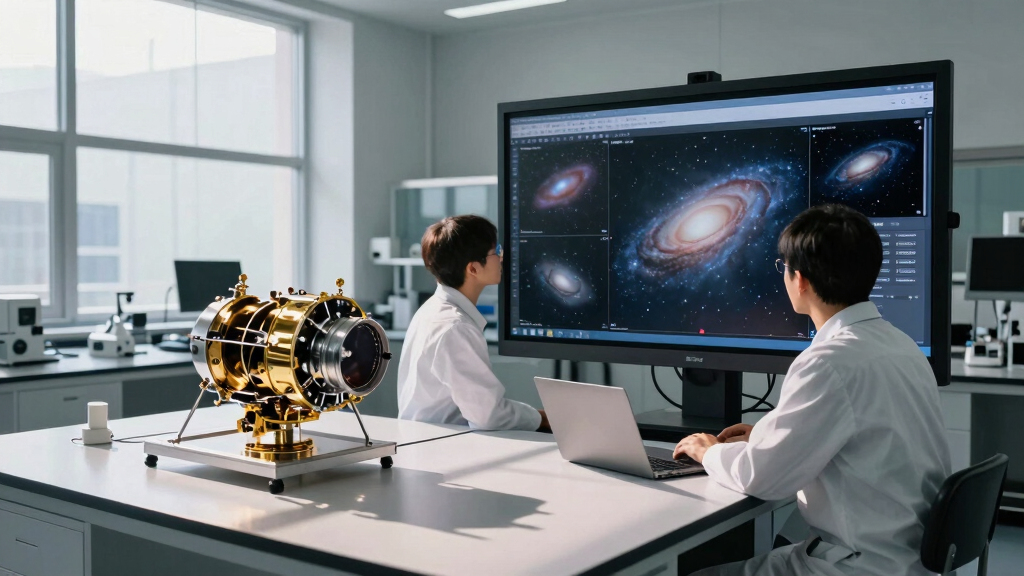
Scientists are currently analyzing unexpected data from the James Webb Space Telescope that challenge existing models of the universe’s early history. The anomalies, detected in the earliest galaxies observed to date, have prompted a flurry of scientific inquiry and debate among astrophysicists worldwide.
The James Webb Space Telescope, launched in December 2021, has provided unprecedented images and data of galaxies formed less than 500 million years after the Big Bang. However, recent observations reveal that some of these early galaxies appear brighter and more massive than current cosmological models predict, according to multiple sources including NASA officials and academic researchers.
Leading astrophysicists, including Dr. Laura Chen of the Space Science Institute, have stated that these findings could imply a need to revise theories about galaxy formation and the distribution of dark matter in the early universe. The data, still under review, show certain galaxies with properties that do not align with existing simulations, prompting questions about the nature of dark matter and the timeline of cosmic evolution.
While the observations are confirmed, the interpretation remains uncertain. Researchers caution that further analysis is necessary before drawing definitive conclusions, and the data are currently being peer-reviewed and validated through multiple independent teams.
Implications for Understanding Cosmic Evolution
This development could influence the understanding of early universe structures if further analysis confirms these findings. Should early galaxies be more luminous or massive than current models predict, it may suggest that galaxy formation occurred differently than previously thought. These observations could have implications for theories related to dark matter and dark energy, which are foundational to current cosmological models.
The ongoing analysis of these anomalies may guide future research directions and observational strategies, including the use of Webb and other instruments, to better understand the early universe. The findings highlight the importance of Webb’s capabilities in exploring the universe’s infancy and may inform future scientific investigations.
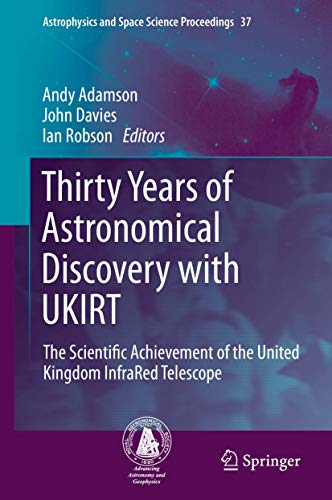
Thirty Years of Astronomical Discovery with UKIRT: The Scientific Achievement of the United Kingdom InfraRed Telescope (Astrophysics and Space Science Proceedings, 37)
As an affiliate, we earn on qualifying purchases.
As an affiliate, we earn on qualifying purchases.
Webb’s Early Universe Discoveries and Expectations
The James Webb Space Telescope, with its advanced infrared instruments, was designed to observe the universe’s earliest galaxies, stars, and planetary systems. Prior to its launch, scientists anticipated that Webb would confirm existing models of galaxy formation and help resolve longstanding questions about the universe’s first billion years.
Since beginning operations, Webb has already delivered groundbreaking images of distant galaxies, pushing the observational frontier further back in time. However, the recent anomalies in early galaxy luminosity and mass distribution are unexpected and have prompted a reassessment of initial assumptions. These observations challenge the straightforward timeline of galaxy assembly and suggest that the universe’s early structure might be more complex than current models account for.
Scientists have emphasized that these findings are preliminary but significant enough to warrant further analysis, given Webb’s potential to contribute to cosmological understanding.
“These observations could suggest that our current models of galaxy formation may need to be reexamined as new data become available.”
— Dr. Laura Chen, Space Science Institute
The Hubble Constant Tension (Springer Series in Astrophysics and Cosmology)
As an affiliate, we earn on qualifying purchases.
As an affiliate, we earn on qualifying purchases.
Unconfirmed Theories and Ongoing Analysis
It remains uncertain whether these anomalies indicate new physics, require revisions to existing models, or are due to observational or data processing issues. The scientific community is actively investigating these possibilities, and further validation is expected as peer review continues. No definitive explanations have been established at this stage.

WAYLLSHINE High Power 1 Mode Red LED Flashlight, Single Mode Red Flashlight, Red Light Flashlight Red Light Torch for Astronomy, Aviation, Night Observation
- Single Mode Red Light: One switch for On/OFF
- Night Activity Use: Ideal for astronomy and night observation
- Animal-Friendly Red Light: Does not disturb wildlife
As an affiliate, we earn on qualifying purchases.
As an affiliate, we earn on qualifying purchases.
Next Steps in Webb Data Analysis and Scientific Review
Researchers will continue to analyze Webb’s data to verify the anomalies and assess their implications. Multiple independent teams are reviewing the observations, and future publications are anticipated to clarify whether these findings necessitate revisions to current cosmological theories. Continued observations by Webb and other instruments will provide additional data to support or refute these initial findings.

Metal Earth James Webb Space Telescope 3D Metal Model Kit Fascinations
- Hobby Model Kit: Unassembled with easy instructions
- No Glue or Solder: Parts clipped from metal sheets
- James Webb Telescope Model: 2.75 sheet, 62 pieces, 1:221 scale
As an affiliate, we earn on qualifying purchases.
As an affiliate, we earn on qualifying purchases.
Key Questions
What specific anomalies have Webb scientists observed?
Webb has detected galaxies that appear brighter and more massive than predicted for their age, which challenges existing models of early galaxy formation.
Could these findings be due to errors in data processing?
While possible, multiple teams are independently analyzing the data to rule out errors. The anomalies are considered significant enough to warrant further validation.
Why do these findings matter for our understanding of the universe?
If confirmed, they could lead to revisions in theories about dark matter, galaxy formation, and the timeline of cosmic evolution, potentially impacting current cosmological models.
When will scientists have more definitive answers?
Further analysis and peer review are expected to conclude within the next few months, providing clearer insights into these anomalies.
What is the significance of Webb’s observations compared to previous telescopes?
Webb’s infrared capabilities enable it to observe further back in time with greater detail, potentially revealing phenomena that earlier telescopes could not detect.
Source: hn