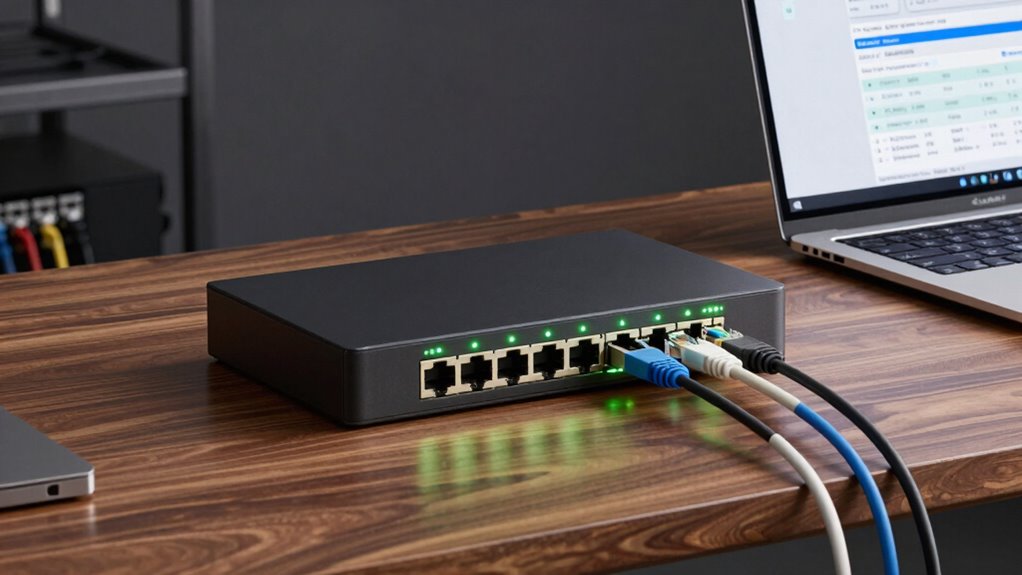

To compare 10GbE switches without overpaying, focus on your current and future needs—look at port counts, switching capacity, PoE support, and latency. Avoid paying for extras you don’t need, like advanced features if they aren’t vital. Balance price with essential capabilities such as reliability and security. By considering these factors carefully, you can select a switch that fits your budget and growth plans. Keep exploring to discover how to make the smartest choice.
Key Takeaways
- Prioritize switches with the necessary port count and speed capabilities to match current and future network requirements.
- Evaluate switching capacity and latency to prevent bottlenecks during peak usage, ensuring optimal performance.
- Check for essential features like PoE support and fiber optic options to enhance functionality without unnecessary extras.
- Balance price with build quality, support, and security features to avoid paying for non-essential add-ons.
- Consider scalability options such as stacking and future-proof features to extend longevity without frequent upgrades.
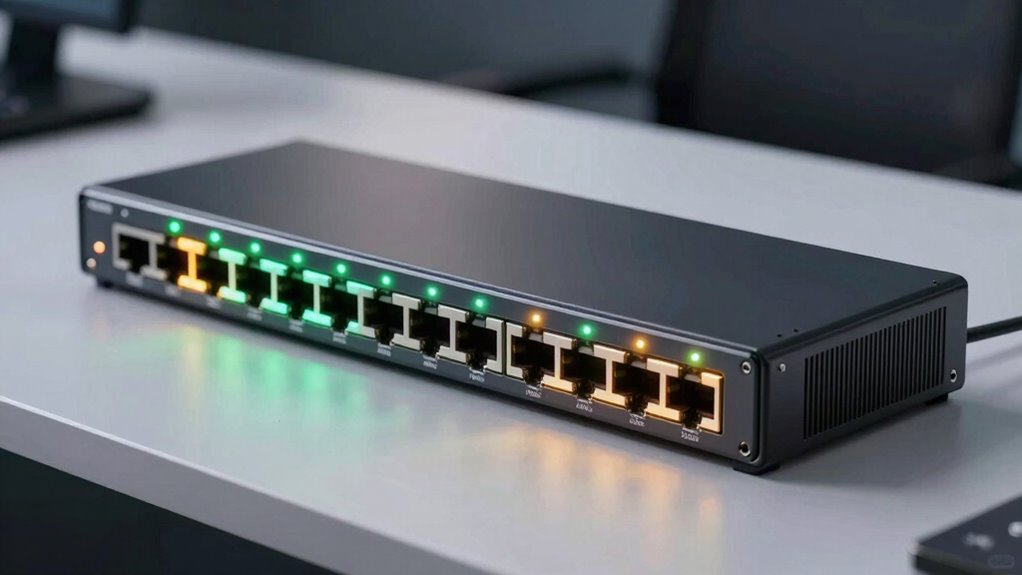
Choosing the right 10GBE network switch can be challenging, especially with so many options and price points on the market. To make an informed decision without overpaying, you need to evaluate the specific features that match your network’s needs. First, evaluate whether your setup requires fiber optic connections. Fiber optic ports are ideal if you’re aiming for high-speed, long-distance data transfer, or if you’re building a future-proof network. They tend to be more expensive upfront but can save you money over time by supporting faster, more reliable connections, especially in enterprise environments. If your network involves connecting devices spread across large distances or requires high bandwidth, prioritizing switches with fiber optic capabilities will pay off. Additionally, understanding the network environment and how these features interact can help you choose the best fit for your specific situation.
Next, assess the availability of Power over Ethernet (PoE) support. PoE allows your switch to power devices like IP cameras, VoIP phones, or wireless access points directly through the Ethernet cable, eliminating the need for separate power supplies. This feature can considerably reduce installation costs and simplify your network setup. When comparing switches, check the PoE budget—how much power the switch can supply across its ports—and ensure it aligns with your current and future device requirements. Keep in mind that switches with PoE support might carry a higher initial cost, but they streamline deployment and maintenance, which saves money in the long run.
PoE support reduces costs by powering devices through Ethernet, but check the PoE budget to match your future needs.
Furthermore, evaluating the switching capacity and latency can help you avoid bottlenecks that impact your network’s performance, especially during peak usage times.
Beyond these features, take a close look at port counts and speed capabilities. Not all 10GBE switches are created equal; some might have a limited number of 10GbE ports, while others include additional gigabit ports for legacy devices. Consider your current device count and anticipate future growth to avoid needing an upgrade soon. Also, examine the switch’s switching capacity and latency—these impact your network’s overall performance, especially for data-heavy applications.
Price is a key factor, but it shouldn’t be the only one. Comparing the included features, build quality, and support options helps you avoid paying for unnecessary extras. Some switches come with advanced management features, security options, or stacking capabilities—only get these if they fit your needs. In the end, balancing price with essential features like fiber optic compatibility and PoE support ensures you get a switch that’s both cost-effective and capable of supporting your network’s requirements now and in the future.
10GbE network switch with fiber optic ports
As an affiliate, we earn on qualifying purchases.
As an affiliate, we earn on qualifying purchases.
Frequently Asked Questions
What Are the Main Differences Between Managed and Unmanaged Switches?
Managed switches give you control over network security and firmware updates, allowing you to configure settings, monitor traffic, and enhance security. Unmanaged switches are simpler; they plug in and work without customization, making them less secure and harder to update. If you want better control, security, and future-proofing, managed switches are worth the investment. For basic setups, unmanaged switches keep costs low and ease of use.
How Does Port Density Affect Switch Performance?
Imagine your network as a busy highway—more lanes mean smoother traffic. Port density directly impacts switch performance by increasing bandwidth capacity and enabling more devices to connect simultaneously. A higher port configuration reduces bottlenecks, ensuring fast data transfer and efficient network operation. Ignoring port density risks congestion, like traffic jams, which can slow down your entire system and hinder productivity. Always choose a switch with ideal port density for your needs.
Are There Specific Brands Known for Reliable 10GBE Switches?
You should look for brands with a strong reputation for reliability, like Cisco, Juniper, or Arista, known for producing dependable 10GbE switches. Consider their product warranties, as longer warranties often indicate higher confidence in quality. These brands consistently deliver performance and support, making them a safer choice for your network investments. Always read reviews and compare warranties to guarantee you’re selecting a switch that meets your reliability needs without overspending.
What Is the Typical Lifespan of a 10GBE Network Switch?
A 10GBE network switch typically lasts around 5 to 10 years, depending on hardware durability and how well you maintain it. Regular firmware updates help extend its lifespan by fixing bugs and improving performance. You should monitor for signs of wear, like overheating or slow speeds, and consider replacing it if hardware issues persist, ensuring your network remains reliable and efficient over time.
How Do Power Consumption and Energy Efficiency Impact Costs?
You might think energy costs are minor, but energy ratings and power savings markedly impact your total expenses. Lower power consumption means less money spent on electricity over time. When comparing switches, look for models with high energy efficiency ratings—these help you cut costs and reduce environmental impact. By choosing energy-efficient switches, you guarantee long-term savings, making your investment smarter and more sustainable.
PoE network switch 10GbE
As an affiliate, we earn on qualifying purchases.
As an affiliate, we earn on qualifying purchases.
Conclusion
When choosing a 10GbE switch, don’t let the price blind you. Focus on your specific needs, compare features, and consider future-proofing. Remember, a switch is the backbone of your network’s future—invest wisely to avoid regrets. Like planting a seed today for a stronger tomorrow, selecting the right switch guarantees your network thrives without overpaying. Make your choice confidently, knowing you’ve balanced cost with capability, and watch your network grow stronger every day.
10GbE switch with stacking capability
As an affiliate, we earn on qualifying purchases.
As an affiliate, we earn on qualifying purchases.
enterprise 10GbE network switch
As an affiliate, we earn on qualifying purchases.
As an affiliate, we earn on qualifying purchases.





![The early History of the Singular Value Decomposition (1993) [pdf]](https://geometr.info/wp-content/uploads/2026/07/the-early-history-of-the-singular-value-decomposition-1993-pdf-featured-260x140.jpg)