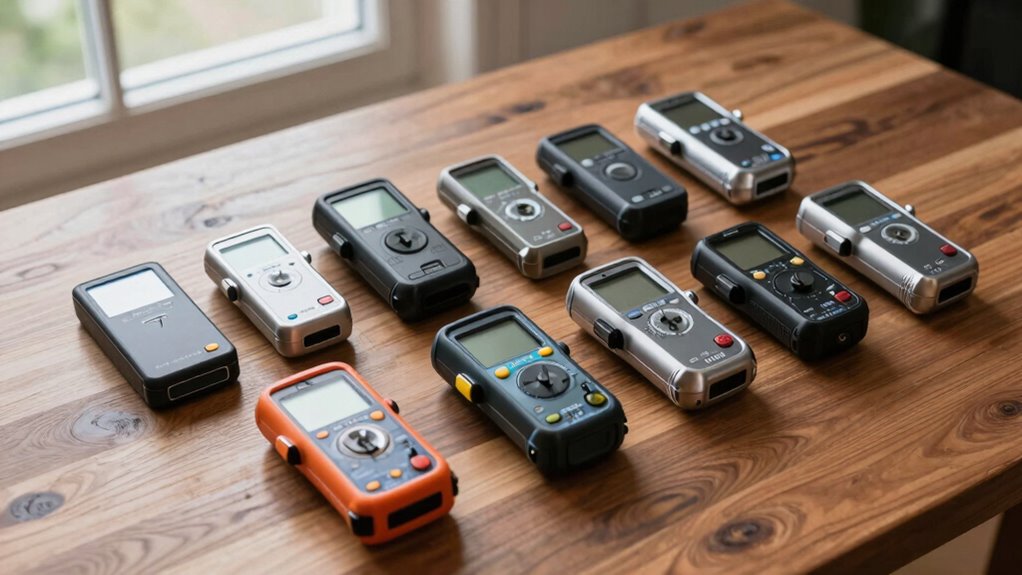

Choosing the right handheld light meter for architecture photography hinges on accuracy, ease of use, and versatility. The Sekonic L-308X-U stands out as the best overall, offering reliable readings in a compact form. For those seeking premium features, the Sekonic L-398A Studio Deluxe III provides advanced functions but at a higher cost. Budget-conscious photographers will appreciate the Extech LT505 for its straightforward design and decent performance. While some models excel in specific areas like color temperature or range, tradeoffs often involve complexity or price. Continue reading for a detailed breakdown of these options to find your ideal fit.

Prime made for students and young adults
- Fast, free delivery for dorm and study essentials
- Prime Video and Amazon Music included
- Member-only deals
Key Takeaways
- The top-ranked models balance accuracy with user-friendly features suitable for architecture photography.
- Range and sensor quality significantly impact the ability to measure diverse lighting conditions typical in architectural shoots.
- Premium options tend to include advanced features like color temperature measurement, but may be overkill for casual use.
- Budget models often sacrifice some precision but still offer reliable readings for standard lighting scenarios.
- Build quality and ergonomics are critical for field use, influencing long-term durability and ease of handling.
| E130 Light Meter – Accurate Lux & Color Temperature (CCT) for Light Sources |  | Best Overall for Precise Light and Color Measurement | Package Dimensions: 7.48 x 3.98 x 1.65 inches | Item Weight: 6.7 ounces | Batteries: 2 AAA batteries (included) | VIEW ON AMAZON | See Our Full Breakdown |
| Extech LT505 Pocket Light Meter, Lux and Foot Candle, 50,000 Lux |  | Best Value for Quick, Reliable Light Measurements | Measurement Range: 0 to 50,000 lux | Units: Lux and Foot-Candles | Display: Backlit LCD | VIEW ON AMAZON | See Our Full Breakdown |
| Digital Illuminance Meter Handheld Lux Meter with Color LCD Screen |  | Best for High-Range Digital Readings and Versatility | Measurement Range: 0 to 200,000 Lux | Display: 4-digit color LCD | Features: MIN/Max, data hold, auto power off | VIEW ON AMAZON | See Our Full Breakdown |
| Digital Illuminance Light Meter, 0-200,000 Lux Range with 180° Rotating Sensor |  | Best for Flexible Indoor and Plant Lighting Measurements | Range: 0-200,000 Lux | Accuracy: ±4% +10 | Sensor Rotation: 180° | VIEW ON AMAZON | See Our Full Breakdown |
| Sekonic L-358 Flash Master Light Meter |  | Best for Ambient and Flash Exposure with Wireless Control | Measurement accuracy: Down to a tenth-of-a-stop | Wireless compatibility: RT-32 Radio Transmitter | Water resistance: JIS Standard Water Resistance Class 4 | VIEW ON AMAZON | See Our Full Breakdown |
| Sekonic L-398A Studio Deluxe III Analog Light Meter |  | Best for Traditional Ambient Light Measurement | Type: Analog light meter | Measurement: Incident and reflected light | Lumisphere: 180-degree | VIEW ON AMAZON | See Our Full Breakdown |
| Sekonic L-358 Flash Master Light Meter |  | Best for Versatile Ambient and Flash Measurement | Display: 800 x 600 SVGA LED backlit screen | Water Resistance: JIS Standard Class 4 | Memory: Up to 9 readings | VIEW ON AMAZON | See Our Full Breakdown |
| MT-92H Light Meter with Split Sensor, Lux/Foot Candles, 200,000 Lux Range |  | Best for High-Precision Professional Lighting Measurement | Measurement Range: 0-200,000 Lux | Accuracy: ±3% | Display: Backlit | VIEW ON AMAZON | See Our Full Breakdown |
| Sekonic L-308X-U Flashmate Light Meter |  | Best for Compact, Versatile Photography and Architecture Use | Exposure Accuracy: Down to a tenth-of-a-stop | ISO Range: ISO 100 | Range: 0 to 19.9 EV | VIEW ON AMAZON | See Our Full Breakdown |
| Sekonic L-398A Studio Deluxe III Analog Light Meter, Battery-Free Incident & Reflected Ambient Meter with Swivel Head |  | Best for Battery-Free, Quick-Read Ambient Light Measurement | Product Dimensions: 2.3 x 4.4 x 1.3 inches | Item Weight: 11.2 ounces | Batteries: 1 Lithium Ion | VIEW ON AMAZON | See Our Full Breakdown |
| handheld light meter for architecture photography | Display |
|---|---|
| E130 Light Meter | — |
| Extech LT505 Pocket Light Mete | Backlit LCD |
| Digital Illuminance Meter Hand | 4-digit color LCD |
| Digital Illuminance Light Mete | Backlit LCD |
| Sekonic L-358 Flash Master Lig | — |
| Sekonic L-398A Studio Deluxe I | — |
| Sekonic L-358 Flash Master Lig | 800 x 600 SVGA LED backlit screen |
| MT-92H Light Meter with Split | Backlit |
| Sekonic L-308X-U Flashmate Lig | LCD auto backlight |
| Sekonic L-398A Studio Deluxe I | — |
More Details on Our Top Picks
E130 Light Meter – Accurate Lux & Color Temperature (CCT) for Light Sources
The E130 Light Meter stands out for its ability to accurately measure both illuminance and color temperature across multiple light sources, making it ideal for detailed architectural lighting analysis. Unlike the Extech LT505, which focuses solely on lux measurements, the E130’s 99-point light mapping provides a nuanced understanding of light distribution, essential for high-precision work. Its spectrum mode, targeting 420/450nm wavelengths, offers specific insights for white LED lighting, though it doesn’t perform detailed spectral analysis. The device’s compact design and ease of use make it suitable for professional settings, but the spectrum mode’s limited wavelength range can be a drawback for those needing comprehensive spectral data. Overall, this pick makes the most sense for architects or lighting specialists demanding detailed, multi-faceted light data.
Pros:- Accurate measurement of Lux and CCT across various sources
- Includes 99-point light mapping for detailed analysis
- Spectrum mode offers specific data for white LEDs
- Compact and user-friendly
Cons:- Spectrum mode limited to specific wavelengths, not full spectral analysis
Best for: Lighting designers and architects who require detailed Lux and CCT data with spectrum analysis
Not ideal for: Beginners or casual users who need simple lux readings without spectral considerations
- Package Dimensions:7.48 x 3.98 x 1.65 inches
- Item Weight:6.7 ounces
- Batteries:2 AAA batteries (included)
- Measurement Range:Lux and CCT
- Light Mapping Points:99
- Spectrum Mode:Yes, 420/450nm
Our verdict“This meter suits professionals needing detailed light and color data, though it may be overkill for casual use.”
Extech LT505 Pocket Light Meter, Lux and Foot Candle, 50,000 Lux
The Extech LT505 offers a straightforward, portable solution for measuring light levels with good accuracy over a wide range up to 50,000 Lux. Compared with the Digital Illuminance Meter with Color LCD, which extends measurement capacity to 200,000 Lux, the LT505 provides sufficient range for most architectural lighting needs while maintaining simplicity. Its dual units—lux and foot-candles—add flexibility, but the lack of data storage or connectivity features limits its use for detailed analysis or record-keeping. The backlit display makes it easy to read in various environments, yet the manual switch between units can be slightly inconvenient. This model is best suited for on-site inspections where quick, reliable measurements are prioritized over advanced features.
Pros:- Compact, pocket-sized design for portability
- Dual measurement units increase versatility
- High accuracy across a broad range up to 50,000 Lux
- Backlit LCD enhances readability
Cons:- Limited to basic light measurement, no spectral data
- No data storage or connectivity options
- Manual unit switching can be slightly cumbersome
Best for: Lighting inspectors or photographers needing a portable, easy-to-use lux meter for on-the-spot measurements
Not ideal for: Lighting designers requiring detailed data logging or spectral analysis, as the LT505 lacks these features
- Measurement Range:0 to 50,000 lux
- Units:Lux and Foot-Candles
- Display:Backlit LCD
- Size:Pocket-sized
Our verdict“Ideal for quick, reliable light level checks in the field, but not suited for detailed light analysis or recording.”
Digital Illuminance Meter Handheld Lux Meter with Color LCD Screen
The Digital Illuminance Meter with Color LCD provides a high measurement ceiling of 200,000 Lux, making it well-suited for environments with intense lighting, such as large architectural spaces or outdoor scenes. Its digital display with color coding ensures clear readings, surpassing simpler analog models like the Sekonic L-358. Although it offers solid accuracy, it slightly declines above 10,000 Lux, which could affect precise readings in very bright settings. Features like MIN/MAX, data hold, and auto power off enhance usability, but the device’s focus on just light and temperature limits its scope for spectral or detailed lighting analysis. This makes it a good option for those needing broad-range digital readings in fast-paced environments, although it falls short for in-depth spectral work.
Pros:- High measurement range up to 200,000 Lux
- Clear, color-coded digital display
- Features like MIN/MAX, data hold, auto power off
- Compact and lightweight
Cons:- Accuracy slightly decreases above 10,000 Lux
- Limited to light and temperature measurements only
- No spectral or detailed measurement modes
Best for: Architectural photographers and lighting professionals needing high-range, quick digital measurements
Not ideal for: Users requiring spectral analysis or multi-spectral data, as this device does not cover those features
- Measurement Range:0 to 200,000 Lux
- Display:4-digit color LCD
- Features:MIN/Max, data hold, auto power off
- Warranty:2 years
Our verdict“This meter excels in high-range digital readings but isn’t designed for detailed spectral analysis or multi-environment versatility.”
Digital Illuminance Light Meter, 0-200,000 Lux Range with 180° Rotating Sensor
The Digital Illuminance Light Meter with Rotating Sensor offers a flexible approach to light measurement with its 180° adjustable sensor, making it particularly useful for architectural lighting assessments that require different angles. Its measurement range, up to 200,000 Lux, and included temperature sensing add to its versatility. Compared to the Extech LT505, which is more compact, this model’s rotating sensor provides greater measurement flexibility, but it may be slightly bulky for pocket carry. Its accuracy, rated at ±4% +10, is suitable for most indoor applications, such as plant growth or interior lighting, but might not meet the precision standards of professional lighting designers seeking detailed spectral data. This pick is best for users needing adaptable, multi-environment light and temperature readings.
Pros:- Wide measurement range with high accuracy
- 180° rotating sensor for measurement flexibility
- Backlit LCD for visibility in low light
- Includes temperature measurement
Cons:- Slightly bulkier for pocket use
- Limited to Lux and temperature, no spectral modes
- Requires 3 AAA batteries which may need frequent replacing
Best for: Indoor plant growers, interior designers, or photographers needing adjustable angles for light measurement
Not ideal for: Casual users or those needing only basic lux readings, as the device’s size and features may be more than necessary
- Range:0-200,000 Lux
- Accuracy:±4% +10
- Sensor Rotation:180°
- Display:Backlit LCD
- Power:3 AAA batteries
Our verdict“This meter offers adaptable measurement angles for indoor or plant lighting but may be less convenient for casual or quick checks.”
Sekonic L-358 Flash Master Light Meter
The Sekonic L-358 excels in providing accurate readings for both ambient and flash lighting, a vital feature for architectural photography involving mixed lighting conditions. Its wireless compatibility via the RT-32 Radio Transmitter adds a layer of convenience for remote readings, unlike most handheld meters that require manual operation. While its dust-proof and splash-proof design enhances durability, the lack of a detailed digital display or advanced on-device features limits real-time data viewing compared to digital models like the Digital Illuminance Meter. The L-358 is best suited for professionals managing complex lighting setups with a need for reliable, remote exposure measurements, but it’s less ideal for quick, on-the-go spot checks or spectral analysis.
Pros:- Accurate readings for ambient and flash light
- Wireless remote control support
- Durable, splash-proof construction
- Reliable for complex lighting setups
Cons:- No integrated digital display for instant readings
- Limited on-device features or data logging
- Potentially higher cost without advanced digital interface
Best for: Professional photographers or lighting technicians needing precise ambient and flash exposure measurements with remote capabilities
Not ideal for: Casual users or those looking for a digital, feature-rich light meter with broad-spectrum options
- Measurement accuracy:Down to a tenth-of-a-stop
- Wireless compatibility:RT-32 Radio Transmitter
- Water resistance:JIS Standard Water Resistance Class 4
- Memory storage:Up to 9 readings
- Modes:Aperture and Shutter priority
Our verdict“This meter is perfect for complex lighting environments where remote, precise flash and ambient measurements are necessary, but it’s less suited for straightforward or spectral tasks.”
Sekonic L-398A Studio Deluxe III Analog Light Meter
The Sekonic L-398A Studio Deluxe III stands out for its precise incident and reflected light readings, ideal for those who prefer an analog approach in architecture photography. Unlike digital meters like the Sekonic L-358, this model offers no reliance on batteries, which can be advantageous in field conditions. However, its analog dial requires manual interpretation and might lack the fine precision of digital displays, making it less suitable for photographers who need ultra-precise or quick readings. The inclusion of a Lumisphere and Lumidisc allows for versatile measurements, but the absence of digital features means it demands familiarity with manual operation.
Pros:- Accurate incident and reflected light readings for precise exposure control
- No batteries needed, ideal for outdoor or remote shoots
- Includes comprehensive accessories like Lumidisc and case for versatile use
Cons:- Analog meter may be less precise than digital options for fine-tuning exposures
- Requires manual operation and interpretation, slower than digital meters
Best for: Traditionalists who value manual control and don’t mind interpreting analog displays in architectural settings
Not ideal for: Photographers seeking rapid, digital readouts or working in fast-paced environments where quick adjustments are necessary
- Type:Analog light meter
- Measurement:Incident and reflected light
- Lumisphere:180-degree
- Includes:Case, strap, Lumidisc, Lumigrid, High Slide
- Battery:No
Our verdict“This meter is best suited for those who prioritize manual operation and durability over digital convenience in architecture photography.”
Sekonic L-358 Flash Master Light Meter
The Sekonic L-358 offers a flexible solution for architects and photographers who need to measure both ambient and flash lighting with high accuracy. Its high-resolution LED backlit screen makes readings clear in various lighting conditions, surpassing the simpler displays of analog models like the L-398A. The addition of wireless remote control, compatible with Sekonic RT-32, enhances its usability in complex setups. Nonetheless, its relatively high price and complexity may deter beginners or casual users, especially when compared to more straightforward models like the Sekonic L-308X-U. Despite this, its ability to store multiple readings makes it invaluable for detailed lighting analysis.
Pros:- High-resolution, easy-to-read LED display
- Waterproof and dustproof design enhances durability
- Wireless remote control improves workflow in complex lighting setups
- Stores up to 9 readings for detailed analysis
Cons:- More complex to operate for users unfamiliar with advanced meters
- Higher cost may be prohibitive for casual or hobbyist use
Best for: Experienced architects and photographers requiring precise, multi-source light measurements and remote control capabilities
Not ideal for: Beginners or casual shooters who prefer simple, straightforward tools without advanced features
- Display:800 x 600 SVGA LED backlit screen
- Water Resistance:JIS Standard Class 4
- Memory:Up to 9 readings
- Measurement Modes:Ambient, flash, aperture, shutter priority
- Additional Features:Wireless remote control
Our verdict“This model is best for seasoned professionals who value detailed readings and remote operation in architecture lighting projects.”
MT-92H Light Meter with Split Sensor, Lux/Foot Candles, 200,000 Lux Range
The MT-92H excels in offering high-precision readings up to 200,000 Lux, suitable for detailed architectural light analysis. Its split sensor design provides flexibility, allowing measurements from different angles simultaneously, a feature not present in simpler meters like the Sekonic L-308X-U. The ability to switch between Lux and Foot Candles, combined with a durable, backlit display, makes it versatile for varied environments. However, its complex interface and need for AAA batteries may be overwhelming for casual users or those seeking quick, straightforward readings. Overall, this meter caters to professionals who require accuracy and adaptability in demanding conditions.
Pros:- High-precision measurements with fast refresh rate
- Split sensor for flexible positioning and simultaneous readings
- Multiple measurement units for versatile applications
- Bright, glare-resistant backlit display
Cons:- Requires AAA batteries, adding to maintenance
- Complex interface may be challenging for less experienced users
Best for: Professional architects or lighting designers needing detailed, high-range lux measurements in complex environments
Not ideal for: Casual users or hobbyists seeking an easy-to-use, plug-and-play device for quick assessments
- Measurement Range:0-200,000 Lux
- Accuracy:±3%
- Display:Backlit
- Sensor:Split sensor
- Power:3xAAA batteries
Our verdict“This meter is ideal for professionals demanding detailed, high-range lighting data in architecture projects.”
Sekonic L-308X-U Flashmate Light Meter
The Sekonic L-308X-U offers a compact, digital solution with multiple modes tailored for photography and architecture, including HD Cine and Cine. Its ability to measure incident and reflected light with tenth-of-a-stop accuracy makes it suitable for detailed lighting setups. The LCD auto backlight ensures readability in various conditions, and its small size makes it easy to carry around. While the multiple modes provide versatility, this complexity can be a hurdle for newcomers to lighting measurement. Compared to digital models like the L-358, it may lack some advanced remote features but compensates with portability and straightforward operation.
Pros:- Highly accurate with tenth-of-a-stop precision
- Multiple modes for versatile use in photography and videography
- Compact, pocket-sized design for easy transport
- Auto backlit LCD for clear readings
Cons:- Multiple modes can be confusing for first-time users
- Limited durability information compared to larger, professional meters
Best for: Photographers and architects who need a portable, multi-mode device for both still and video lighting assessments
Not ideal for: Beginners or those seeking a simple, single-purpose light meter without multiple modes
- Exposure Accuracy:Down to a tenth-of-a-stop
- ISO Range:ISO 100
- Range:0 to 19.9 EV
- Modes:Photo, HD Cine, Cine
- Display:LCD auto backlight
Our verdict“This pick makes the most sense for photographers and architects who value versatility and portability in a compact device.”
Sekonic L-398A Studio Deluxe III Analog Light Meter, Battery-Free Incident & Reflected Ambient Meter with Swivel Head
The Sekonic L-398A Studio Deluxe III (second listing) offers a battery-free, full-dial analog solution tailored for studio and field use. Its amorphous photocell powers the device without batteries, which is advantageous in remote or outdoor settings. The full dial readout allows for quick, intuitive adjustments, and the swivel head provides flexible positioning—perfect for capturing accurate ambient light readings in architectural environments. However, its analog display can be less intuitive for users accustomed to digital readouts, and it is limited to ambient light measurement, making it less versatile for mixed lighting conditions. Its rugged design makes it suitable for professional use, but less so for those seeking digital convenience.
Pros:- Battery-free operation with ambient-powered photocell
- Full dial readout for quick, accurate exposure adjustments
- Swivel head for flexible measurement angles
- Includes professional accessories for diverse use
Cons:- Analog display may be less convenient for digital users
- Limited to ambient light measurement, not suitable for all lighting scenarios
Best for: Photographers and cinematographers who need reliable, battery-free ambient light readings in studio or outdoor settings
Not ideal for: Users who require digital readouts or measurements of artificial or mixed lighting conditions
- Product Dimensions:2.3 x 4.4 x 1.3 inches
- Item Weight:11.2 ounces
- Batteries:1 Lithium Ion
- Measurement:Incident and reflected light
- Swivel Head:Yes
Our verdict“This meter is perfect for professionals prioritizing durability and battery-free operation in ambient light measurement tasks.”

How We Picked
These products were selected based on a combination of performance metrics, usability, build quality, and value. Priority was given to meters that provide precise readings in the typical lighting environments encountered in architecture photography, such as mixed lighting and high contrast scenes. We also considered ease of calibration, display clarity, and overall durability. The ranking reflects how well each model balances these factors, with an emphasis on practical field performance rather than niche features. Budget, brand reputation, and user feedback also played a role in final selection.Factors to Consider When Choosing Handheld Light Meter For Architecture Photography
Selecting a handheld light meter for architecture photography involves understanding several key factors. Beyond basic accuracy, consider how the device handles complex lighting conditions, its portability, and how intuitive the controls are. Investing in a meter with a broad measurement range can be crucial for capturing both bright sunlight and interior lighting. Additionally, durability and ease of calibration ensure reliable performance over time. Avoid common pitfalls like choosing overly complicated models that slow workflow or those lacking adequate range for your typical scenes.Measurement Range and Sensor Quality
For architecture photography, a light meter should comfortably measure high contrast scenes, from deep shadows to bright sunlight. Models with a wide lux range, like 0-200,000 Lux, provide flexibility across diverse conditions. Sensor quality directly influences measurement accuracy and consistency, especially in mixed or rapidly changing lighting environments. Investing in a meter with a sensitive, well-built sensor ensures reliable readings, reducing guesswork during complex shoots.
Usability and Display Clarity
Ease of use is vital in fast-paced architectural shoots. Look for meters with clear, backlit LCDs and straightforward controls. A rotating or swiveling sensor can aid in capturing incident and reflected light from tricky angles. Intuitive interfaces reduce setup time and minimize errors, especially in challenging lighting conditions. Remember, a complicated device may slow your workflow, even if it offers advanced features.
Build Quality and Portability
Architectural photographers often work on-site in diverse environments, so durability matters. Choose a meter with a sturdy body, resistant to dust and moisture. Compact, lightweight models improve handling during long shoots or when working at height. Some meters include protective cases or straps, which help prevent damage. Prioritize models that balance ruggedness with ease of transport to avoid frustration or damage in the field.
Additional Features and Cost
Features like color temperature measurement, multiple measurement modes, and data storage can enhance workflow but often add to the cost. Decide which extras are necessary based on your typical projects. For instance, if you frequently shoot interiors with mixed lighting, a meter with color temp readings is beneficial. However, overpaying for advanced features you won’t use can reduce overall value. Focus on getting the best performance for your specific needs and budget.
Calibration and Maintenance
Accurate readings depend on proper calibration. Choose meters that are easy to calibrate, or come with automatic calibration features. Regular maintenance, like sensor cleaning and software updates, prolongs device lifespan and accuracy. Avoid models with complicated calibration procedures, which can lead to errors if not performed correctly. Investing in a reliable, easy-to-maintain meter saves time and ensures consistent results over the long term.
Frequently Asked Questions
Can I use a general light meter for architecture photography?
While a general light meter can provide basic readings, specialized meters for architecture photography are designed to handle the high contrast and mixed lighting typical in such scenes. They often feature wider measurement ranges, incident and reflected light modes, and better build quality for outdoor and on-site use. Using a dedicated meter improves accuracy and efficiency, especially in complex lighting environments, making it a worthwhile investment for serious architectural shooters.
Is it worth paying more for a light meter with color temperature measurement?
Yes, investing in a meter with color temperature capabilities can significantly improve your control over lighting conditions, especially for interior or mixed lighting scenarios. It helps ensure consistent color rendering and exposure, reducing post-processing time. However, if your work mainly involves straightforward exterior shots with uniform lighting, a simpler model may suffice, making the extra cost unnecessary. Consider your typical shooting conditions when choosing this feature.
How often should I calibrate my light meter?
Regular calibration depends on usage and environmental conditions but generally every few months is recommended for consistent accuracy. If the meter is exposed to extreme temperatures, dust, or moisture, more frequent calibration may be necessary. Some models include automatic calibration features, simplifying this process. Proper calibration ensures reliable readings, which is vital for precise exposure in architecture photography.
Are handheld light meters suitable for indoor and outdoor architecture shoots?
Handheld light meters are versatile tools that perform well in both indoor and outdoor settings. Their portability allows quick measurements across various locations, and many models can handle high light levels outdoors or in brightly lit interiors. Choosing a model with a broad measurement range and durable build ensures consistent performance across different environments. Properly calibrated, they provide accurate data that enhances your overall photographic control.
What features should I prioritize if I am new to using light meters?
Beginners should look for models that are straightforward, with easy-to-read displays and simple controls. Features like automatic calibration, incident light measurement, and backlit LCDs help simplify the process. Avoid overly complex devices with numerous modes or settings, which can be overwhelming initially. Starting with a reliable, user-friendly meter allows you to learn lighting basics effectively and build confidence for more advanced tools later on.
Conclusion
For most users, the Sekonic L-308X-U offers the best balance of accuracy, usability, and portability, making it a strong overall choice. Those on a budget or new to the craft should consider the Extech LT505 for its straightforward operation and solid performance. Professionals seeking advanced features and maximum precision might find the Sekonic L-398A Studio Deluxe III to be worth the investment. If you primarily work indoors or need a simple, reliable device, the Sekonic L-358 Flash Master provides excellent incident and reflected light measurement without fuss. Ultimately, your choice depends on your specific needs, environment, and budget, but these options collectively cover a broad range of requirements for architecture photography in 2026.
Fall Picks
fall essentials
As an affiliate, we earn on qualifying purchases.