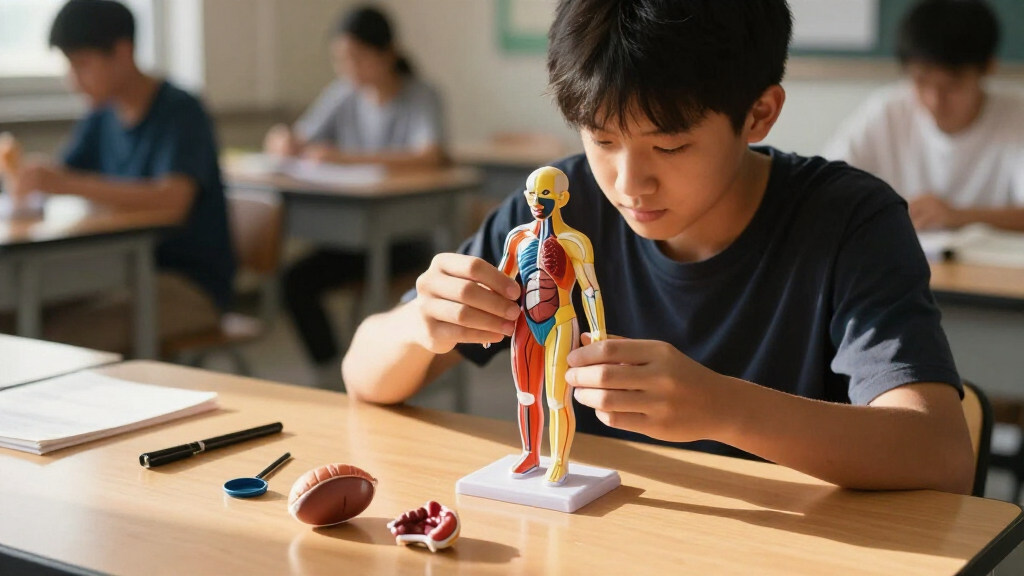

Anatomy model kits for students range from focused brain and joint models to multi-part torso and skeleton sets. I rank the EVOTECH SCIENTIFIC 17-Inch Human Torso as the best overall choice for students who want a larger, hands-on overview, while the Learning Resources Human Anatomy Model Brain is a focused pick for studying one complex organ and the National Geographic Human Body Model suits younger learners who benefit from guided, approachable assembly. The main tradeoff is breadth versus detail: bundles cover more systems, while a dedicated model can make one topic easier to study closely. Size, removable-part count, and how much assembly a student can manage also shape the choice. Read on for the full comparison and advice on matching a kit to a course, age, and study space.

Prime made for students and young adults
- Fast, free delivery for dorm and study essentials
- Prime Video and Amazon Music included
- Member-only deals
Key Takeaways
- The 17-inch EVOTECH torso is the strongest all-round study format in this group because its larger scale and 16 removable parts support repeated, hands-on review of body structures.
- Three-model bundles favor breadth over close study. Skeleton, heart, and skull combinations provide several teaching aids, but a dedicated brain or joint model gives more attention to a narrower topic.
- Removable-part counts are not a direct measure of learning depth. A 60-piece figure or 32-piece kit can involve more handling, while a simpler model may be easier to use for quick revision.
- There are options for different study settings. Eleven-inch models and the study cube suit compact spaces, while larger torso displays are easier to demonstrate to a group.
- Age and course level change what counts as value. The Be Amazing! figure is aimed at ages 8 and up, while students seeking anatomical detail may prefer a torso, joint, or organ-specific model.
| 6-Piece Human Joint Anatomy Model Set with Ligaments |  | Best for Joint and Movement Study | Number of models: 6 | Models included: Shoulder, elbow, hip, knee, hand, and foot | Material: PVC | VIEW LATEST PRICE | See Our Full Breakdown |
| Anatomy Human Skeleton, Skull, and Heart Model Bundle Set of 3 |  | Best Broad-Topic Bundle | Set contents: Human skeleton, torso with removable organs, and anatomical heart | Skeleton height: 17.7 inches | Torso height: 11 inches | VIEW LATEST PRICE | See Our Full Breakdown |
| Human Anatomical Body, Skeleton, Heart, Skull with Brain Models and Cubes Set |  | Best for Display Alongside Study | Set contents: Skeleton, torso, heart, skull with brain, and anatomical cubes | Skeleton height: 17.7 inches | Torso height: 11 inches | VIEW LATEST PRICE | See Our Full Breakdown |
| Learning Resources Human Anatomy Model Brain |  | Best for Focused Neuroanatomy | Number of pieces: 31 | Age range: 8+ | Material: Hard plastic | VIEW LATEST PRICE | See Our Full Breakdown |
| Be Amazing! Toys Interactive Human Body Anatomy Figure, 60 Pieces, Ages 8+ |  | Best for Younger Hands-On Learners | Age range: 8+ | Model height: 14 inches | Number of pieces: 60 | VIEW LATEST PRICE | See Our Full Breakdown |
| Human Body, Skeleton, Heart, Half Size Skull with Brain Models |  | Best Multi-Model Study Set | Model set: 4 pieces: human body, skeleton, heart, and half-size skull with brain | Skeleton height: 17.7 inches | Torso height: 11 inches | VIEW LATEST PRICE | See Our Full Breakdown |
| Human Body Model with 15 Removable Parts, 11-inch Anatomical Educational Display |  | Best Compact Classroom Demonstrator | Size: 11 inches | Number of parts: 15 | Material: Non-toxic PVC | VIEW LATEST PRICE | See Our Full Breakdown |
| EVOTECH SCIENTIFIC 17-Inch Human Torso Anatomy Model, 16 Removable Parts |  | Best for Detailed Torso Study | Height: 17 inches | Removable parts: 16 | Material: Non-toxic PVC | VIEW LATEST PRICE | See Our Full Breakdown |
| Human Body, Skeleton and Heart Models – Set of 3 Anatomy Models |  | Best Separate-Model Study Set | Model set: 3 pieces | Skeleton height: 17.7 inches | Torso height: 11 inches | VIEW LATEST PRICE | See Our Full Breakdown |
| 15-Piece Human Body Anatomy Model, 11-Inch |  | Best for Small Study Spaces | Size: 11 inches | Detachable parts: 15 | Included structures: Torso, 2-part brain, heart, esophagus and aorta, 4-part lungs, and skull | VIEW LATEST PRICE | See Our Full Breakdown |
| National Geographic Human Body Model for Kids 32-Piece Anatomy Set |  | Best for Younger Beginners | Brand: Blue Marble | Recommended age: 8 years and up | Piece count: 32 pieces | VIEW LATEST PRICE | See Our Full Breakdown |
| Human Anatomy Study Cube |  | Best for Portable Review | Brand: Kits of Medicine | Format: Folding study cube | Dimensions: 2.76 x 2.76 inches | VIEW LATEST PRICE | See Our Full Breakdown |
| Learning Resources Anatomy Models Bundle Set |  | Best for Multi-Model Classroom Study | Set includes: Heart, brain, body, and skeleton models | Material: Plastic | Recommended age: 8 years and up | VIEW LATEST PRICE | See Our Full Breakdown |
| Anatomy Model Bundle Set of 3 – Human Body, Heart, Torso & Skeleton | 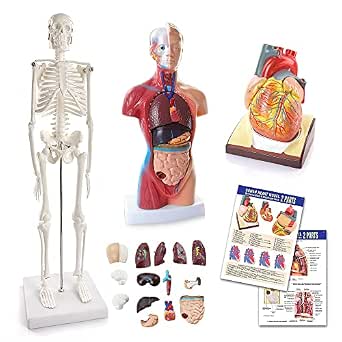 | Best for Older Students Seeking a Display Set | Set includes: Skeleton, torso, and heart models | Skeleton height: 17.7 inches | Torso height: 11 inches | VIEW LATEST PRICE | See Our Full Breakdown |
| anatomy model kits for student | Material |
|---|---|
| 6-Piece Human Joint Anatomy Mo | PVC |
| Anatomy Human Skeleton | — |
| Human Anatomical Body | — |
| Learning Resources Human Anato | Hard plastic |
| Be Amazing! Toys Interactive H | — |
| Human Body | Plastic |
| Human Body Model with 15 Remov | Non-toxic PVC |
| EVOTECH SCIENTIFIC 17-Inch Hum | Non-toxic PVC |
| Human Body | Hand-painted models |
| 15-Piece Human Body Anatomy Mo | — |
| National Geographic Human Body | — |
| Human Anatomy Study Cube | Plastic |
| Learning Resources Anatomy Mod | Plastic |
| Anatomy Model Bundle Set of 3 | — |
More Details on Our Top Picks
6-Piece Human Joint Anatomy Model Set with Ligaments
For students focused on how major joints connect and move, this set offers a more targeted lesson than broad body kits. It includes life-size shoulder, elbow, hip, knee, hand, and foot models, with detailed ligaments that give demonstrations a useful focus on joint structure. The sturdy PVC construction is suited to repeated classroom handling, while the six separate models let an instructor compare upper- and lower-body joints side by side. Compared with the Be Amazing! Toys Interactive Human Body Anatomy Figure, this set provides greater emphasis on ligaments rather than removable organs and full-body assembly. That focus is also its limit: it does not teach whole-body anatomy, and students seeking a broad introduction may get more from a torso or skeleton bundle. Careful handling is still needed to protect the detailed parts.
Pros:- Six life-size models cover major joints in both the upper and lower body
- Detailed ligaments support focused study of joint anatomy
- PVC construction is suited to repeated handling and demonstrations
- Separate models make side-by-side comparisons straightforward
Cons:- Does not include organs or a complete skeleton for broader anatomy lessons
- Covers only six joints, leaving other areas outside the set
- Detailed models call for careful handling
Best for: Anatomy students and instructors studying joint structure, ligaments, and movement across several major body areas
Not ideal for: Beginners seeking one model that covers the organs and skeleton together, since this set focuses only on six joints
- Number of models:6
- Models included:Shoulder, elbow, hip, knee, hand, and foot
- Material:PVC
- Dimensions:12.01 x 5.31 x 4.72 inches
- Weight:5.6 pounds
- Manufacturer:chiazllta
Our verdict“Choose this set for hands-on comparison of major joints and ligaments, not as a stand-alone general anatomy kit.”
Anatomy Human Skeleton, Skull, and Heart Model Bundle Set of 3
This bundle suits students who want to connect skeletal anatomy with organs rather than study one body system alone. Its three models—a 17.7-inch skeleton, an 11-inch torso with removable organs, and an 8-inch heart—give lessons several different scales and subjects, and the included guides support independent study or classroom explanation. Compared with the 6-Piece Human Joint Anatomy Model Set with Ligaments, this is the broader choice: it introduces the skeleton, torso, and heart, while the joint set gives more dedicated attention to ligaments and movement. The tradeoff is that none of these models is full-size, so small parts and compact proportions may be less useful for detailed demonstrations from across a room. The listed safety information also makes this a poor fit for younger children; it is specified as unsuitable for those under 18.
Pros:- Combines skeleton, removable-organ torso, and heart models in one set
- Included guides support study and teaching
- Compact models are portable and can be assembled or disassembled
- Covers more body systems than the joint-focused six-model set
Cons:- Smaller-than-life-size models may be harder to see in group instruction
- Small organ pieces can pose a choking hazard
- Specified as unsuitable for children under 18
Best for: Older students, tutors, and educators who want a portable set covering the skeleton, removable torso organs, and heart
Not ideal for: Families buying for children under 18 or learners who need large, full-size models for group demonstrations
- Set contents:Human skeleton, torso with removable organs, and anatomical heart
- Skeleton height:17.7 inches
- Torso height:11 inches
- Heart height:8 inches
- Weight:5.5 pounds
- Package dimensions:12.36 x 8.94 x 7.64 inches
Our verdict“Pick this bundle for portable, multi-topic anatomy study by older learners who can handle its small parts safely.”
Human Anatomical Body, Skeleton, Heart, Skull with Brain Models and Cubes Set
This set pairs recognizable anatomy models with display pieces, making it a fit for students who want study aids that can also stay on view. Alongside a 17.7-inch skeleton, 11-inch torso, and 8-inch heart, it adds a skull with brain and anatomical cubes; the hand-painted finish and included guides add visual interest for a desk or classroom shelf. Compared with the Anatomy Human Skeleton, Skull, and Heart Model Bundle Set of 3, this package adds the skull-and-brain model and cubes, but the extra decorative and detailed components call for more care in handling and transport. The small skull and cubes are useful as close-up prompts, not substitutes for larger teaching models. Buyers should also note that the listed base options vary, and the set is described as intended for educational and display use.
Pros:- Includes skeleton, torso, heart, skull with brain, and anatomical cubes
- Hand-painted details support visual study and display
- Guides accompany the models for learning
- Portable set includes a carrying case
Cons:- Detailed pieces may be fragile and need careful transport
- Small skull and cube models are not suited to large-group viewing
- Described as intended for education and display rather than rough handling
Best for: Students or educators who want a multi-topic anatomy set with small display pieces for a desk, study area, or classroom
Not ideal for: Learners needing rugged equipment for frequent hands-on group use or large models visible from a distance
- Set contents:Skeleton, torso, heart, skull with brain, and anatomical cubes
- Skeleton height:17.7 inches
- Torso height:11 inches
- Heart height:8 inches
- Skull with brain size:3.5 inches
- Anatomical cube size:2.76 inches
- Base options:Crystal, oak wooden, or plastic
Our verdict“Choose this set when variety and display appeal matter, but opt for a simpler classroom bundle for heavy handling.”
Learning Resources Human Anatomy Model Brain
Students studying the brain will get a more focused tactile aid here than from a general skeleton-and-torso bundle. The 31-piece, 9-inch brain model separates color-coded regions for closer inspection, while a stand and assembly guide help keep the parts organized during study or classroom demonstration. Compared with the Anatomy Human Skeleton, Skull, and Heart Model Bundle Set of 3, this model trades broad coverage of body systems for a more specific lesson in neuroanatomy. That narrow scope is helpful when the brain is the subject, but it leaves students without a skeleton, torso, or other organs for wider anatomy work. Its hard-plastic construction and compact format suit repeated handling and storage; students preparing for advanced medical training may find the representation too simplified, and assembly can be challenging for some learners.
Pros:- Thirty-one pieces allow tactile exploration of brain regions
- Color-coded sections support visual identification
- Hard-plastic construction is suited to repeated use
- Compact model includes a stand and assembly guide
Cons:- Brain-only coverage cannot replace a broader anatomy set
- Simplified detail may not meet advanced medical-training needs
- Assembly may challenge some users
Best for: Students aged 8 and up who need a hands-on model for introductory brain-region study or classroom demonstration
Not ideal for: Advanced medical students seeking detailed neuroanatomy or beginners who want one kit covering the whole body
- Number of pieces:31
- Age range:8+
- Material:Hard plastic
- Model size:9 inches
- Included:Assembly guide and display stand
Our verdict“Select this compact model for introductory, hands-on brain study rather than broad or advanced anatomy instruction.”
Be Amazing! Toys Interactive Human Body Anatomy Figure, 60 Pieces, Ages 8+
For younger students who learn by assembling and handling parts, this 14-inch articulated figure makes anatomy more interactive than a display-only model. Its 60 pieces include removable organs, muscles, and bones, and the poseable skeleton supports simple demonstrations of where structures sit in the body. Compared with the Learning Resources Human Anatomy Model Brain, this is the broader entry point: it spans several body structures instead of concentrating on neuroanatomy, though it offers less focused detail on the brain. Illustrated instruction cards help guide assembly, but the number of pieces can be a hurdle for younger children, and small components need supervision. It is designed as an educational model, not for rough play. Students seeking life-size detail or a more specialized model for advanced coursework should look at other options in this roundup.
Pros:- Sixty pieces offer hands-on assembly and organ removal
- Articulated figure can be posed for simple demonstrations
- Includes organs, muscles, and bones in one introductory kit
- Illustrated instruction cards support guided learning
Cons:- Small parts need careful handling and supervision
- Assembly may be challenging for younger children
- A 14-inch figure offers less scale and detail than full-size joint models
Best for: Children aged 8 and up who enjoy assembling models and want an introductory, interactive overview of bones, muscles, and organs
Not ideal for: Advanced anatomy students or families seeking a rugged figure for unsupervised rough play
- Age range:8+
- Model height:14 inches
- Number of pieces:60
- Included components:Articulated plastic skeleton, removable organs, muscles, bones, and stand
- Brand:Be Amazing! Toys
- Model name:Science to the Max Interactive Human Body
- Model number:813268016047
Our verdict“Choose this kit for supervised, hands-on anatomy exploration by younger students, not for advanced study or rough play.”
Human Body, Skeleton, Heart, Half Size Skull with Brain Models
This set earns its place for students who need to compare several body systems without relying on a torso alone. It includes a human body, skeleton, heart, and skull with brain, giving learners distinct models for whole-body orientation and focused study. The included manuals and illustrations add guidance that the three-model Human Body, Skeleton and Heart Models set does not match with a skull-and-brain model. The carrying case also makes this a more practical choice for moving between home and classroom study. Its tradeoff is that the models are separate, so it does not offer the same step-by-step organ removal from one figure as the 15-Piece Human Body Anatomy Model. Detailed, hand-painted pieces may also need careful handling, and this is intended for learning rather than medical practice.
Pros:- Four distinct models cover broad body structure and focused heart and skull study
- Manuals and illustrations provide learning support beyond the models themselves
- Carrying case helps keep pieces together and supports transport
- Hand-painted details make structures easier to distinguish visually
Cons:- Separate models do not provide the organ-by-organ assembly practice of a removable-part torso
- Detailed pieces may be fragile if handled roughly
- Recommended age is 14 years and up, limiting suitability for younger students
Best for: Students aged 14 and up who want separate models for studying the body, skeleton, heart, and skull, with materials they can carry between study spaces
Not ideal for: Learners who want to remove and replace many organs on a single torso, or anyone needing a model for clinical or medical skills practice
- Model set:4 pieces: human body, skeleton, heart, and half-size skull with brain
- Skeleton height:17.7 inches
- Torso height:11 inches
- Heart height:8 inches
- Skull with brain size:3.5 inches
- Material:Plastic
- Included learning materials:Manuals and illustrations
- Recommended age:14 years and up
Our verdict“Choose this set if you want portable, separate models for broad anatomy study rather than one torso with removable organs.”
Human Body Model with 15 Removable Parts, 11-inch Anatomical Educational Display
For a desk-sized model that still offers hands-on organ study, this 11-inch figure is a practical middle ground. Its 15 detachable parts include structures such as the brain, heart, lungs, stomach, and intestines, so students can see how components fit into one body rather than study them as separate pieces. Compared with the larger EVOTECH SCIENTIFIC 17-Inch Human Torso, this model takes up less space and is easier to carry, though the smaller scale may make demonstrations harder to see across a room. The non-toxic PVC construction and wooden base suit home or classroom display, while the brochure supports guided learning. Small removable organs call for careful storage and make it a poor fit around young children; it is an educational aid, not medical-training equipment.
Pros:- Fifteen removable parts support hands-on placement and identification of organs
- Compact 11-inch size is easier to store and transport than a 17-inch torso
- Non-toxic PVC construction and a wooden base suit educational display
- Educational brochure is included
Cons:- Small scale can limit visibility during whole-class demonstrations
- Small removable parts require careful handling and storage around young children
- Provides educational demonstrations, not medical skills practice
Best for: Students and teachers aged 14 and up who want a portable, hands-on torso model for close-up desk or small-group lessons
Not ideal for: Teachers presenting to a large classroom, younger children who may handle or swallow small organ pieces, or learners seeking medical training equipment
- Size:11 inches
- Number of parts:15
- Material:Non-toxic PVC
- Included components:Trunk, brain, heart, esophagus and aorta, lung, skull cap, stomach, diaphragm, liver, pancreas and spleen, and intestines
- Included learning material:Educational brochure
- Base:Wooden base
- Age range:14 years and up
- Model year:2023
Our verdict“Pick this compact torso for close-up lessons and portable organ demonstrations, but choose a larger model for viewing across a classroom.”
EVOTECH SCIENTIFIC 17-Inch Human Torso Anatomy Model, 16 Removable Parts
The larger format and 16 removable parts make this torso better suited to sustained organ study than the 11-inch Human Body Model with 15 Removable Parts. At 17 inches tall, it gives students more room to distinguish structures during demonstrations, and the oak-wooden base helps it stand as a classroom display. Hand-painted details and an educational brochure support visual identification and guided review. The inclusion of male and female reproductive parts broadens the topics available from one model. That extra scale has a cost in portability: at 5.02 pounds, it is heavier than a compact desk model, and its package is correspondingly larger. Small organ pieces also need supervision around young children. I’d choose it for a dedicated study area, not for frequent transport or clinical practice.
Pros:- 17-inch height gives removable structures more visibility than an 11-inch torso
- Sixteen removable parts support hands-on study across multiple body systems
- Includes male and female reproductive parts
- Oak-wooden base and brochure support display and guided learning
Cons:- At 5.02 pounds, it is less convenient to carry than the smaller 11-inch models
- Small organ pieces need careful handling and storage around young children
- A larger torso occupies more shelf and classroom space
Best for: Students and educators who want a larger, single torso model for close classroom demonstrations and study of multiple organ systems, including reproductive anatomy
Not ideal for: Students who need a lightweight model to carry regularly, or families with young children who may handle small removable parts
- Height:17 inches
- Removable parts:16
- Material:Non-toxic PVC
- Base:Oak wood
- Weight:5.02 pounds
- Package dimensions:18.11 x 8.66 x 5.94 inches
- Included:Educational brochure
- Anatomical features:Includes male and female reproductive parts
Our verdict“Choose this model for a more visible, detailed torso lesson at a fixed study station, rather than a lightweight travel kit.”
Human Body, Skeleton and Heart Models – Set of 3 Anatomy Models
This three-piece bundle suits students who prefer to move between a whole-body view and dedicated skeleton and heart models. The 17.7-inch skeleton and 8-inch heart provide focused reference points, while the 11-inch torso keeps the set from becoming a collection of oversized displays. Compared with the four-model Human Body, Skeleton, Heart, Half Size Skull with Brain Models, this set leaves out the separate skull-and-brain model, so it makes more sense when skeletal and cardiac study take priority. Guides and manuals support independent review, and the stated weight of 2.32 kg suggests it is portable, though less convenient than a single compact torso. These are separate models, not a torso with removable organs, and the detailed pieces need careful handling.
Pros:- Three distinct models support both whole-body orientation and focused skeleton and heart study
- Includes informative guides and manuals
- The 17.7-inch skeleton is larger than the set’s 11-inch torso for clearer skeletal reference
- Suitable for study and display with sturdy bases
Cons:- Does not include the separate skull-and-brain model found in the four-piece set
- Separate models do not provide organ removal and reassembly practice
- Detailed pieces may be damaged if handled roughly
Best for: Students aged 14 and up who want separate body, skeleton, and heart references for study or display, especially when skull study is not a priority
Not ideal for: Learners who need a separate skull-and-brain model, removable organs for assembly practice, or equipment for medical training
- Model set:3 pieces
- Skeleton height:17.7 inches
- Torso height:11 inches
- Heart height:8 inches
- Material:Hand-painted models
- Bases:Crystal, oak, and plastic
- Age range:14 years and up
- Weight:2.32 kg
Our verdict“Choose this bundle for separate skeleton, heart, and body references; select the four-model set if skull-and-brain study matters too.”
15-Piece Human Body Anatomy Model, 11-Inch
This model is the straightforward choice when a student wants removable anatomy parts but has little room for a larger display. Its 11-inch height and stable base suit a desk, while the 15-piece layout includes a two-part brain, heart, esophagus and aorta, four-part lungs, and skull. The manual gives learners a reference as they take the torso apart and put it back together. Compared with the EVOTECH SCIENTIFIC 17-Inch Human Torso, this is easier to fit into a small study space, but the smaller scale can make details less visible in a classroom demonstration. It also offers fewer listed structures than a broader multi-model set such as the Human Body, Skeleton, Heart, Half Size Skull with Brain Models. It’s a compact study aid, not a large-group display or medical-training tool.
Pros:- Compact 11-inch size fits small desks and study spaces
- Fifteen detachable parts allow hands-on assembly and organ identification
- Includes a two-part brain and four-part lungs among the listed structures
- Educational manual and stable base support study and display
Cons:- Small size may limit visibility of anatomical details during group lessons
- Does not include separate skeleton and heart models
- The provided data does not specify the material or age range
Best for: Students studying at a small desk who want a compact torso with removable organs and a manual for independent anatomy review
Not ideal for: Teachers who need details visible from across a classroom, or students seeking separate skeleton and heart models alongside a torso
- Size:11 inches
- Detachable parts:15
- Included structures:Torso, 2-part brain, heart, esophagus and aorta, 4-part lungs, and skull
- Included accessory:Educational manual
- Base:Stable display base
Our verdict“Pick this model for compact, hands-on torso study at a desk; choose a larger or multi-model set for broader classroom viewing.”
National Geographic Human Body Model for Kids 32-Piece Anatomy Set
For students aged 8 and up, this set makes anatomy a hands-on activity rather than a page of labels. Its 32-piece model lets children remove and examine bones, organs, and muscles, while the forceps, identification chart, and learning guide give them ways to connect parts with names and functions. The glow-in-the-dark components add a playful hook that the more study-focused Human Anatomy Study Cube lacks. That fun-first approach also defines the limit: this is aimed at basic exploration, not detailed medical study, and small pieces call for adult supervision. Compared with the Learning Resources Anatomy Models Bundle Set, it offers a larger assortment of body components but does not provide the same distinct heart, brain, body, and skeleton models. Choose it for an engaging first anatomy kit, not advanced coursework.
Pros:- Removable bones, organs, and muscles support hands-on identification
- Glow-in-the-dark components add a playful visual element
- Includes forceps, an identification chart, and a learning guide
- Designed for children aged 8 and up
Cons:- Small pieces require adult supervision during use
- Basic anatomical detail limits its value for advanced study
- The description does not specify assembled dimensions
Best for: Children aged 8 and up who are beginning anatomy and learn well through handling and identifying removable parts.
Not ideal for: Older students seeking detailed anatomical structures or a study aid for medical-level coursework; the model focuses on basic anatomy and includes small parts.
- Brand:Blue Marble
- Recommended age:8 years and up
- Piece count:32 pieces
- Included model components:Bones, organs, muscles, and shell
- Other included items:Display stand, forceps, identification chart, and learning guide
- Educational objective:STEM
- Model number:NGHUMBODY2
Our verdict“Choose this for a younger student who wants an interactive first look at body parts, rather than a detailed model for advanced study.”
Human Anatomy Study Cube
The 7 cm folding cube is the most portable study option in this group: students can keep it nearby for quick anatomy review without setting up separate models. It covers nine areas, including the eye, ear, brain, heart, lungs, digestive system, muscles and bones, and circulatory system. That breadth makes it a useful prompt for revision, but not a substitute for seeing how structures fit together in three dimensions. Compared with the National Geographic Human Body Model for Kids, the cube is less suited to tactile assembly and younger learners, yet it takes up far less space and spans more body topics at a glance. Its small panels may be hard to read, and the plastic format favors compact reference over the richer handling experience of the Learning Resources Anatomy Models Bundle Set.
Pros:- Covers nine anatomical areas in one compact format
- Folding design makes review interactive and easy to store
- Lightweight at 100 g for carrying between study spaces
- Offers a broader topic list than a single-structure model
Cons:- Small format may make information difficult to read
- Does not provide removable structures for hands-on assembly
- Plastic cube offers less three-dimensional learning than model sets
Best for: Older students and anatomy enthusiasts who want a compact, easy-to-store review aid covering several body systems.
Not ideal for: Students who need large, clearly visible labels or removable three-dimensional parts for classroom demonstrations.
- Brand:Kits of Medicine
- Format:Folding study cube
- Dimensions:2.76 x 2.76 inches
- Weight:100 g
- Material:Plastic
- Body areas covered:9
- Age range:Adult
Our verdict“Pick this cube for portable, broad-topic revision, but choose a physical model set if students need to inspect structures in depth.”
Learning Resources Anatomy Models Bundle Set
This bundle earns its place by giving students four separate models—heart, brain, body, and skeleton—instead of asking one torso to cover every lesson. Assembly and disassembly turn each structure into a practical activity, while movable skeleton joints and hinged heart sections help demonstrate how parts relate and move. Display stands keep the assembled models visible between lessons, a useful classroom or homeschool touch. Compared with the National Geographic Human Body Model for Kids, this set offers clearer focus on distinct structures but lacks the glow-in-the-dark feature and the same stated 32-piece assortment. The tradeoff is that the description gives no dimensions, so buyers cannot judge display size in advance; detailed parts may also challenge younger children despite the age-8-plus recommendation.
Pros:- Four distinct models cover several major anatomical structures
- Assembly and disassembly support active study
- Movable skeleton joints and hinged heart sections add useful demonstrations
- Display stands allow assembled models to remain visible
Cons:- Model dimensions are not specified
- Detailed anatomy may be challenging for some younger students
- Plastic models may offer less material realism than advanced teaching models
Best for: Teachers, homeschool families, and students aged 8 and up who want separate heart, brain, body, and skeleton models for repeated lessons.
Not ideal for: Buyers who need specified model dimensions or a simple, low-detail introduction for very young children.
- Set includes:Heart, brain, body, and skeleton models
- Material:Plastic
- Recommended age:8 years and up
- Features:Movable skeleton joints and hinged heart sections
- Display supports:Display stands included
- Intended use:Classroom, homeschool, and individual study
Our verdict“Choose this bundle for classroom or homeschool lessons that benefit from separate, reusable models of major structures.”
Anatomy Model Bundle Set of 3 – Human Body, Heart, Torso & Skeleton
With a 17.7-inch skeleton, an 11-inch torso, and an 8-inch heart, this three-model bundle gives older students larger structures to inspect than the compact Human Anatomy Study Cube. The included manuals and charts add reference material, while a carrying case helps keep the models and learning aids together between study sessions. Its age recommendation of 12+ and emphasis on detail make it a better fit for secondary students than the National Geographic Human Body Model for Kids, which targets younger beginners with a more playful kit. There is a tradeoff: the description warns that rough handling may damage the models, and the set is intended for education rather than medical training. Choose it when visible scale and several major structures matter more than child-oriented play or advanced clinical utility.
Pros:- Includes skeleton, torso, and heart models at useful display sizes
- Manuals and charts provide supporting study material
- Carrying case supports storage and portability
- Age recommendation suits older student learners
Cons:- Not recommended for children under 12 due to small parts
- Models may be fragile if handled roughly
- Educational use only; not intended for medical training
Best for: Students aged 12 and up who want larger skeleton, torso, and heart models with manuals and charts for home or classroom study.
Not ideal for: Younger children, rough-handling environments, or medical learners who need equipment suitable for clinical training.
- Set includes:Skeleton, torso, and heart models
- Skeleton height:17.7 inches
- Torso height:11 inches
- Heart height:8 inches
- Weight:2.86 pounds
- Recommended age:12 years and up
- Additional included items:Carrying case, manuals, and charts
Our verdict“Choose this for an older student who wants sizeable display models and accompanying study materials, not a toy-like starter kit or clinical tool.”

How We Picked
I compared these kits by the learning tasks they support: identifying structures, seeing how body systems relate, handling or removing parts, and revisiting material without a teacher present. I also weighed scale, stated part counts, included model types, likely storage needs, and how clearly each product fits a student age or study purpose. A high number of pieces mattered only when it appeared to add useful interaction rather than complexity for its own sake.
The ranking gives priority to versatility for student study, then weighs focus, accessibility, and space demands. That puts a larger removable-part torso ahead as an all-round option, while specialist models and multi-model bundles rank higher for particular lessons rather than every course. I distinguish products by their stated contents and intended use; the listings do not provide enough information to assume identical materials, labeling, or classroom durability across the range.
| anatomy model kits for student | Material |
|---|---|
| 6-Piece Human Joint Anatomy Mo | PVC |
| Anatomy Human Skeleton | — |
| Human Anatomical Body | — |
| Learning Resources Human Anato | Hard plastic |
| Be Amazing! Toys Interactive H | — |
| Human Body | Plastic |
| Human Body Model with 15 Remov | Non-toxic PVC |
| EVOTECH SCIENTIFIC 17-Inch Hum | Non-toxic PVC |
| Human Body | Hand-painted models |
| 15-Piece Human Body Anatomy Mo | — |
| National Geographic Human Body | — |
| Human Anatomy Study Cube | Plastic |
| Learning Resources Anatomy Mod | Plastic |
| Anatomy Model Bundle Set of 3 | — |
Factors to Consider When Choosing Anatomy Model Kits For Students
Before choosing a kit, match the model to the way the student will study—not just the number of pieces in the box. A model can be useful for memorizing structures, demonstrating relationships, or simply making a lesson more approachable, and those goals do not always call for the same format.
Match the Model’s Scope to the Course
Start with the topics on the syllabus, then decide whether the student needs a broad body overview or a close look at one system. A torso or body-and-skeleton set can support introductory surveys, while a brain or joint model may suit a unit that repeatedly returns to that structure. A common mistake is buying a broad bundle because it contains more objects, even when most of the student’s work is focused on one subject. On the other hand, a specialist model may feel limiting if the course expects connections among organs and body systems. Check whether the kit’s listed models correspond to actual course topics, rather than treating a large bundle as automatically more useful.
Think About Scale and Study Space
Model size affects both visibility and routine use. A larger torso can be easier to point to during group instruction, while an 11-inch model is simpler to keep on a desk or store between study sessions. Measure the shelf or work surface before choosing, especially if the kit includes multiple separate models. Buyers sometimes focus on display size but overlook the space needed to lay out removed parts during a lesson. For a student who studies at a shared table, a compact option may see more use than an impressive display that is awkward to unpack. Choose the scale that fits the student’s real study habits.
Read Part Counts as a Clue, Not a Score
Removable parts can support active recall: students can name a structure, take it out, and explain where it belongs. But a high count does not automatically mean the model teaches more, especially when pieces are small or the instructions do not match the learner’s level. Consider whether the student will benefit from handling many components or would learn more from a simpler, clearly focused model. For younger learners, too many loose pieces can turn a lesson into sorting and cleanup. For advanced study, a modest piece count may leave out details needed for coursework. Look for a good match between the model’s interaction and the student’s assignment.
Choose for the Learner’s Age and Independence
A kit intended for children can make anatomy less intimidating, while an older student may need a model that better supports independent review. Age guidance is a starting point, not a measure of academic suitability; a young learner may enjoy a complex kit with help, and an adult beginner may prefer a straightforward introduction. Think about whether the student can assemble, remove, and replace parts without frequent assistance. Assembly can encourage engagement, but it can also distract from the lesson if the steps are unclear or beyond the learner’s patience. Choose a level of interaction that helps the student focus on anatomy rather than managing the kit.
Decide Between a Bundle and a Focused Model
A bundle is useful when a student needs several visual references or when family members are studying different topics. Separate skull, heart, skeleton, and body models can also make it easier to compare structures side by side. A single focused model takes less room and can be more directly relevant to a specific lesson. Avoid assuming that bundled items will share the same scale or offer the same level of detail; check the product contents and dimensions where available. Paying more for variety makes sense only if the student will use those added models. If one topic dominates the course, a focused choice may be the better learning tool.
Check What the Listing Does Not Tell You
Product titles often highlight size and piece count but may not answer questions about labels, assembly instructions, replacement parts, or the material’s feel. Those details affect whether a model works for self-study, classroom demonstrations, and repeated handling. Before buying, inspect the available product information for dimensions, included guides, and the exact models in a set. If a specific feature matters for a course, such as labeled structures or a certain system, do not infer it from the product name alone. This extra check can prevent a mismatch between an appealing display model and the student’s actual learning needs. Where information is absent, treat that as an unknown rather than a promised feature.
Frequently Asked Questions
Should I choose a torso model or a set of separate anatomy models?
Choose a torso when the student needs to see several internal structures in relation to one body layout. Separate models are a better fit when lessons call for close inspection of specific structures, or when several students need different teaching aids at once. Bundles that include a skeleton, skull, and heart offer broader reference material, but they may take more storage space and vary in scale. A torso is usually the more direct starting point for a general anatomy survey. Let the course’s main assignments guide the decision rather than choosing by the number of included models.
Are anatomy kits made for children suitable for older students?
They can help older beginners build a basic visual understanding, especially if the student benefits from hands-on assembly. However, a child-oriented kit may not provide the level of detail needed for advanced coursework or formal anatomy revision. Compare the structures shown and the study tasks required, not just the age label or piece count. A focused brain, joint, or larger torso model may serve a more specialized course better. For a student moving beyond introductory lessons, check that the kit supports the concepts they are expected to identify.
Does a higher number of removable parts make a model better for studying?
Not by itself. Removable parts can make a model more interactive and support recall practice, but the student still needs a clear way to identify and replace each structure. A large count may add setup and cleanup without helping if the pieces are not relevant to current lessons. Some learners benefit more from a focused organ model than from a highly component-heavy figure. Consider whether the student will use the parts for demonstrations, quizzes, or hands-on review. The best count is the one that serves the intended study activity.
What should I prioritize for a student with limited desk or storage space?
Look for a smaller model, such as an 11-inch body model or a compact study aid, and check the space needed for its removed pieces as well as the assembled display. A bundle can occupy more room than its main model suggests because every separate item needs a place to live. Students who study at a shared desk may prefer a kit that is quick to set up and put away. If a larger torso is important for coursework, measure storage space before purchasing. Compactness matters most when it makes the model easy to use regularly.
When is it worth choosing a more specialized model over a broader bundle?
A specialized model makes sense when the student repeatedly studies one structure, such as the brain or joints, and needs a dedicated visual reference. It can keep attention on the topic instead of spreading it across several models that may see little use. A broader set is a better choice for introductory courses, mixed study needs, or demonstrations covering several body areas. Check whether the course requires detailed knowledge of one region or a general understanding of multiple systems. The right choice follows the learning plan, not the assumption that more included items always mean more educational value.
Conclusion
For most students seeking one hands-on model for broad study, I recommend the EVOTECH SCIENTIFIC 17-Inch Human Torso as the best overall pick: its larger format and removable parts make it the most versatile option in this lineup. For best value in study coverage, I would look to a three-model bundle when the student will use its separate references; among the listed choices, compare the skeleton, skull, and heart combinations by their exact contents and available dimensions. The best premium-style choice is the larger torso format for learners who need a prominent classroom or desk demonstration model, though the product listings do not establish a premium material advantage. For beginners, the National Geographic Human Body Model is the approachable choice, while the Be Amazing! figure is aimed at ages 8 and up. For specific needs, pick the Learning Resources brain model for focused brain study, the 6-piece joint set for ligament and joint lessons, or the Human Anatomy Study Cube when compact storage matters most.
Halloween Picks
halloween
As an affiliate, we earn on qualifying purchases.